
Why Is My Whatcom County Lawn Turning Yellow or Patchy?
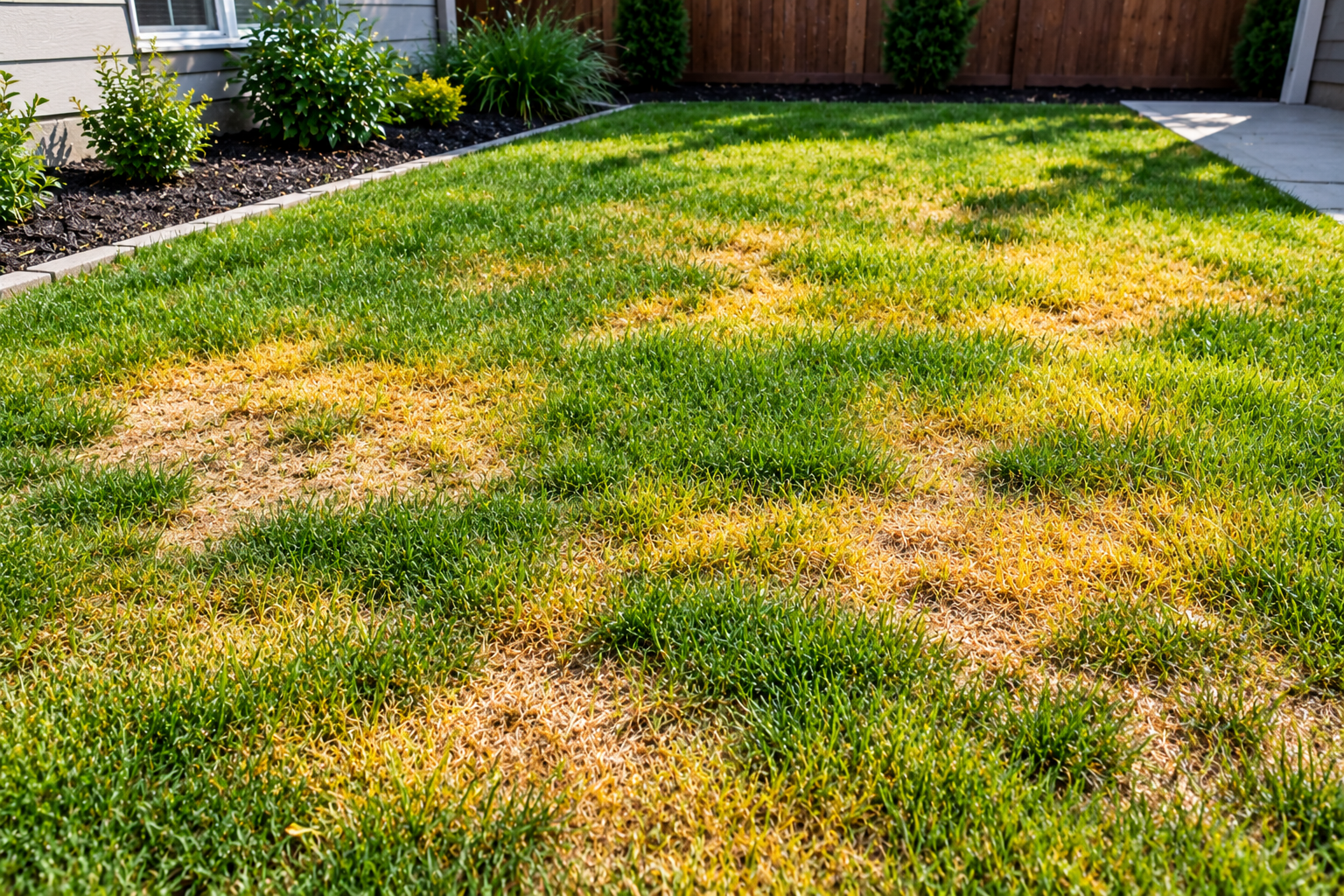
Few things frustrate a homeowner like a lawn that won’t stay green. Across Whatcom County, from in-town yards in Bellingham to larger properties around Ferndale, Lynden, and Everson, patchy and yellowing grass is one of the most common issues we’re asked about. The challenge is that several very different problems can produce the same yellow patch, and the right fix depends on knowing which one you’re dealing with.
Here’s what’s most often behind it, and what actually brings a lawn back.Quick Answer: Yellow or patchy grass in Whatcom County usually comes down to compacted soil, saturated ground from steady rainfall and poor drainage, worn-down high-traffic areas, or a grass blend that isn’t suited to our climate. Dog urine, lawn fungus, and low-nutrient soil are other frequent culprits.
The most reliable fixes are aeration, overseeding, hydroseeding, or new sod, paired with a drainage correction if water is part of the problem. Get a free lawn assessment →
Common Causes of a Yellow or Patchy Lawn in Whatcom County
1. Compacted Soil
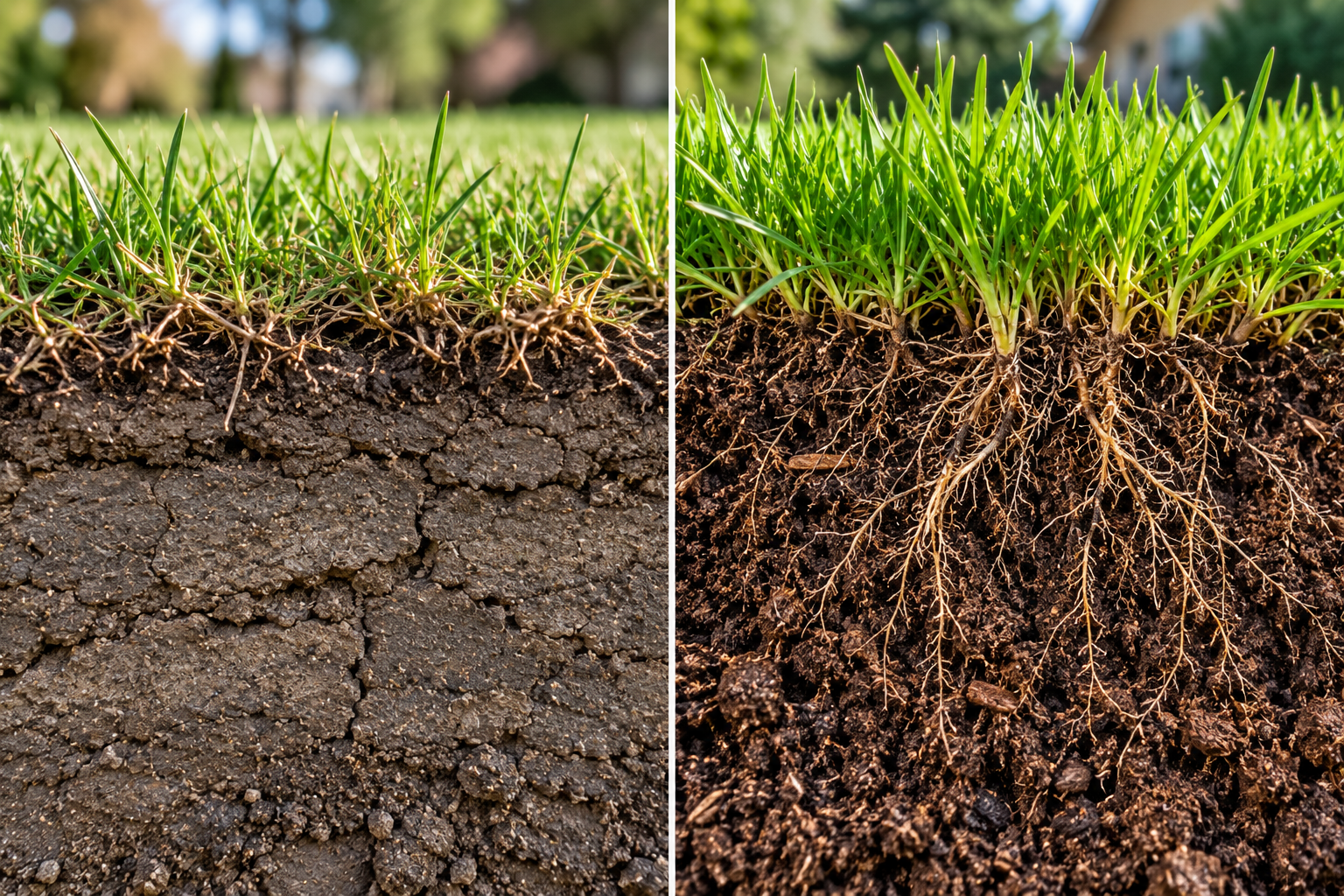
Foot traffic, play areas, mowers, and years of settling squeeze soil particles together until water, air, and nutrients struggle to reach the roots. Grass in compacted ground thins and yellows even when it’s watered and fertilized on schedule.
2. Saturated Ground and Poor Drainage
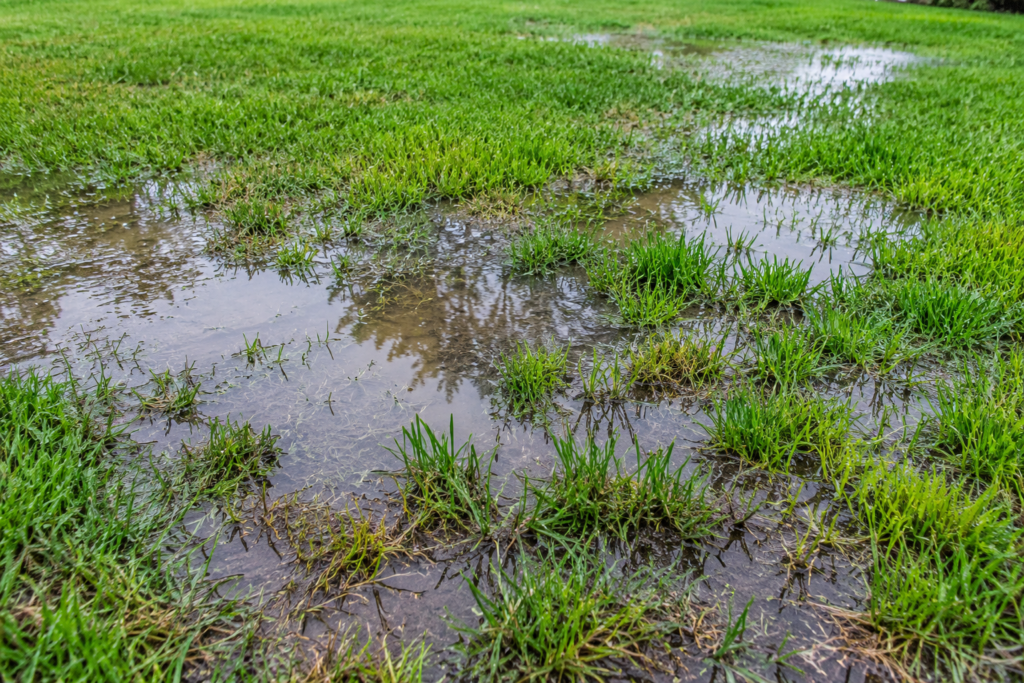
Whatcom County’s steady rainfall means lawns rarely get a long dry stretch, and soil that drains slowly keeps roots sitting in water. Grass roots need oxygen, so waterlogged areas turn yellow, soft, and thin, usually in the same low spots each time it rains.
3. Worn Areas from Heavy Use
Pathways, gate areas, spots where kids play, and the routes pets run every day wear grass down faster than it can regrow, leaving thin or bare strips that never quite fill in on their own.
4. Dog Urine Spots
Concentrated nitrogen in dog urine burns the grass it lands on, creating round yellow or brown spots, often with a ring of extra-green grass around the edge where the diluted nitrogen acted as fertilizer.
5. Lawn Fungus
Extended damp weather creates ideal conditions for fungal diseases, which tend to appear as irregular yellow, tan, or brown patches that spread over time rather than staying one fixed size.
6. A Grass Blend That Doesn’t Suit the Climate
Not every seed mix is built for the Pacific Northwest. A blend that struggles in cool, wet conditions can thin out over a few seasons no matter how well you care for it.
7. Low-Nutrient Soil
Soil that hasn’t been fed or amended in a long time can run short on what grass needs to stay thick and green, leading to a pale, yellowish lawn overall rather than distinct patches.
How to Fix a Yellow or Patchy Lawn
The right approach depends on the cause. These are the fixes that work most often:
Aeration
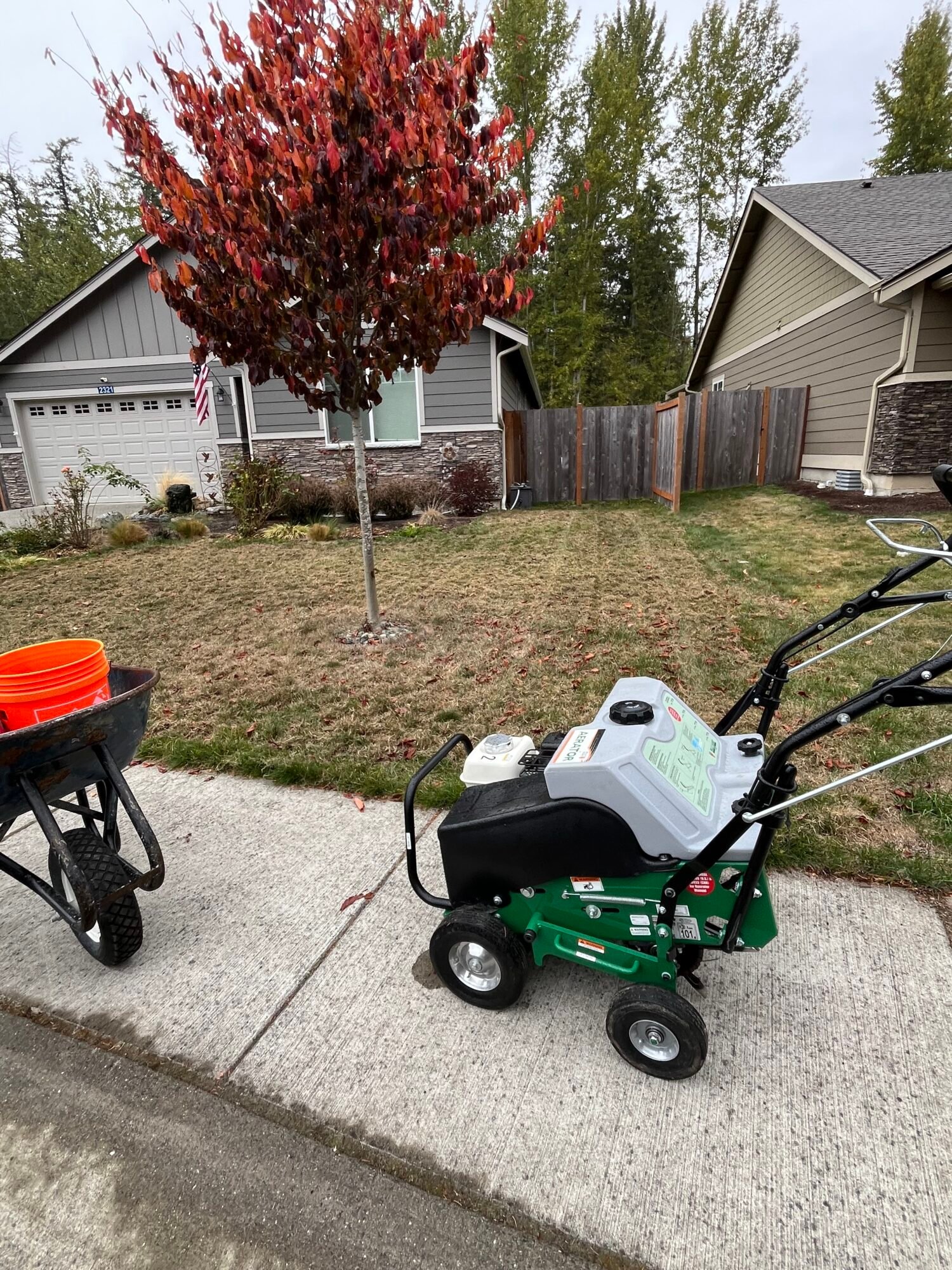
Aeration removes small plugs of soil from the lawn, which loosens compaction and lets water, air, and nutrients get back down to the roots. It’s usually the right first step when grass is thinning across a wide area instead of in a few isolated spots.
Overseeding
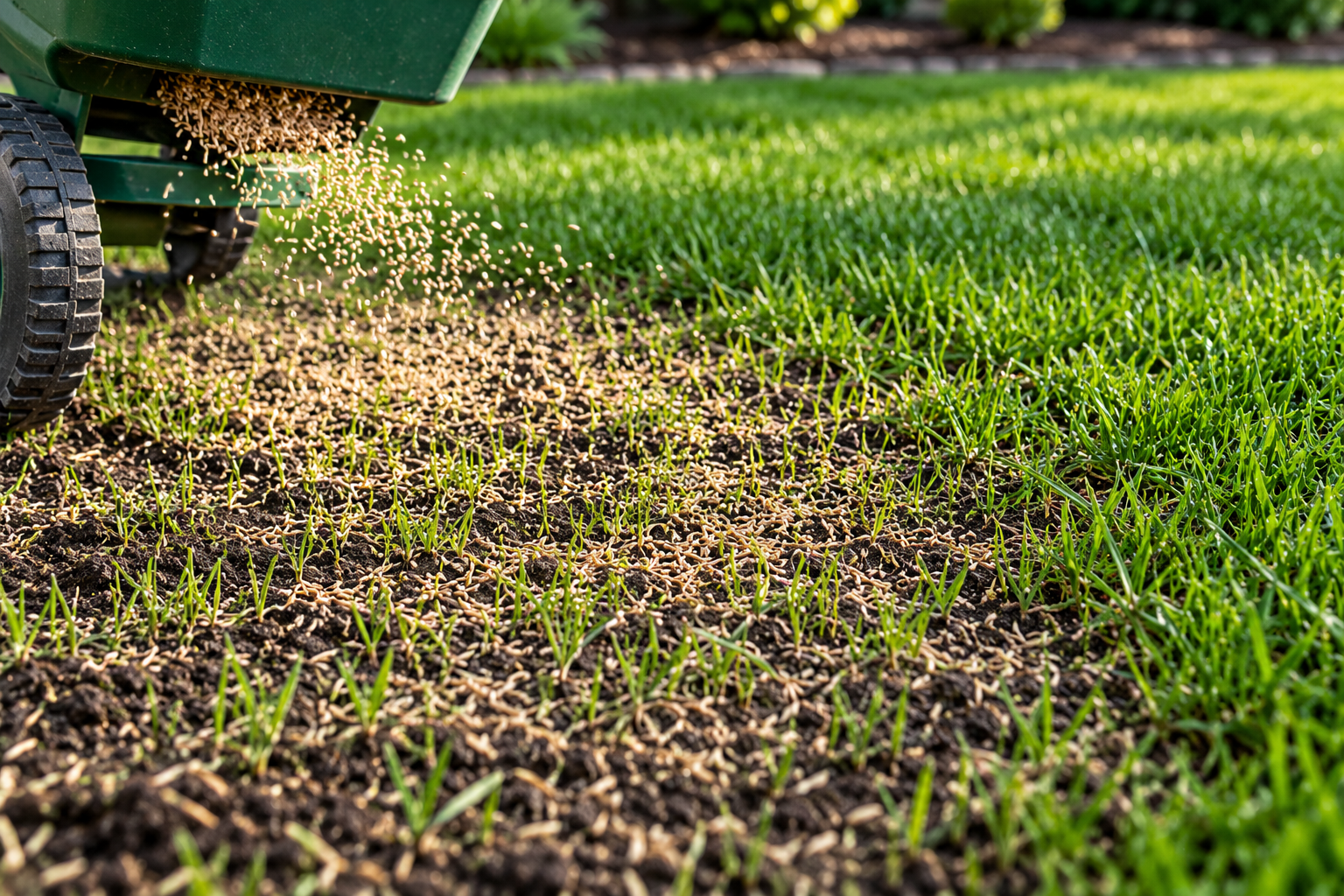
Overseeding spreads fresh seed over an existing lawn to thicken thin areas and fill small bare spots without starting from scratch. It works best once the cause of the thinning, like compaction or heavy wear, has been dealt with first.
Hydroseeding
Hydroseeding sprays grass seed onto the ground as a slurry mixed with mulch, fertilizer, and a binding agent. The mulch holds moisture against the seed and the binder keeps it in place, which helps seed germinate more evenly and stay put on slopes or uneven ground. It’s a strong choice for larger bare or patchy areas where sod would be expensive and plain broadcast seed might wash away or come in unevenly.
New Sod
Sod delivers an established lawn right away, with no waiting for seed to sprout and fill in. It’s often the best option for large damaged areas or any situation where you want a finished lawn quickly.
Correcting the Drainage Problem
If yellow patches show up in the same wet spot every time it rains, new grass won’t survive there until the water issue is solved. Depending on the yard, that may mean a French drain, a catch basin, or regrading so water moves off the lawn instead of sitting in it.
Choosing a Seed Blend That Fits Western Washington
Whenever you reseed, overseed, or hydroseed, using a blend chosen for our cool, wet climate makes a big difference in whether the lawn stays thick over the long run.
Many lawns need a combination, such as aerating compacted ground before hydroseeding it, or fixing a soggy low spot before laying sod there. That’s why looking at what’s actually happening in the yard beats guessing from how the patches look.
When to Get Your Lawn Looked At
An assessment is worth it if you notice:
Not sure what’s behind the patches in your lawn? Get a free on-site lawn assessment from our Whatcom County team — we’ll pinpoint the cause and recommend the right fix, whether that’s aeration, overseeding, hydroseeding, sod, or a drainage correction underneath it.
Fix Your Yard Today
A patchy lawn is often a symptom rather than the problem itself, pointing to compaction, drainage, or a grass type that doesn’t suit our climate. If you’re dealing with thin or yellowing grass on a property in Bellingham, Ferndale, Blaine, Lynden, or anywhere else in Whatcom County, contact us today for a free lawn consultation. We handle seeding, hydroseeding, sod installation, and drainage fixes throughout Whatcom County to help your lawn recover and stay that way.
Or Call Us at