Retaining Wall Cost in Whatcom County: What Drives the Price
10-6-2026 – Brownstone L&H LLC
Retaining Wall Cost in Whatcom County (2026 Guide)
Most block retaining walls in Whatcom County cost between $45 and $90 per square foot of wall face, installed. Taller walls that need a permit and engineering run higher, often $90 to $150 or more per square foot.
That is a wide range, and the reason is simple: most of what you pay for is not the block you see. It is the excavation, the gravel base, and the drainage behind the wall that keep it standing through our wet winters.
At Brownstone L&H we build retaining walls from Bellingham and Ferndale to Lynden and Blaine. This guide breaks down what actually drives the price so you can read a quote, compare bids fairly, and budget with confidence.
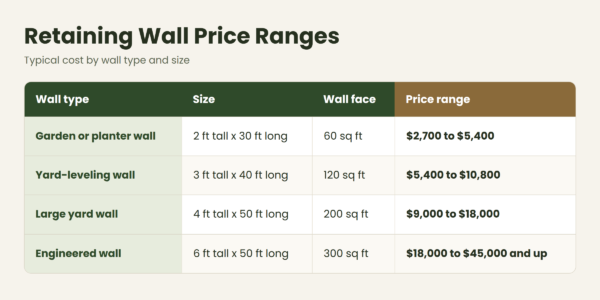
Typical retaining wall prices by size
Walls are priced by the square foot of wall face, which is length times height. A wall 40 feet long and 3 feet tall is 120 square feet.
These are ballpark ranges for segmental block walls with proper base and drainage, not fixed prices. Depending on your site, your wall could land inside the range, below it, or above it. The next section explains why.
What drives the price of a retaining wall
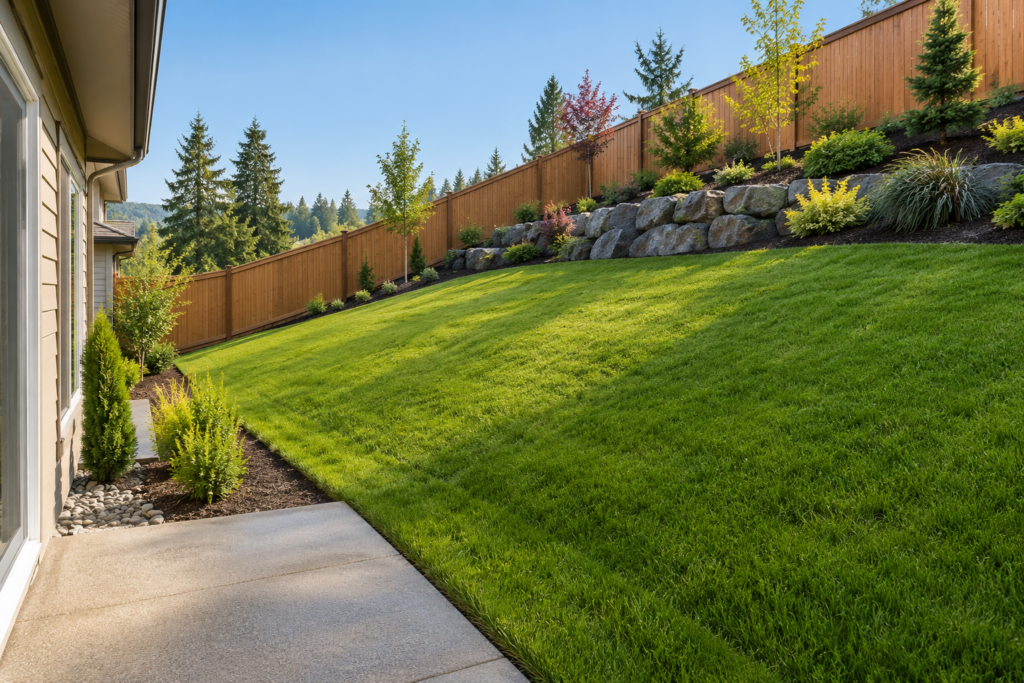
1. Height
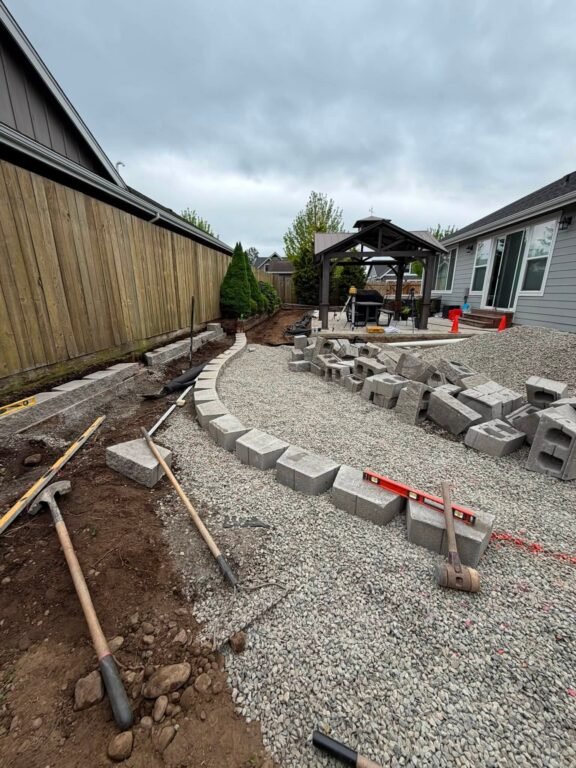
Height is the biggest single factor. A taller wall holds back far more weight, so it needs a deeper and wider base, more buried block, more gravel, and usually geogrid layers running back into the slope. A 6-foot wall costs much more than twice a 3-foot wall of the same length.
2. Base preparation
A wall is only as good as what it sits on. Base prep means digging a trench, removing soft or organic soil, and compacting crushed rock in layers until it is level and solid. The first course of block is buried below grade.
Soft, wet, or filled ground needs deeper excavation and more rock. This is the part of the job you never see afterward, and it is the part that decides whether the wall is straight in ten years.
3. Drainage system
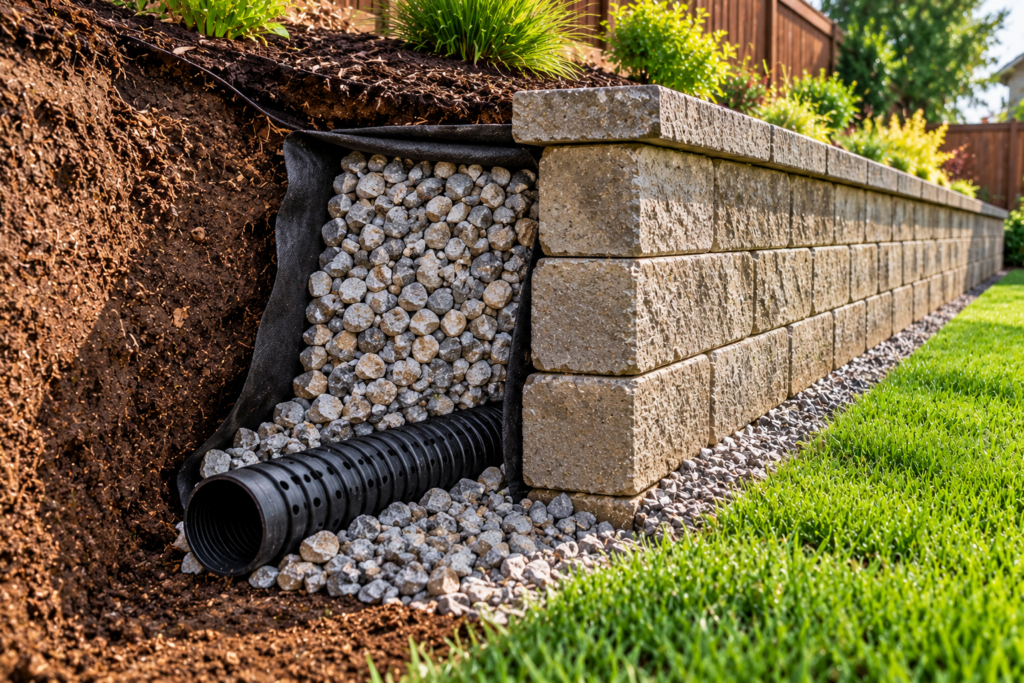
Water is what pushes walls over. Whatcom County gets steady rain for months, and saturated soil is much heavier than dry soil. The walls we build typically include:
– Clean drain rock behind the block
– Perforated drain pipe at the base, sloped to an outlet
– Filter fabric between the drain rock and the native soil
– A place for the water to go, such as daylight on a slope or a catch basin
Skipping drainage is the most common way a cheap bid gets cheap. It is also the most common reason walls fail.
4. Permits
Retaining walls over 4 feet require a building permit. Permit fees, plan review, and inspections add cost and can add weeks to the schedule, so it helps to know early whether your wall will need one. Your local building department makes that call for your property.
5. Plans and engineering
A wall that needs a permit generally needs stamped plans from a licensed engineer. Engineering typically adds $1,500 to $4,000 depending on the wall and the site. Steep lots and poor soils may also need a geotechnical report.
The engineer specifies base depth, geogrid length, and drainage. That adds material and labor, but it is also what makes a tall wall safe.
This is general information, not engineering or legal advice. Confirm permit and engineering requirements for your property with your local building department.
6. Block type and color
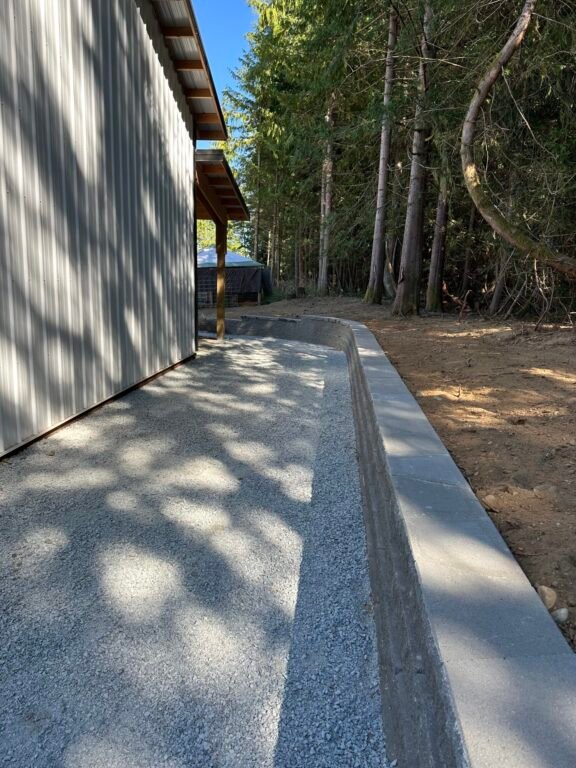
Block usually makes up a smaller share of the total than people expect, but the choice still moves the price:
– Standard segmental block in gray or tan is the most affordable.
– Tumbled, textured, or multi-size block costs more per square foot and takes longer to lay.
– Blended and premium colors cost more than standard colors and may have longer lead times.
– Large-format block needs equipment to set but builds tall walls quickly.
– Caps, corners, curves, and steps add material and cutting time.
7. Site access
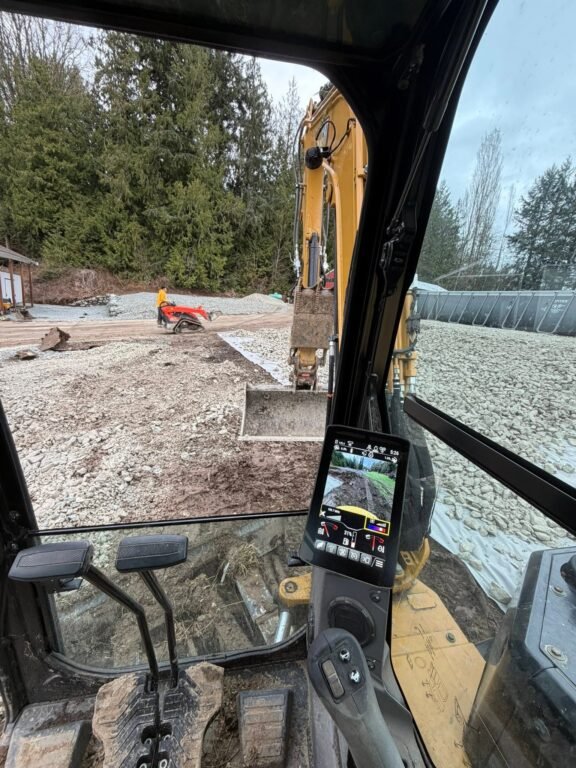
If an excavator and a loader can reach the wall, the work goes fast. A backyard with a narrow gate, a steep slope, or no room to stage material means smaller machines and more hand labor, and labor is the largest line on any wall quote.

8. Removal and hauling
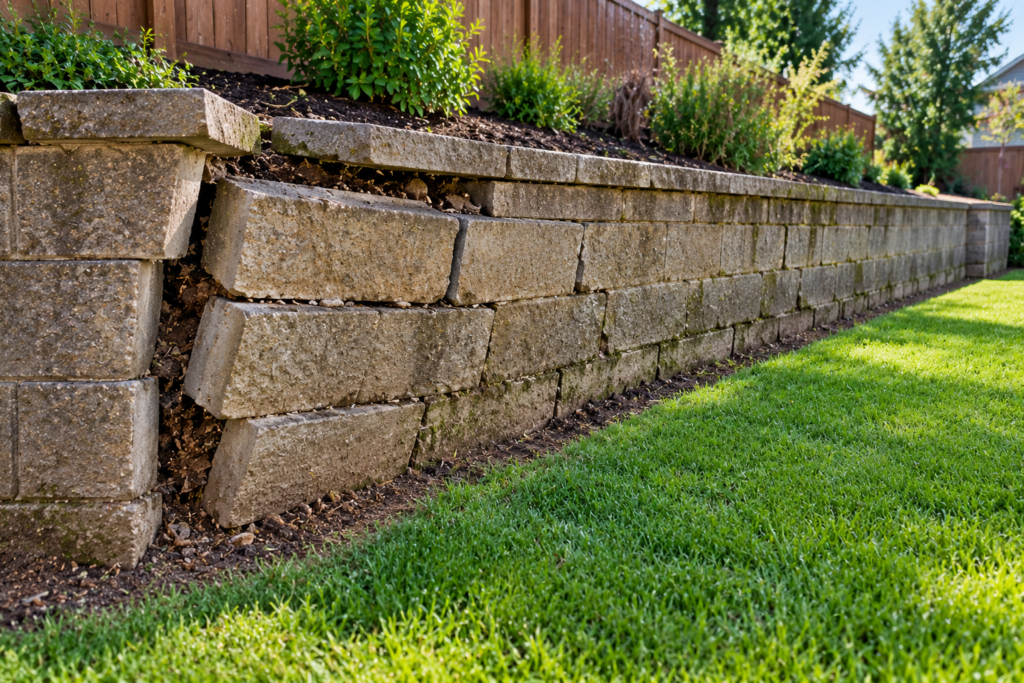
Tearing out a failed timber or block wall, hauling away excess soil, and bringing in backfill all add to the price. Dump fees and trucking depend on how much comes out and how far it goes.
Where to save money, and where not to
Good places to save
Choose a standard block and color. It performs the same as premium block.
Keep the layout simple. Straight runs cost less than curves, corners, and steps.
Consider two shorter walls instead of one tall one. Terracing can sometimes lower the cost. Whether it works on your lot is a question for an engineer or the building department.
Clear the way. Removing a fence panel or moving items so equipment can get in saves labor hours.
Schedule ahead. Dry-season slots fill early. Booking in winter or early spring gives you more choice on timing.
Places never to cut
– Base depth and compaction
– Drain rock, drain pipe, and filter fabric
– Geogrid and engineering on tall or loaded walls
– Permits when they are required
When you compare bids, ask each contractor how deep the base is, what drainage is included, and where the water goes. If one bid is far below the others, the difference is usually in those answers. Rebuilding a failed wall costs more than building it right the first time, because the old one has to come out first.
How Brownstone L&H quotes a retaining wall
An accurate price takes a site visit, because the ground decides most of the cost. Here is what to expect from us:
– Site visit. We measure the wall, check the slope, soil, and access, and look at where water goes now.
– Permit check. We tell you up front whether your wall is likely to need a permit or engineering.
– Written quote. You get an itemized scope covering excavation, base, drainage, block, and cleanup, so you know what is included.
– Block selection. We show you block styles and colors at different price points.
– Build. Most residential walls under 4 feet take a few days to two weeks once we start.
Ready for a real number on your wall? Brownstone L&H builds retaining walls across Whatcom County, including Bellingham, Ferndale, Lynden, Blaine, Birch Bay, and Everson, as well as Skagit and Snohomish County. Contact us at [360-333-7738] or brownstonelh@gmail.com to schedule a site visit and estimate.
Common questions about retaining wall cost
How much does a retaining wall cost per square foot in Whatcom County?
Most block walls under 4 feet run $45 to $90 per square foot of wall face, installed. Engineered walls over 4 feet typically run $90 to $150 or more.
How much does a 4-foot retaining wall cost?
A 4-foot wall 50 feet long is 200 square feet, which usually falls between $9,000 and $18,000 depending on soil, drainage, access, and block.
What is the cheapest type of retaining wall?
A short, straight wall in standard segmental block is the most affordable option that lasts. Timber costs less up front but rots in our wet climate and usually needs replacing within 10 to 20 years.
Do I need an engineer for my retaining wall?
Walls over 4 feet require a permit, and permitted walls generally need plans from a licensed engineer. Your building department and the engineer decide what your wall needs.
Why are retaining wall quotes so different from each other?
Bids usually differ in base depth, drainage, and whether permits and engineering are included. Ask each contractor to spell out those items so you are comparing the same wall.
What time of year is best to build a retaining wall?
Late spring through early fall is easiest because the ground is drier. Walls can be built in winter, but wet soil slows excavation and compaction.
Phone
360-333-7738
Brownstonelh@gmail.com
License number
#BROWNL*753BW