
Retaining Wall Leaning or Cracking? What Skagit County Homeowners Should Do Before Winter Rain
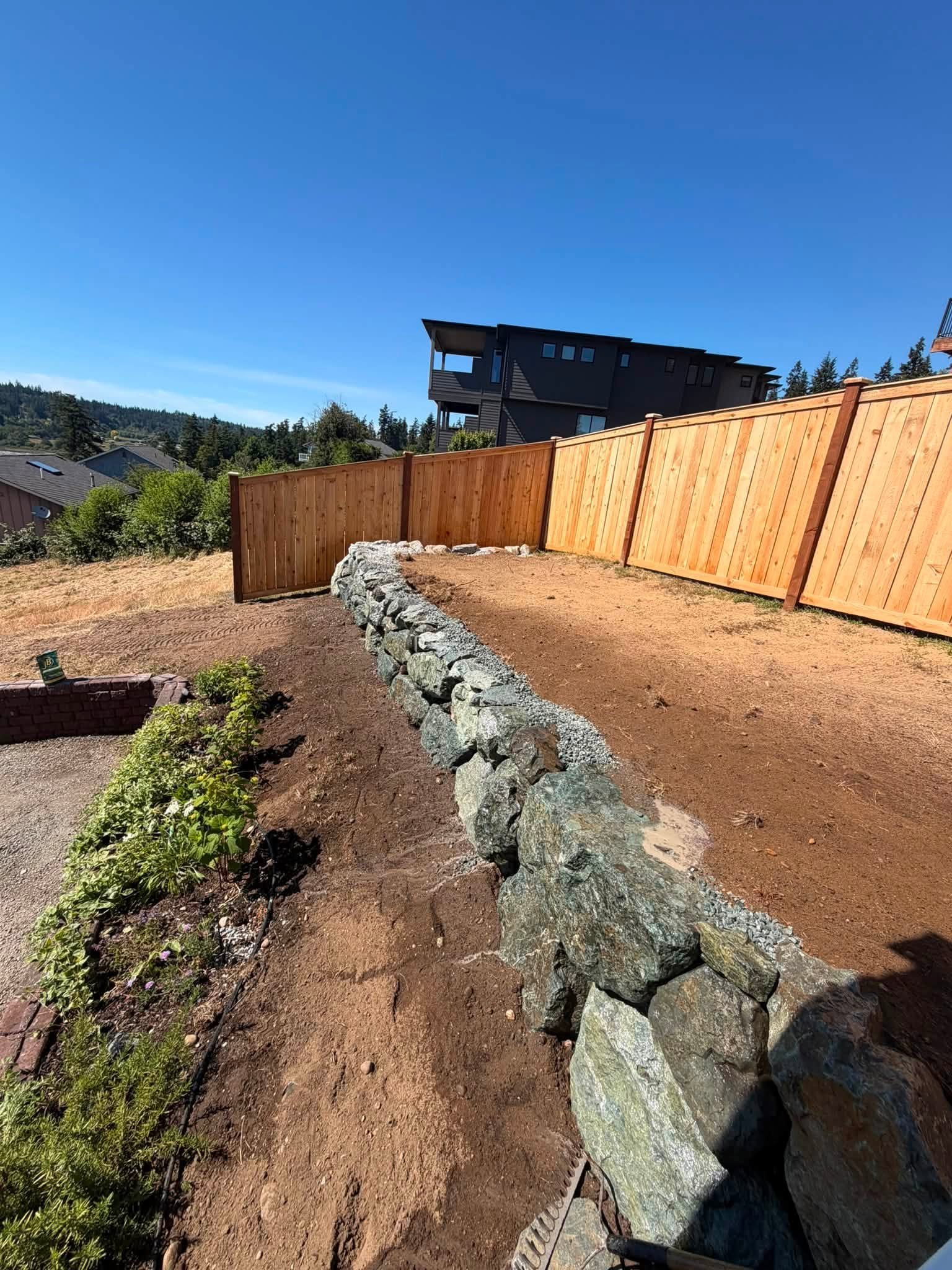
If you’ve noticed your retaining wall tilting, cracking, or pushing outward, the timing matters. Skagit Valley’s rainy season is only weeks away, and a wall that’s already under strain in October can fail by January. Here’s what to look for, why it happens here, and what to do now.
Quick Answer: A retaining wall that is leaning, bulging, cracking, or shifting is usually being pushed by water-saturated soil behind it. In Skagit County, where clay-heavy soil holds water and fall rain is about to ramp up, that pressure only grows through winter. Redirect water away from the wall now, document the damage, and have the wall looked at before the wettest months arrive.
Fixes typically involve rebuilding with proper gravel backfill and a drain pipe, along with correcting the drainage that caused the problem. Get a free retaining wall assessment →
Why Retaining Walls Fail in Skagit County
Water Pressure Behind the Wall
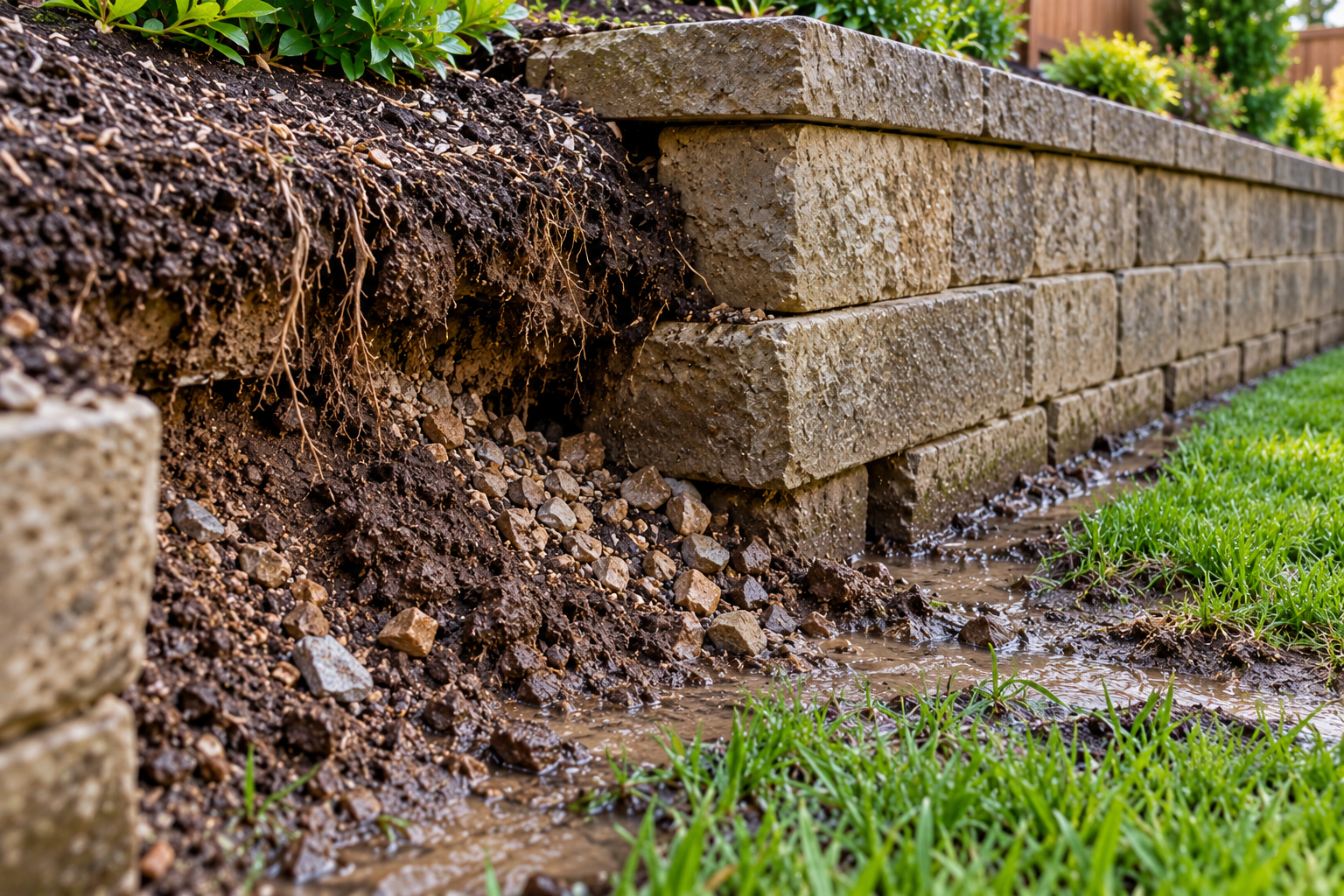
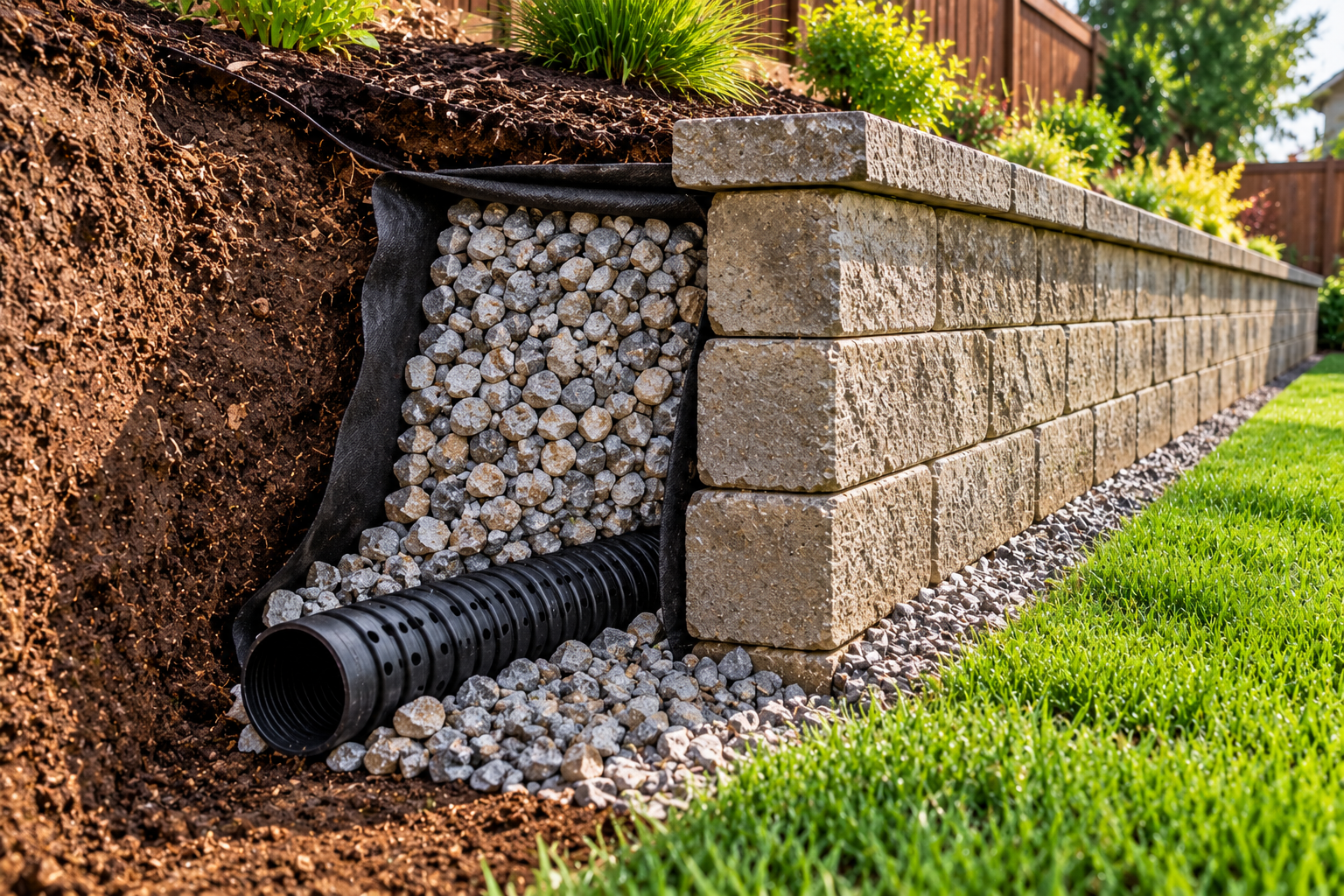
This is the most common cause by far. When water collects behind a wall and has nowhere to go, it adds enormous pressure against it. Walls built without gravel backfill and a drain pipe behind them are especially vulnerable.
Clay-Heavy, Saturated Soil
Much of the Skagit Valley sits on dense soil that drains slowly. After weeks of rain, that soil gets heavy and pushes harder against anything holding it back.
Poor Base or Missing Drainage Layers
A wall needs a compacted gravel base and drainage material behind it. Walls built over soft soil, or without proper backfill, can settle and shift over time.
Runoff Aimed at The Wall
Downspouts, driveways, or sloped lawns that send water toward the top of a wall add to the load on it.
Tree Roots & Added Weight
Roots can push on a wall, and new soil, planters, or structures placed above it add weight the wall wasn’t designed for.
Warning Signs a Retaining Wall Is Failing
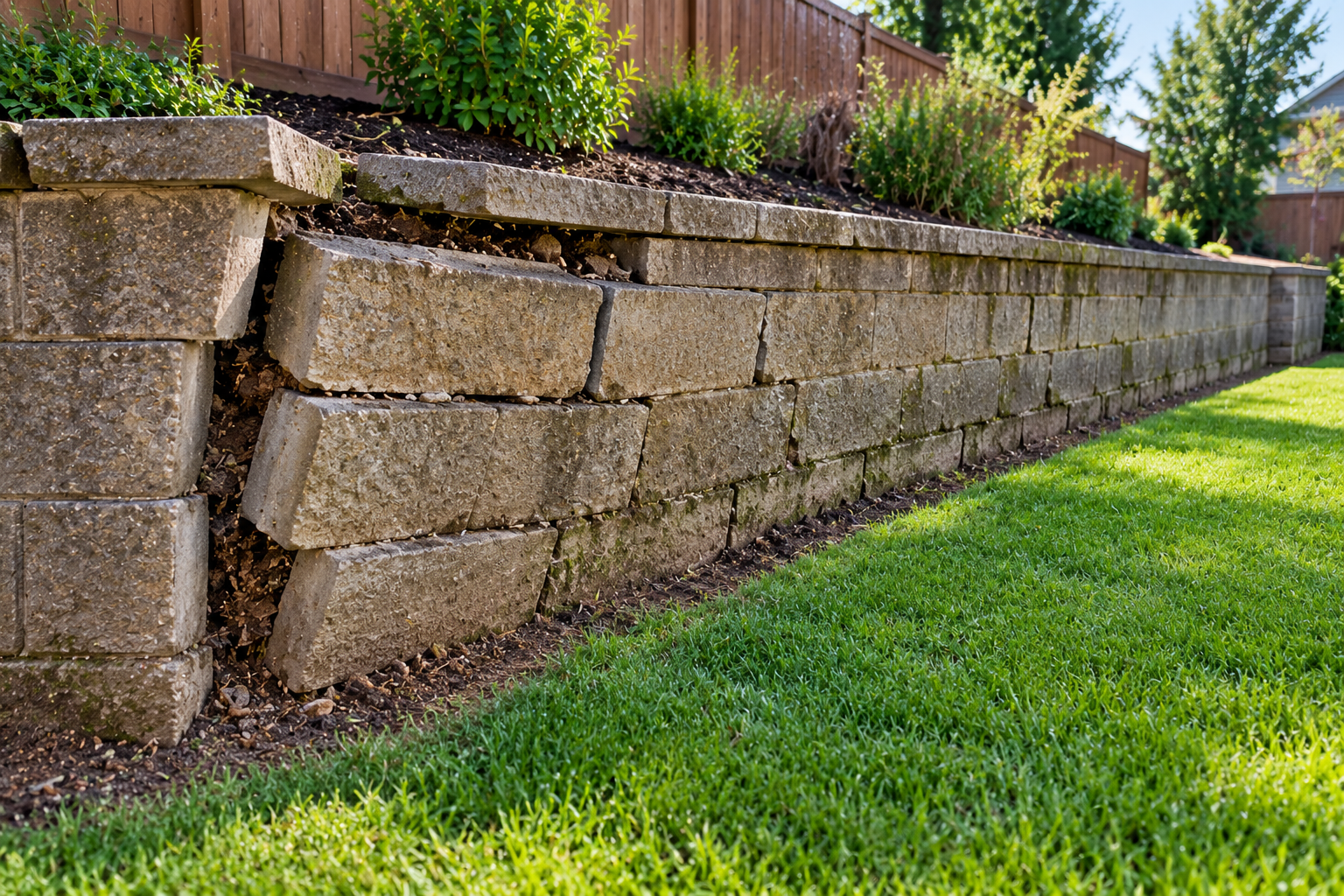
Leaning or tilting away from the slope it holds back
Bulging in the middle of the wall face
Cracks in the blocks or mortar, especially horizontal or stair-step cracks
Gaps opening between blocks, or blocks sliding out of line
Soil washing out from the base or behind the wall
Water staining or seeping through the wall face after rain
Sinking ground or soggy patches at the top or bottom of the wall
One small hairline crack isn’t always an emergency. Movement that is getting worse, or any lean you can see with the naked eye, deserves a closer look.
What to Do Before Winter Rain
1. Redirect water away from the wall. Route downspouts and runoff well away from the top of the wall.
2. Don’t add weight. Avoid piling soil, stone, firewood, or heavy planters at the top.
3. Clear drainage outlets. If your wall has weep holes or a drain outlet at the base, keep them free of mud and debris.
4. Document the damage. Take dated photos and measure any gaps or lean so you can tell whether it’s moving.
5. Keep people and play areas away from any wall that looks like it is shifting.
6. Get it assessed soon. Walls are far easier to repair before saturated winter soil makes the job harder.
How a Failing Retaining Wall Gets Fixed
The fix depends on how much damage there is and what caused it.
Rebuilding With Proper Drainage
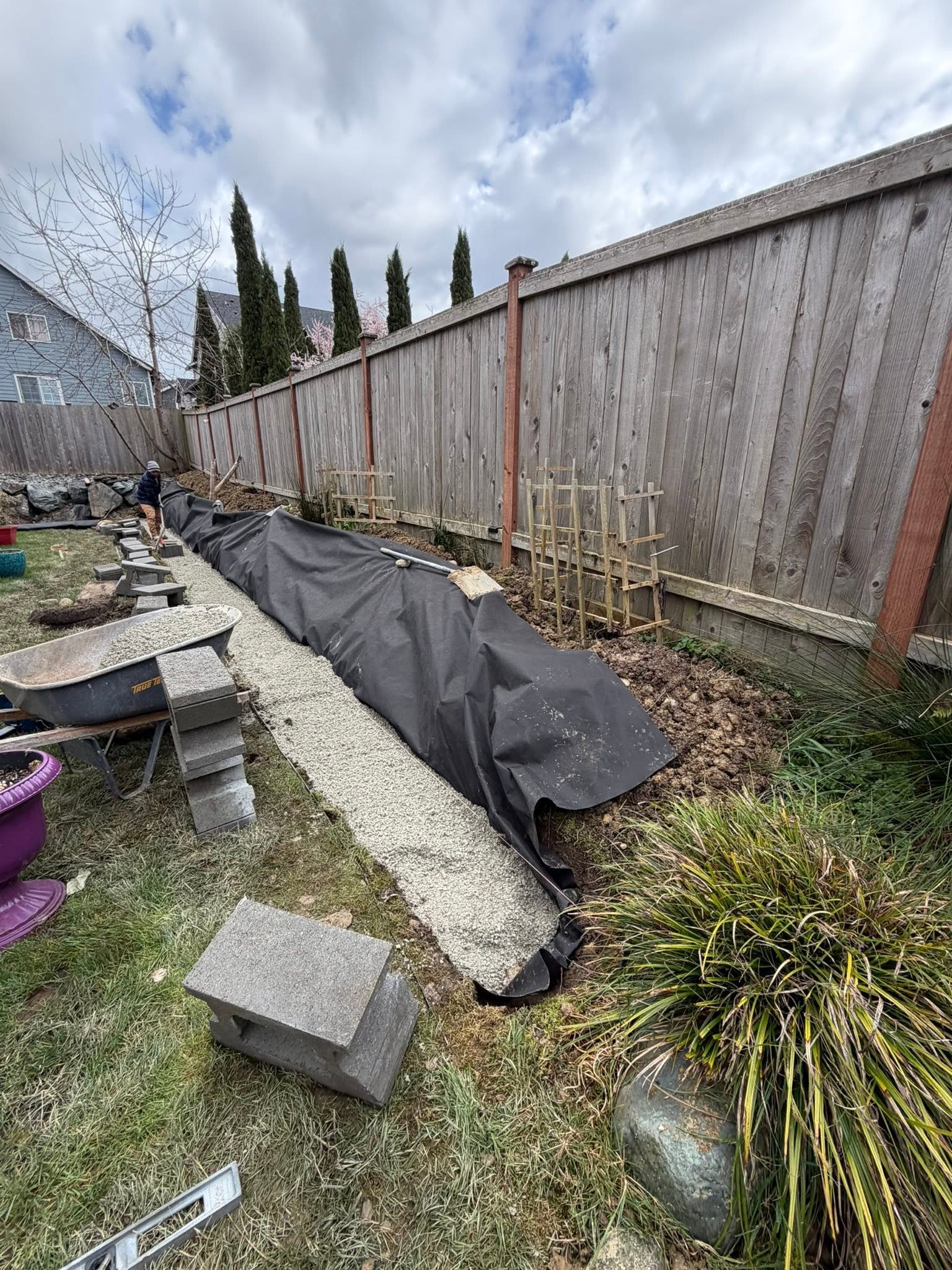
A wall built to last is typically made of interlocking concrete blocks or boulders, set on a compacted gravel base, with gravel backfill behind it and a perforated drain pipe running along the base. The gravel lets water move down to the pipe instead of building pressure behind the wall.
Adding A French Drain Above The Wall
A trench with gravel and perforated pipe can intercept water before it reaches the wall.
Regrading
Reshaping the ground above the wall so water flows away from it instead of toward it.
Replacing With A Rock Wall
Stacked natural stone or boulders built with the same gravel backfill and drainage approach can be a durable, natural-looking option.
Fixing only the visible damage without fixing the water problem rarely lasts, which is why finding the cause matters as much as the repair.
Note: taller retaining walls often require a permit or engineered design, and the rules vary by jurisdiction. Check requirements with Skagit County or your city before building or rebuilding.
When to Call a Professional
Get a wall looked at promptly if you see:
Visible lean or bulging that is getting worse
Cracks that are widening
Water pooling or seeping at the base after rain
A wall holding back a slope near your house, driveway, or a structure
Not sure how serious your retaining wall problem is? Get a free on-site assessment from our Skagit County team. We’ll look at the wall, find out what’s causing the movement, and recommend the right fix before winter.
Fix Your Wall Today!
Retaining wall problems rarely fix themselves, and Skagit Valley winters are long and wet. If you’re dealing with a leaning or cracking wall in Mount Vernon, Burlington, Oak Harbor, Sedro-Woolley, or anywhere else in Skagit County, contact us today for a free consultation. We build and rebuild retaining and rock walls with proper drainage, install French drains, and regrade yards throughout the Skagit Valley.
Or text/Call Us at