
8 Front Yard Landscaping Ideas for Northwest Homes That Handles Rain
Your front yard is the first thing anyone sees, and in Northwest Washington it has a tougher job than in drier places. It has to look good in sunshine and in months of rain, and it has to cope with mud, standing water, moss, and slopes without taking all your weekends.
These ten ideas work for homes across Skagit, Whatcom, and Snohomish County and on Camano Island, from in-town lots in Mount Vernon and Bellingham to larger properties around Stanwood, Marysville, and Arlington. Each one comes with a note on why it suits our climate.
Quick Answer: The best front yard landscaping ideas for Northwest homes combine curb appeal with durability in our wet climate. Strong options include a paver walkway or entry, defined mulch or river rock beds, a low block or rock wall, a fence or gate that suits the house, a smaller and healthier lawn, hidden drainage, and irrigation for beds and lawn.
Start with drainage and the layout, then add materials that hold up to rain without constant upkeep. Get a free landscape consultation →
Start Here: Two Things That Come Before Any Design
Fix drainage first. If water pools in the front yard or runs toward the house, even a beautiful design will suffer. Building the drainage in at the start costs far less than redoing the work later. See our guide on why water pools in your yard.
Think in layers. The best front yards have a clear path to the door, defined edges, a few focal points, and plenty of room for the house itself to stand out. Pick a few strong ideas instead of using all eight.
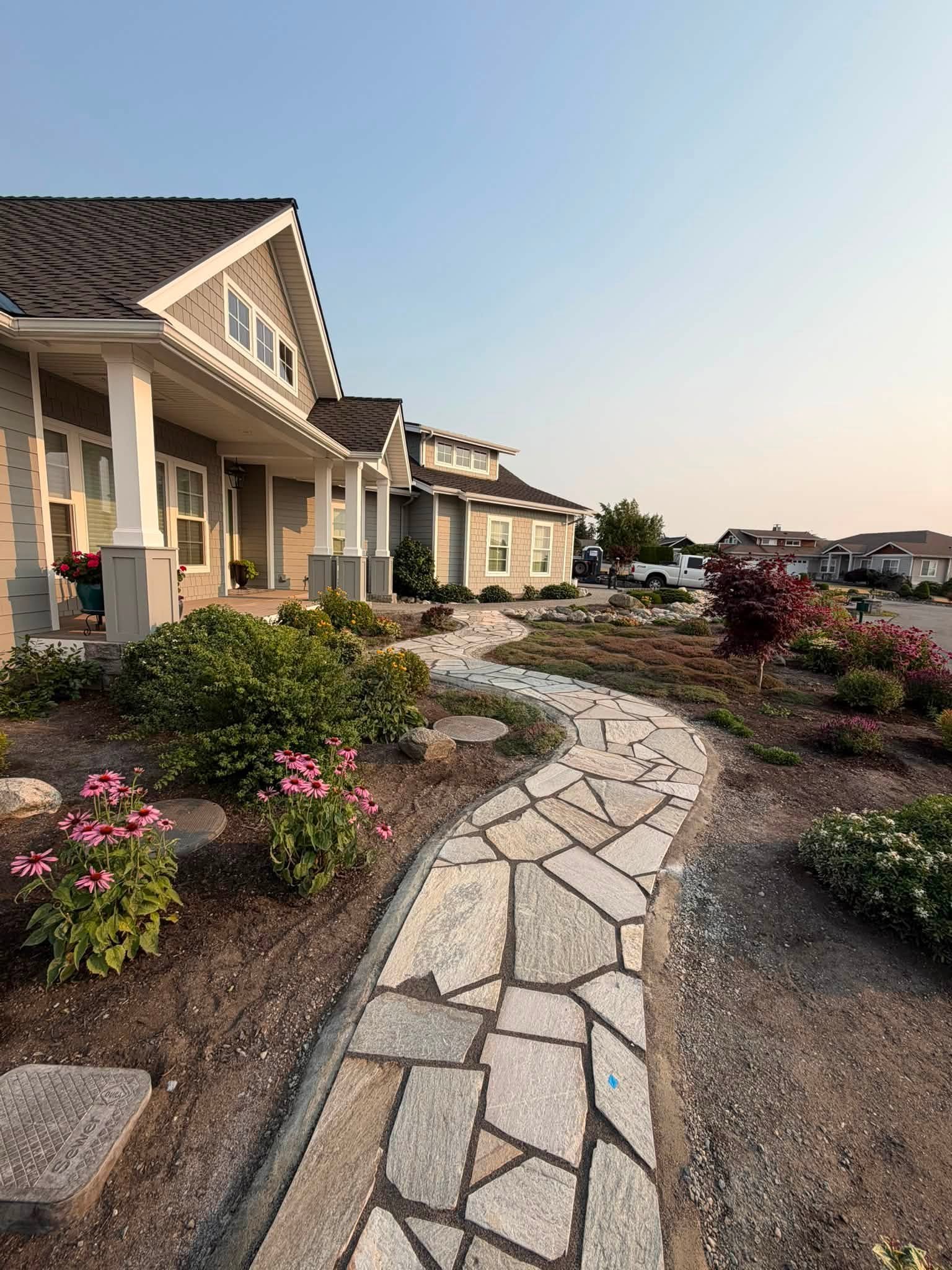
1. A Paver Walkway or Entry
A paver walkway gives your front yard a clear, welcoming route to the door and adds texture that grass can’t. It also solves a common problem: grass that wears thin along the path people actually walk.
Why it works here: Pavers drain between the joints, hold up in rain, and don’t turn to mud. Built on a properly compacted base with good drainage, they last for years. Choose patterns and colors that suit your home, such as a classic running bond, a herringbone, or a curved path that softens straight lines.
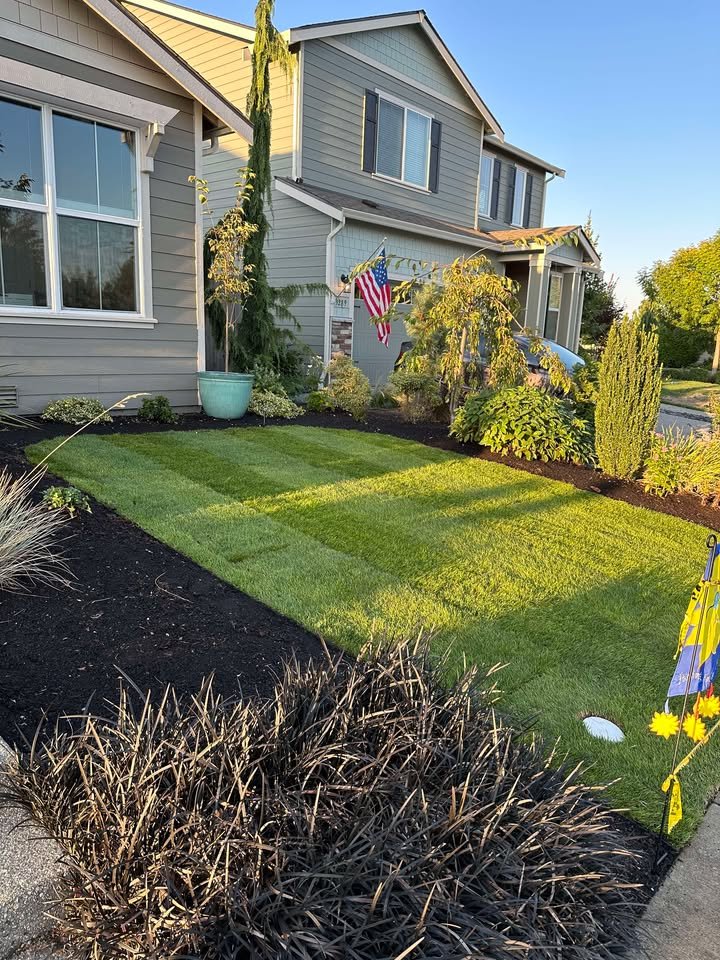
2. Defined Beds With Clean Edging
Clearly shaped planting beds give the yard structure. A crisp edge between lawn and bed makes the whole yard look maintained, even when the plantings are simple.
Why it works here: Weeds and grass spread fast in our mild, wet climate, and edging keeps them from creeping into beds. A deep edge also keeps mulch or rock from washing onto the lawn or walkway.
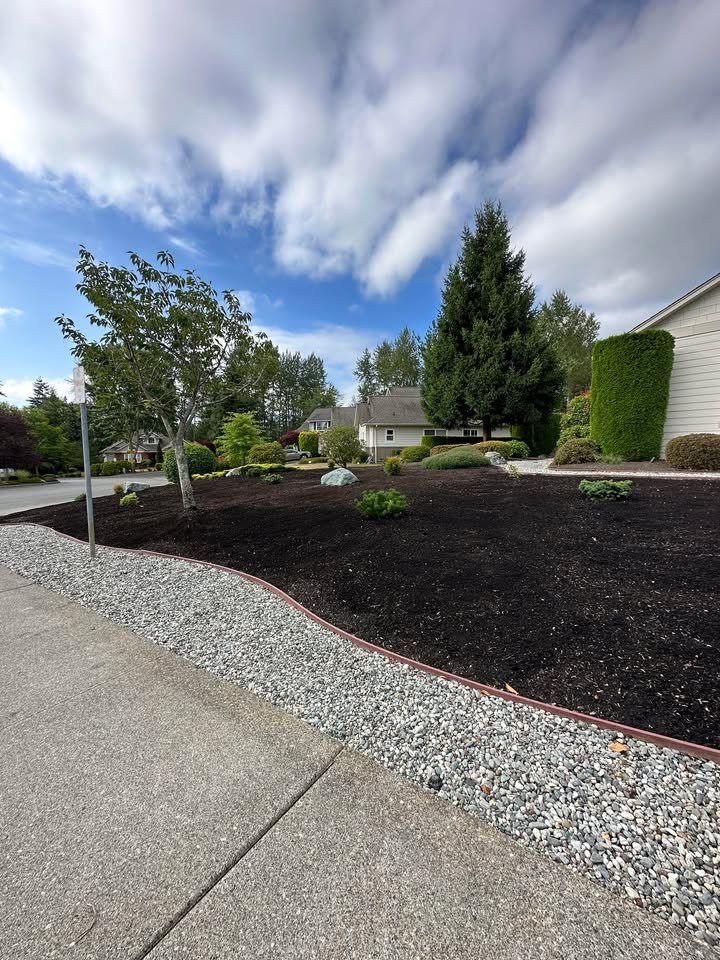
3. Fresh Mulch for a Finished Look
A layer of bark, cedar, or compost mulch makes beds look finished right away, and it helps suppress weeds and hold moisture. Dark, even mulch also makes plants and the house stand out.
Why it works here: Mulch is one of the most affordable ways to refresh a front yard. See our guide to the best mulch for Skagit and Whatcom County for help choosing a type, and keep mulch back a few inches from the foundation and siding.
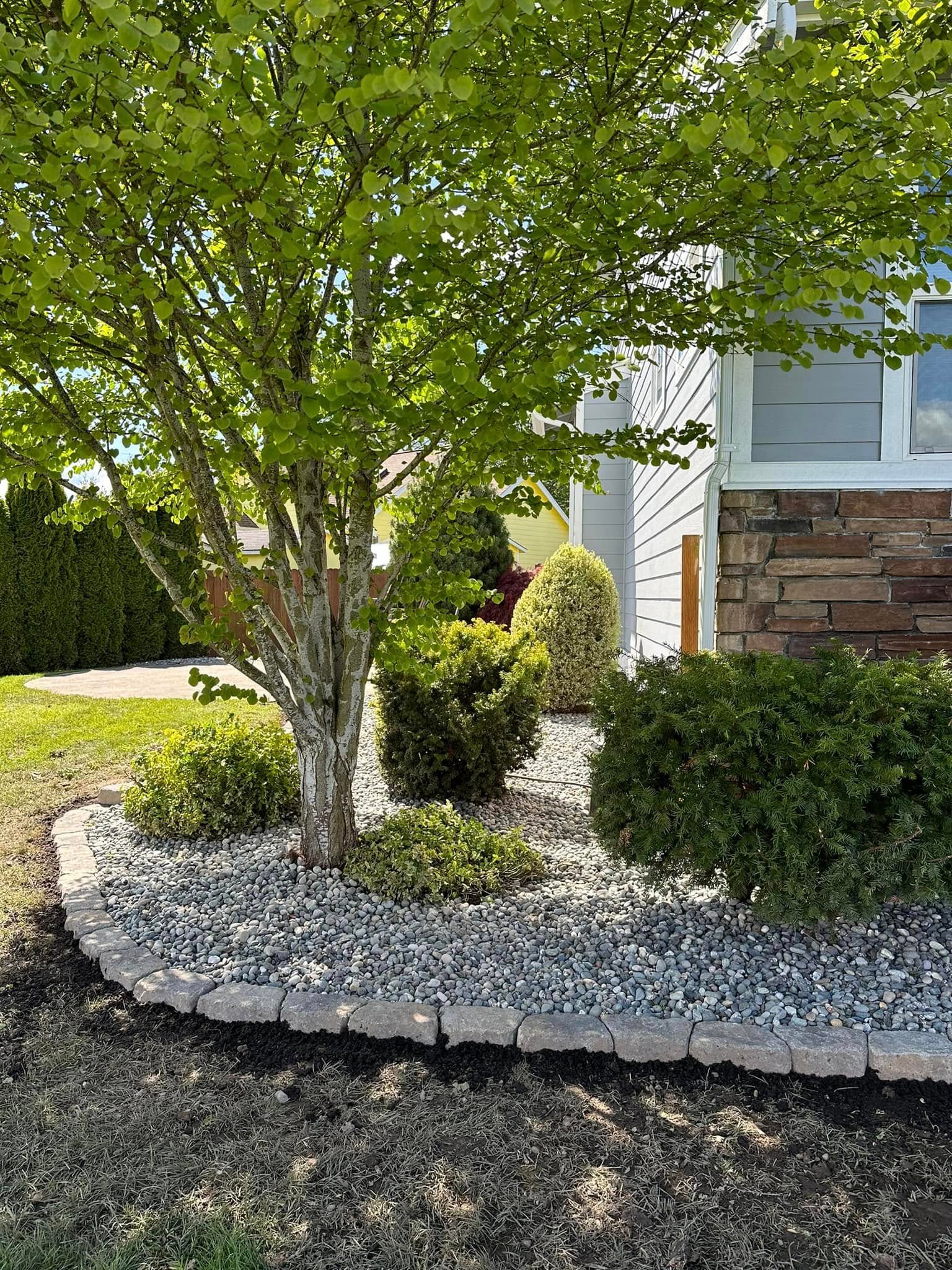
4. River Rock Beds and Borders
River rock adds a clean, lasting look, and it never needs refreshing the way organic mulch does. It works well along the foundation, under a downspout, around a feature, or as a border between lawn and bed.
Why it works here: River rock doesn’t wash away or break down in constant rain, and it handles wet spots better than lightweight mulch. A stable base underneath keeps stones from sinking into soft soil.
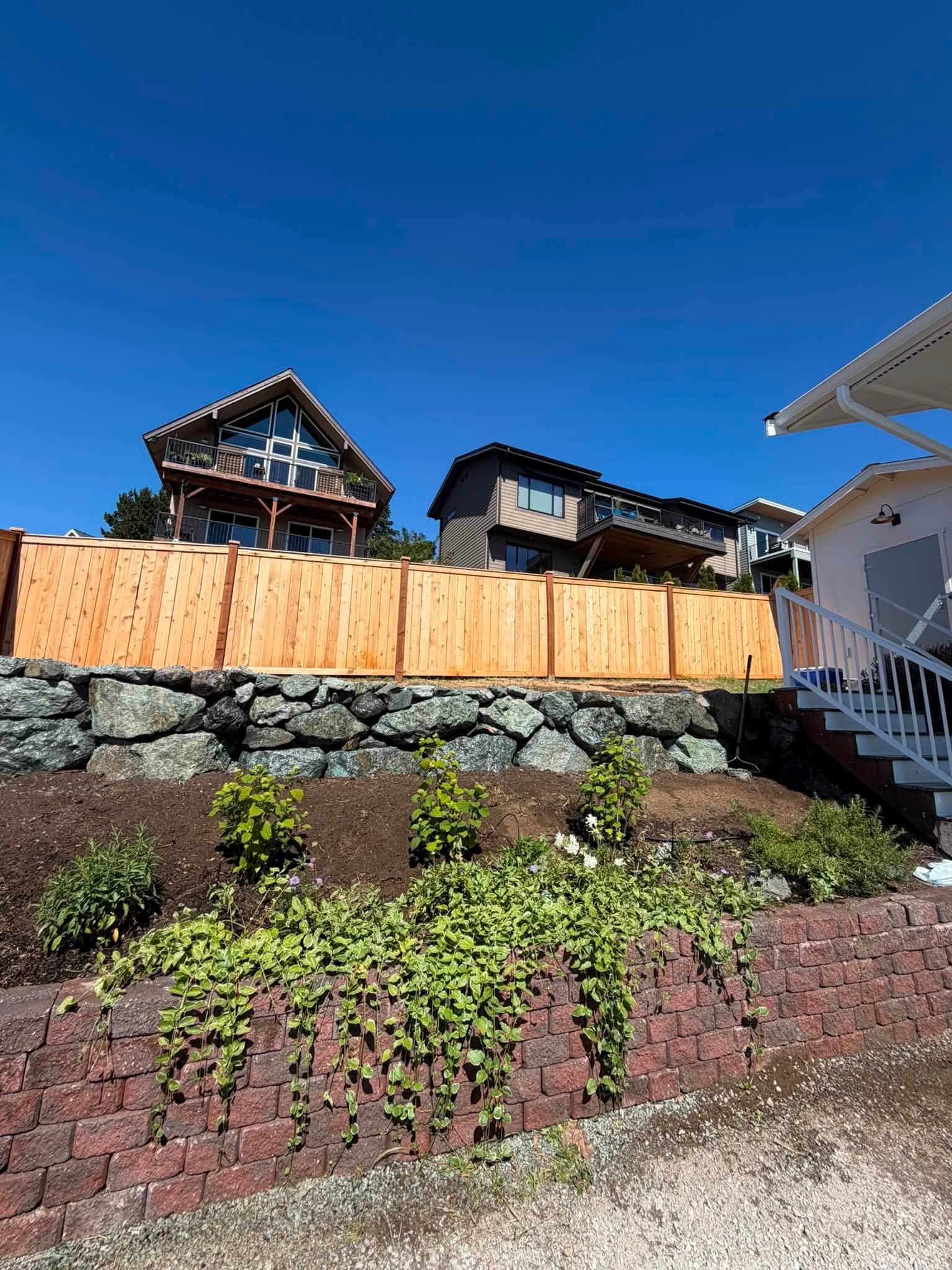
5. A Low Block or Rock Wall
A low wall adds height and shape to a flat front yard, holds a gentle slope, or creates a raised bed. Stacked stone or boulders give a natural look. Interlocking block gives a cleaner, more formal one.
Why it works here: On a sloped front yard, a wall turns hard-to-mow ground into level, usable space. Built with gravel backfill and a drain pipe behind it, a wall also manages water instead of fighting it. See our guide on leaning and cracking retaining walls for what a well-built wall avoids.
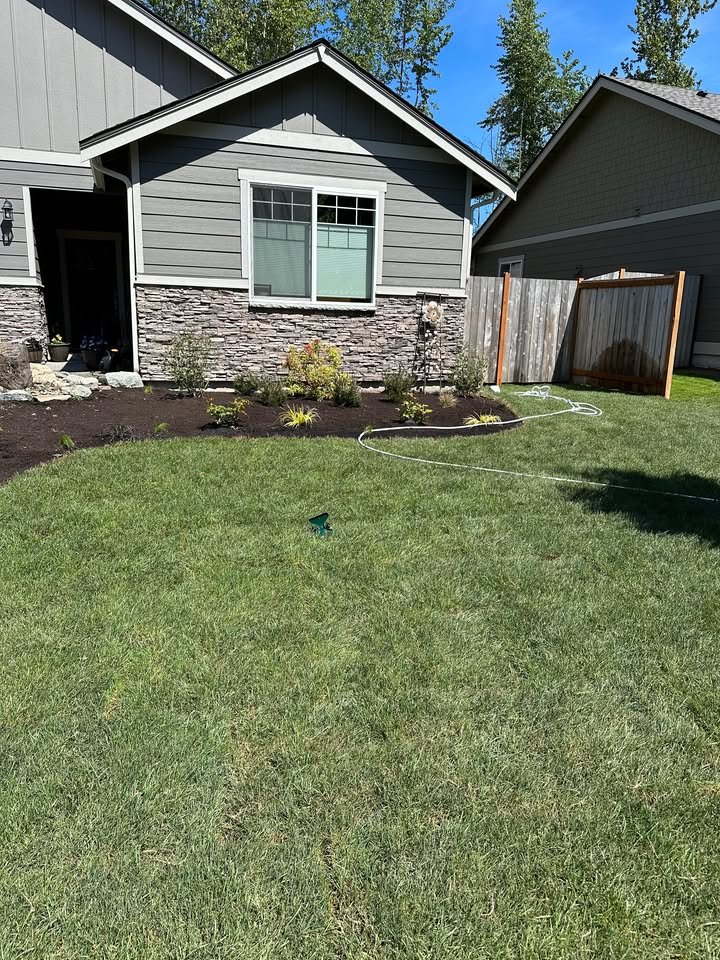
6. A Smaller, Healthier Lawn
A lush green lawn is still a front yard classic. The trick in our climate is to keep it to a size you can maintain and start it right, with good drainage and a grass blend that suits Western Washington.
Why it works here: Starting fresh with sod or hydroseeding gives you an even, healthy lawn that holds up better than a patchy old one. Not sure which fits? See our comparison of hydroseeding, sod, and seed. And if your existing lawn is thin, see our guide on why lawns turn yellow or patchy.
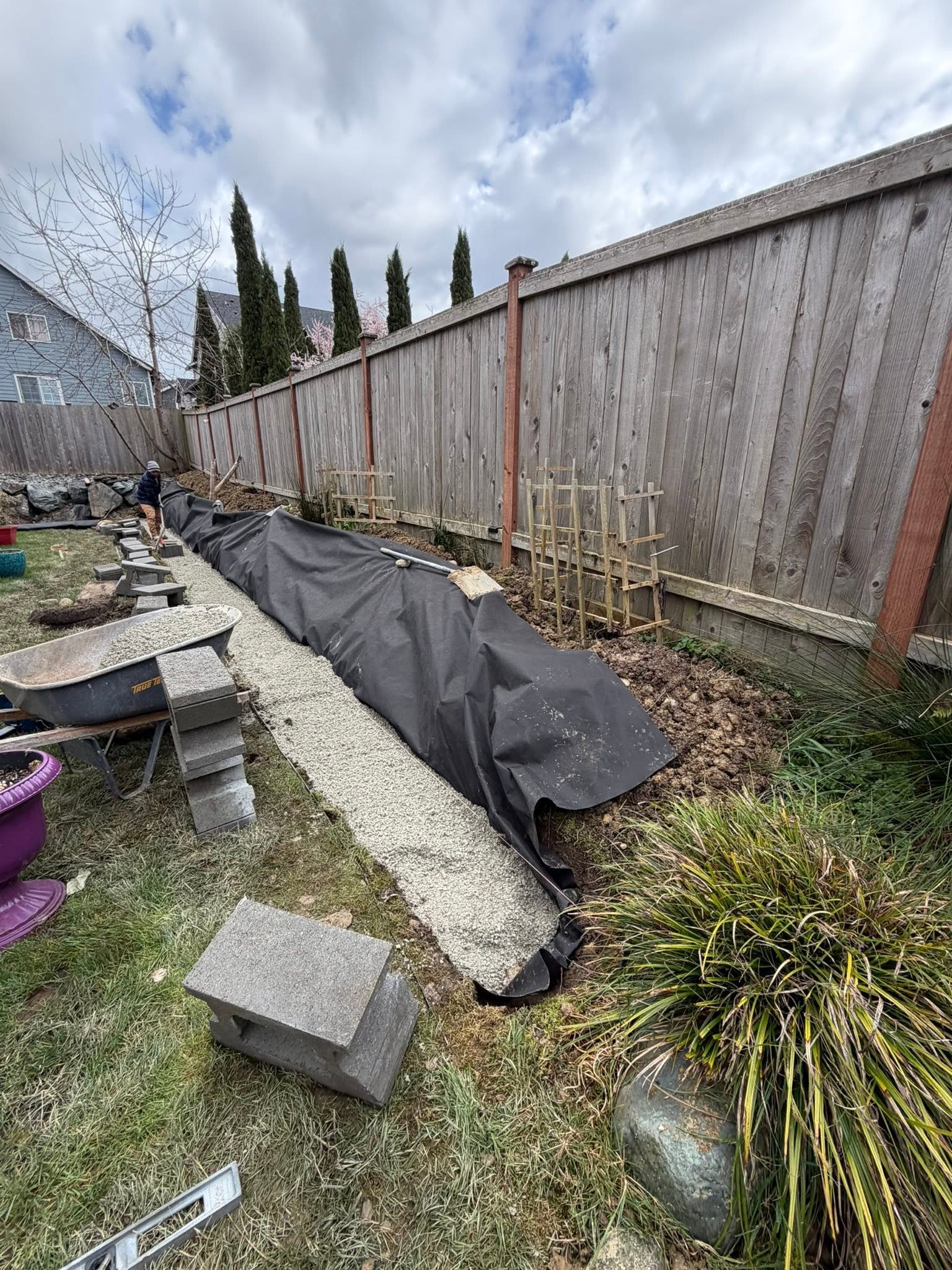
7. Drainage Built Into the Design
The best drainage is the kind you don’t notice. A catch basin tucked into a rock bed, a French drain under a walkway edge, or a gentle regrade can keep water off the lawn and away from the house without changing how the yard looks.
Why it works here: Our steady rain means water has to go somewhere. Planning for it in the design, instead of fixing it later, protects your lawn, pavers, and foundation. See our guide on French drains vs. catch basins.
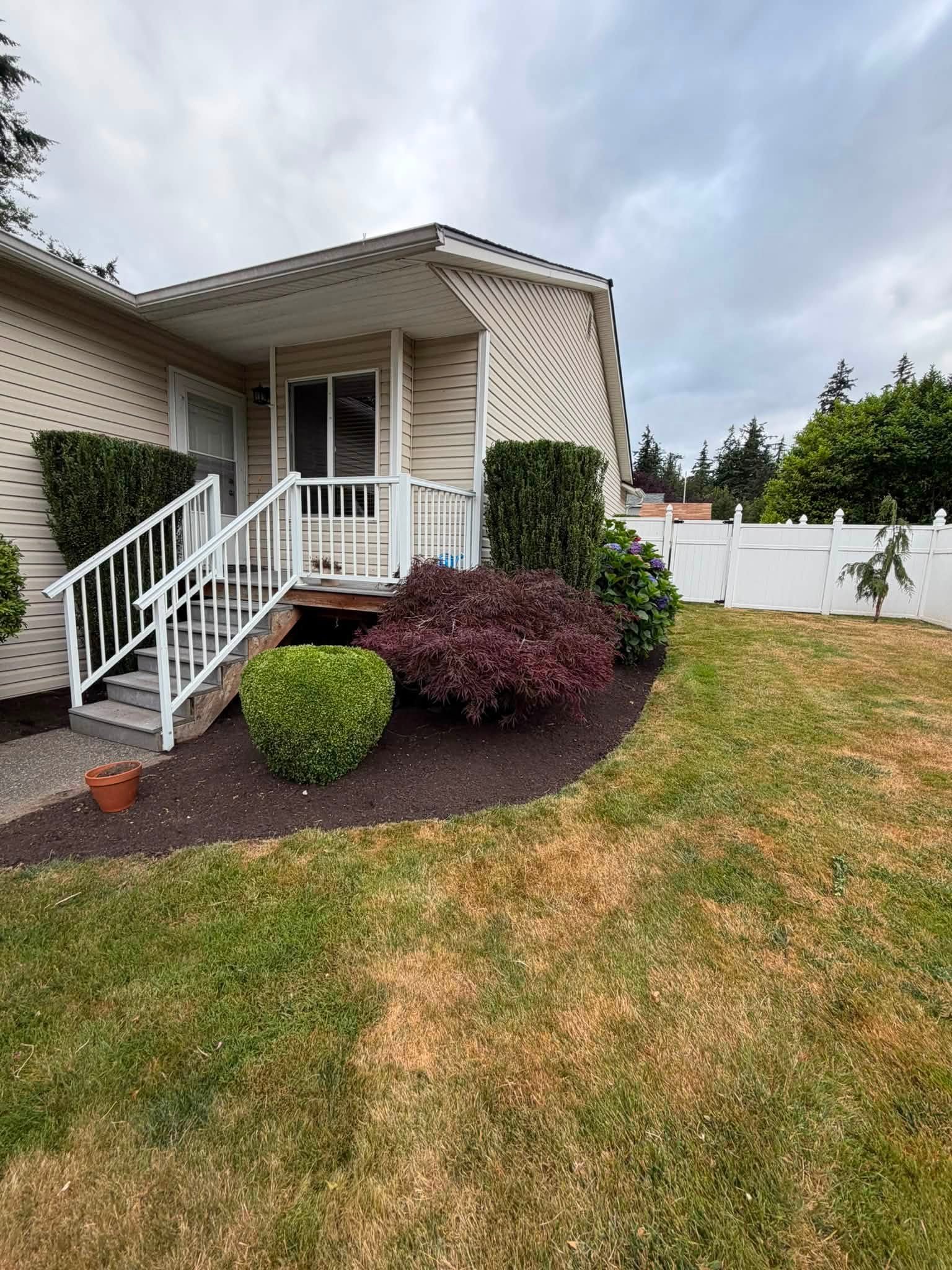
8. Low-Maintenance Layers and Focal Points
Finish the yard with a few deliberate touches: a focal point near the entry, matching materials that repeat across the yard, and simple, durable surfaces that don’t ask much of you. Repeating one or two materials, like the same paver color or the same stone, ties everything together.
Why it works here: A front yard that looks good with little upkeep is a front yard you’ll actually enjoy. See our guide to low-maintenance landscaping for ways to cut the work.
H2
How to Plan Your Front Yard
1. Walk the yard in the rain to see where water goes.
2. Decide how you want it to feel, such as formal, natural, or low-key.
3. Plan the path and entry first, then beds, then the lawn.
4. Pick durable materials that handle rain.
5. Phase the work so each step builds on the last.
6. Get a design, so the pieces fit together before anything is built.
Frequently Asked Questions
What are the best front yard landscaping ideas for the Pacific Northwest?
Ideas that handle rain well, like paver walkways, defined mulch or river rock beds, low walls, open fencing, a healthy lawn, and built-in drainage.
How can I improve curb appeal on a budget?
Fresh mulch, clean edging, a rock border, and repairing the lawn are the most affordable improvements.
What is the lowest-maintenance front yard?
One with pavers, river rock, defined mulched beds, a smaller lawn, and drainage that works.
What’s the best time to landscape a front yard in Western Washington?
Fall and spring are good for lawns and planting. Hardscape can often be built in more seasons, and planning in winter lets you book for spring.
Do I need a permit for a front yard wall or fence?
It can depend on height and location. Check with your city or county before you build.
Ready to Upgrade Your Front Yard?
Get a free landscape consultation and we’ll look at your yard, talk through your goals and budget, and recommend a design that looks good and handles our rain.
Whether you’re in Mount Vernon, Oak Harbor, Bellingham, Ferndale, Marysville, Lake Stevens, or on Camano Island, contact us today. We design and build paver walkways and patios, retaining and rock walls, fencing, hydroseeded and sod lawns, mulch and river rock beds, irrigation, and drainage solutions throughout Skagit, Whatcom, and Snohomish County and on Camano Island.