Flagstone Patios & Walkways: Cost, Pros & Cons, and What to Expect
Flagstone Patios & Walkways
Flagstone is one of the most requested materials we get asked about — it has a natural, upscale look that pavers and poured concrete can’t quite match. But it also behaves differently during installation and over time, especially in a climate like ours. Here’s what to know before choosing it for your patio, walkway, or entryway.
What Makes Flagstone Different
Flagstone is natural stone (commonly sandstone, quartzite, or limestone). Its usually cut or naturally split into irregular flat pieces, rather than the uniform manufactured shapes you get with concrete pavers. That irregularity is part of the appeal — no two flagstone patios look alike — but it also means installation takes more skill and time.
A few things that matter for how well it performs long-term are:
Base prep – Because flagstone pieces vary in thickness, a well-compacted gravel base along with a sand or mortar setting layer, is what keeps the surface even. Skipping this leads to wobbly stones and trip hazards within a season or two.
Joint Material Affects Maintenance – Flagstone can be set with regular (non-polymeric) sand. Cheapest and easiest to install, but offers little resistance to washout, and weeds, needs occasional refreshing. It can also be set with polymeric sand. Sets up hard when activated with water, resisting weeds and ant intrusion. Given enough time, freeze-thaw cycling and heavy traffic can cause it to crack or crumble, meaning spot re-sanding every few years.
Sealing Matters Here More Than With Pavers – Natural stone is more porous, so in a wet climate an unsealed surface is more prone to moss, algae, and staining.
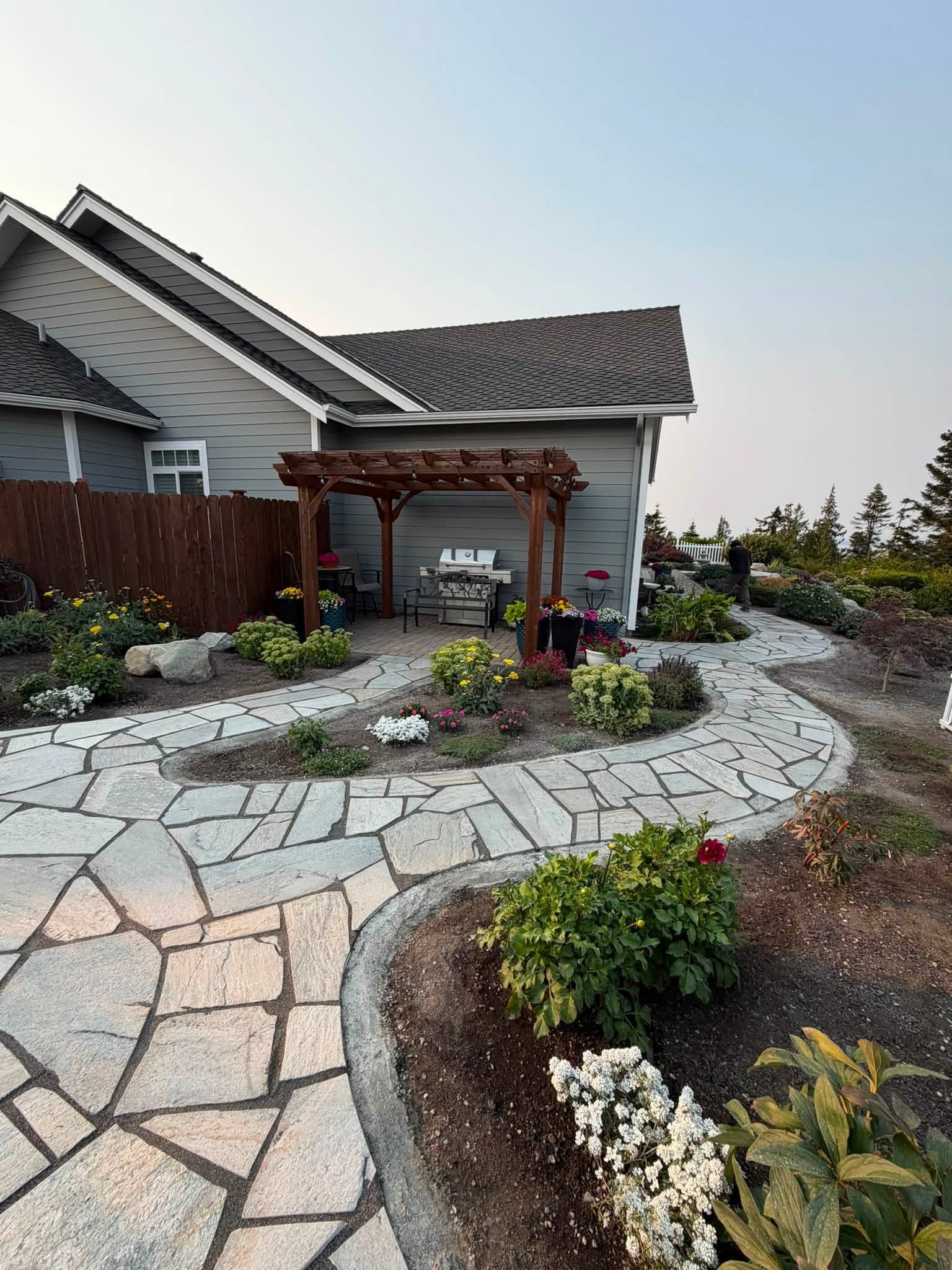
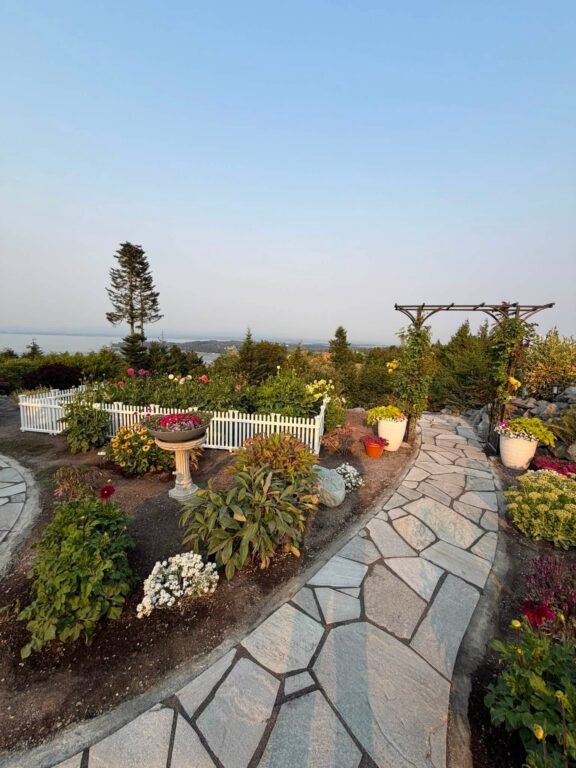
Camano Island Job
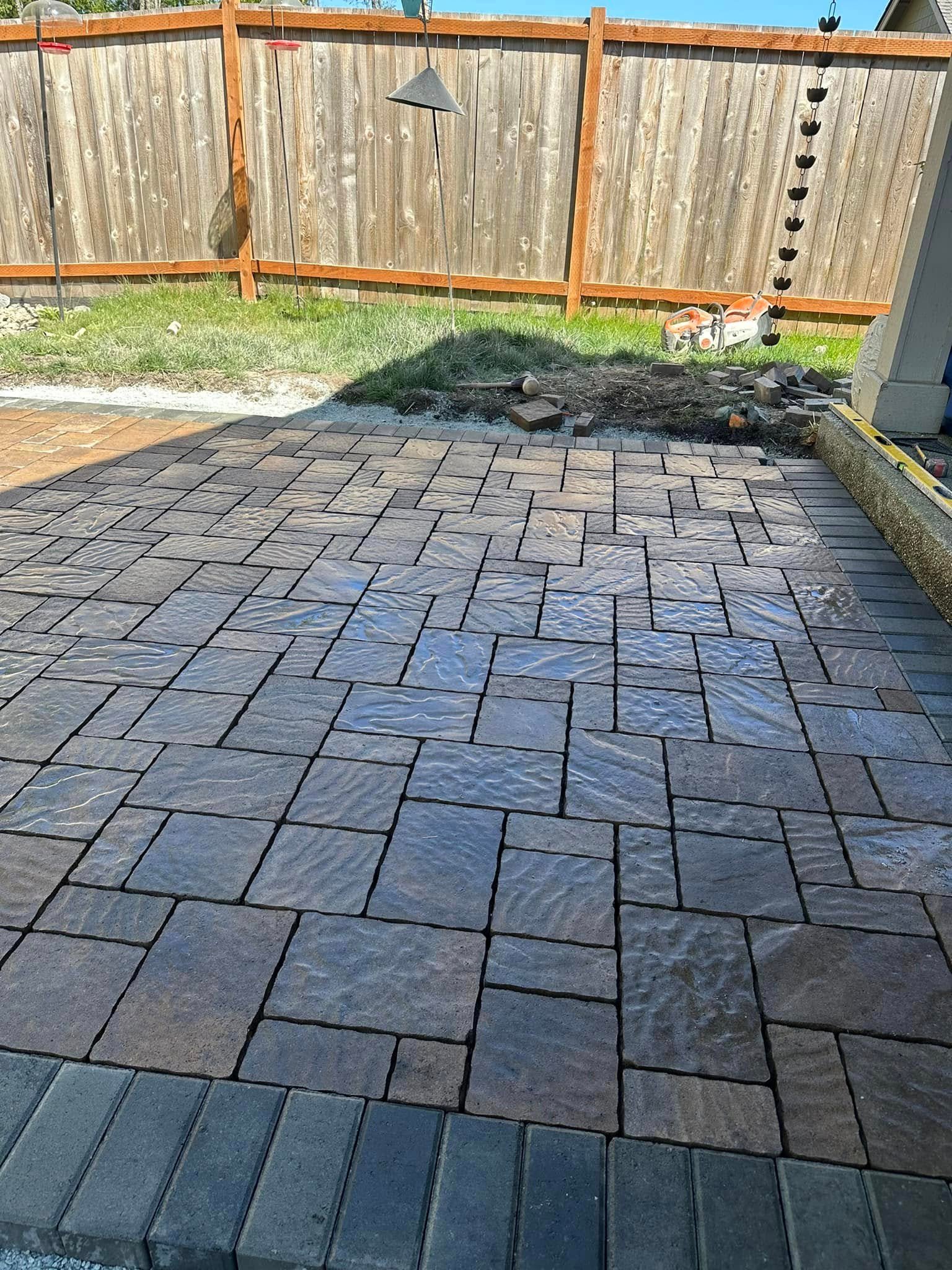
Camano Island Job
Flagstone Pavers
Regular Pavers
Look –
Natural, irregular, upscale
Uniform, wide style range
Cost –
Highest
Mid-range
Installation Time –
Longest (skilled labor)
Moderate
Repairability
Individual stones replaceable
Individual pavers replaceable
Freeze-thaw durability
Good with proper base
Very good
What Flagstone Costs
Pricing varies more here than with pavers, since stone thickness, type, and joint style (non-polymeric sand vs. polymeric sand) all affect the price. As a general range:
A few things that matter for how well it performs long-term are:
Area Size
Typical Cost Range
Small (100-150 sq ft)
$3,500 – $6,000
Medium (200-300 sq ft)
$7,000 – $12,000
Large (400+ sq ft)
$14,000+
*Ranges depend heavily on stone type and sourcing, plus whether joints are sand-set or mortared. [Request an estimate] for pricing specific to your project.
Installation Timeline
Installation timelines for flagstone patios/walkways generally range from 4 to 7 working days for smaller areas. Larger projects require additional time, as each stone is individually placed and leveled to ensure a stable, even surface:
Day 1-2| Excavation & Base Prep : Crews dig out the patio/walkway footprint to proper depth and grade for drainage, then compact the subgrade to create a stable foundation.
Day 2-3| Gravel Compaction & Setting Bed Prep : A crushed gravel base gets laid and compacted in controlled layers. Then topped with a leveling bed of sand or screenings. This layer does the real work of load-bearing and drainage, so getting depth and compaction right pays off for decades.
Day 3-5| Stone Layout & Placement – This is the slow part — irregular flagstone pieces have to be dry-fit, cut, and leveled one at a time, unlike uniform pavers that snap into a pattern. A good installer is constantly eyeballing joint width and stone-to-stone height to keep the surface even and walkable
Day 5-6| Joint Filling – Polymeric sand gets swept into the joints and misted with water, activating a binder that locks it in place against weeds, ants, and washout. Non-polymeric sand is simply swept in dry with no binder, making it cheaper and faster to install but far more prone to erosion, weed growth, and needing regular top-ups.
Final day| Cleanup/Sealing – Crews clear excess material, wash down the stone, and apply sealer if the client opted for it. Sealing enhances color and adds a protective layer, but it also adds a day since the surface needs to be fully dry before application.
A Recent Project
We recently installed a sand-set flagstone walkway and small patio area for a homeowner who wanted something that would blend into an existing garden rather than look like an obvious hardscape addition. Using irregular stone with wider, planted joints gave it a settled, established look that a uniform paver pattern wouldn’t have achieved — and it was actually one of the requests we hear most from people going the flagstone route.
Is Flagstone Right for Your Project?
Flagstone is a strong fit if you want a natural, high-end look and are willing to invest in both the higher upfront cost and periodic sealing/maintenance. If budget or fast turnaround is the priority, regular pavers usually make more sense. If you want the closest thing to a “set it and forget it” surface, pavers will generally require less upkeep than natural stone.
Areas We Serve: We install flagstone patios, walkways, and entryways throughout Skagit County, Whatcom County, and Snohomish County.
Not sure if flagstone or pavers make more sense for your yard? [Contact Brownstone l&H for a free estimate] — we’re happy to walk through the trade-offs based on your specific space and budget.