
Pavers Sinking, Shifting, or Cracking? Causes and Fixes for Northwest Washington Homeowners
A paver patio or walkway should stay flat and tight for years. When pieces start to dip, wobble, drift apart, or crack, it’s a sign that something underneath has changed. This guide covers the signs to watch for, why it happens across Skagit, Whatcom, and Snohomish County, from Mount Vernon, to Bellingham, Ferndale, Stanwood, and Marysville, and what actually fixes it.
Quick Answer: Pavers sink, shift, or crack when something underneath them gives way, most often a base that wasn’t built or compacted correctly, or water washing out the base and soil. In Northwest Washington, steady rain and clay-heavy, slow-draining soil make drainage the most common culprit. Other causes include missing edge restraints, washed-out joint sand, tree roots, and heavy loads, which can also crack pavers.
The lasting fix is usually to lift the pavers, rebuild the base, correct the drainage problem, and relay them, replacing any cracked pieces. Simply filling in a dip rarely holds. Get a free paver assessment →
Why Pavers Sink or Shift
1. An Inadequate or Poorly Compacted Base
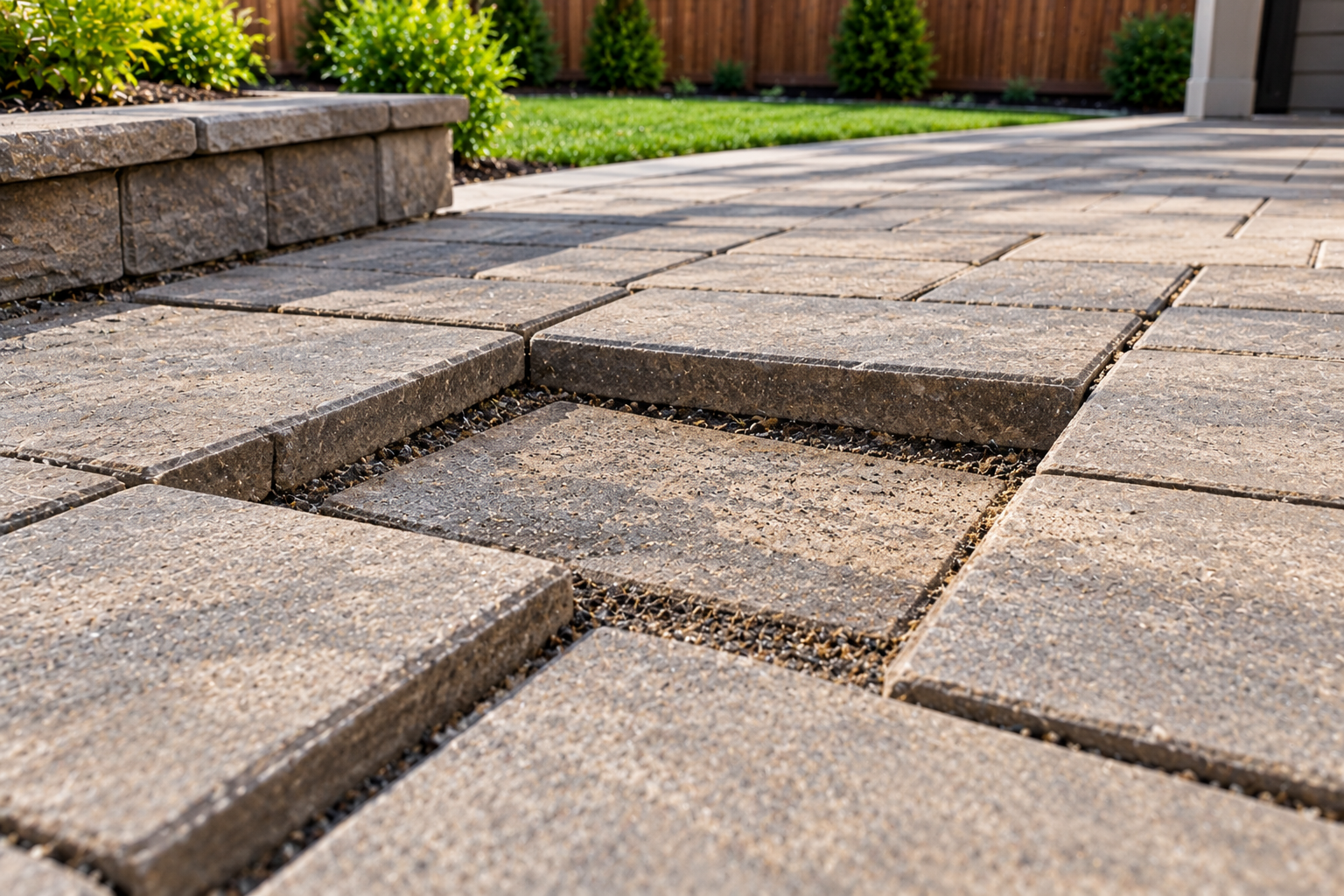
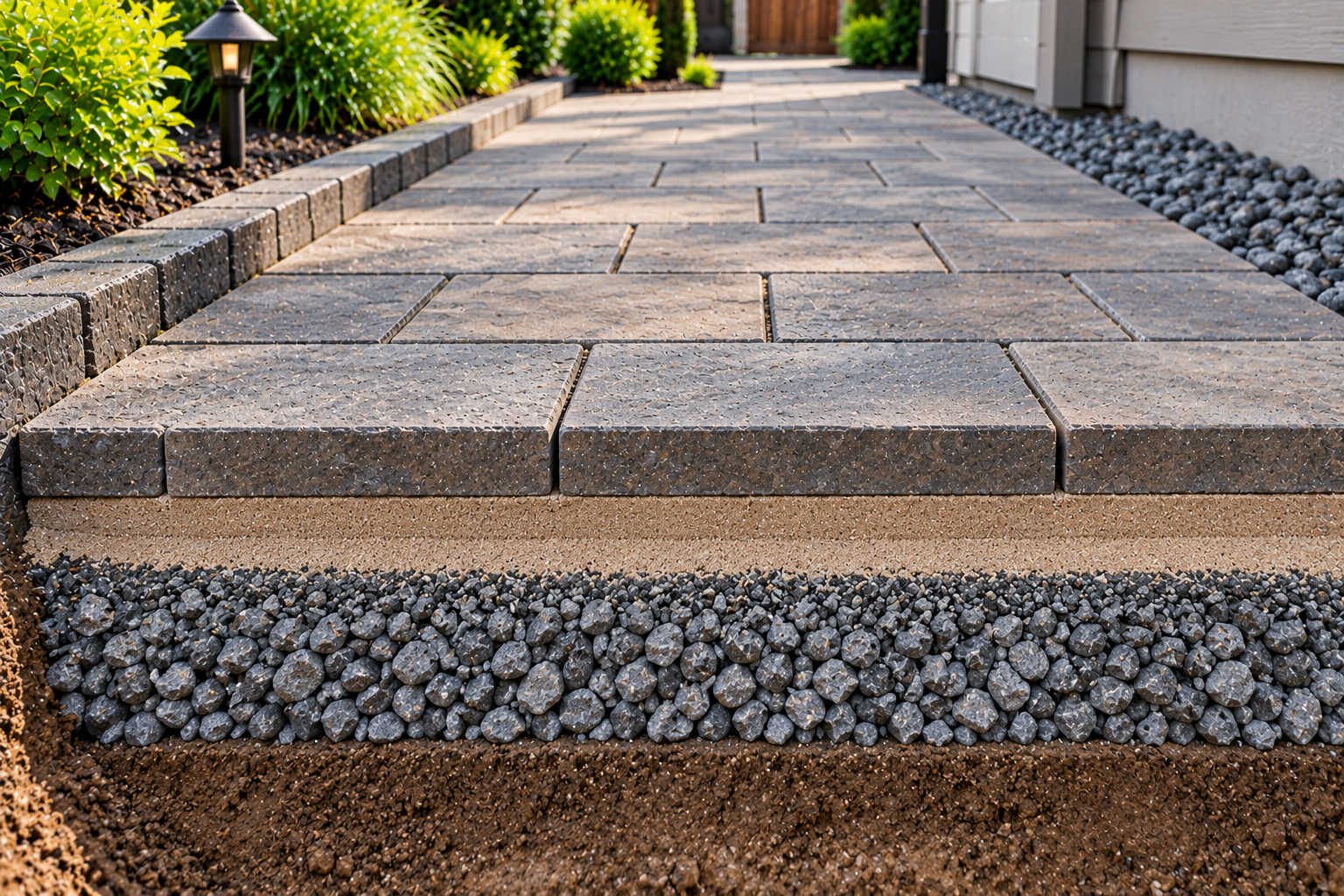
This is the most common cause by far. A paver surface is only as stable as the compacted gravel base beneath it. If the base was too thin, not compacted well, or built over soft soil, the pavers settle unevenly as the ground compresses over time.
2. Water Washing Out The Base
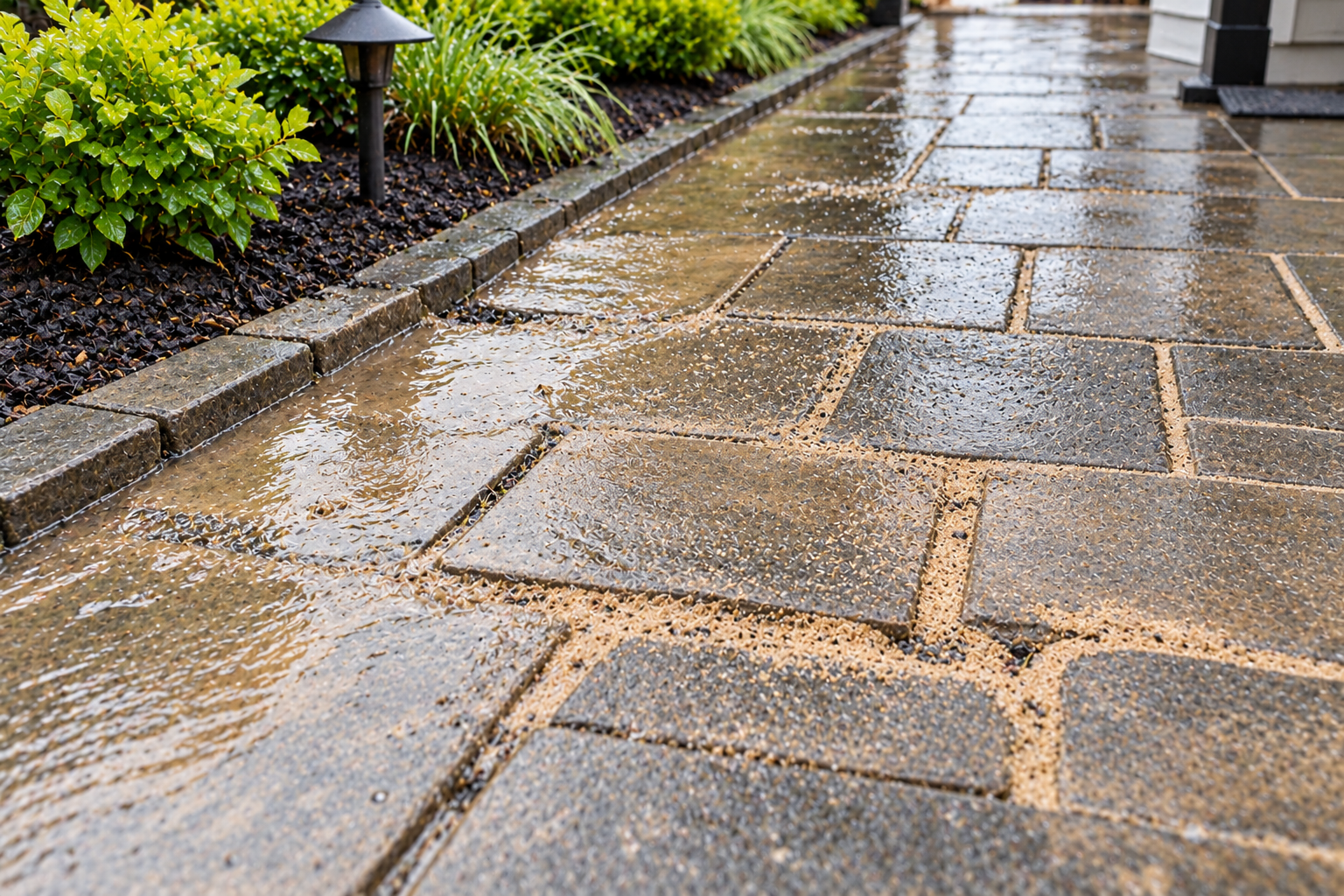
Water is the biggest enemy of a paver base. When water collects under or beside a patio, it can wash away fine material and soften the soil, leaving voids that pavers sink into. With Northwest Washington’s long, steady rain, a patio without a way to shed water is at risk.
3. Clay-Heavy, Slow-Draining Soil
Much of the region sits on dense soil that holds water instead of draining it. Saturated clay softens and shifts, which can let a paver base settle, particularly in low spots in the Skagit Valley and in poorly drained yards around Marysville, Arlington, and Ferndale.
4. Poor Drainage and Runoff
Downspouts that empty onto the patio, a surface that slopes toward the house, or runoff from higher ground can send water straight into the base. Fixing the pavers without fixing where the water goes means the problem returns.
5. Missing or Failed Edge Restraints
Edge restraints keep the pavers locked in place. Without them, pavers can slowly spread outward and loosen, especially along walkways and patio borders
6. Washed-Out Joint Sand
Sand in the joints locks the pavers together. When rain, pressure washing, or runoff clears it out, pavers lose their grip on each other and begin to shift.
7. Tree Roots
Roots can push pavers up from below, creating humps instead of dips, or leave voids that cause settling when they decay.
8. Heavy Loads
Patios and walkways built for foot traffic can sink if they’re driven on or used to store heavy loads. Driveways need a stronger base than a patio does.
Signs Your Pavers Are Sinking or Shifting
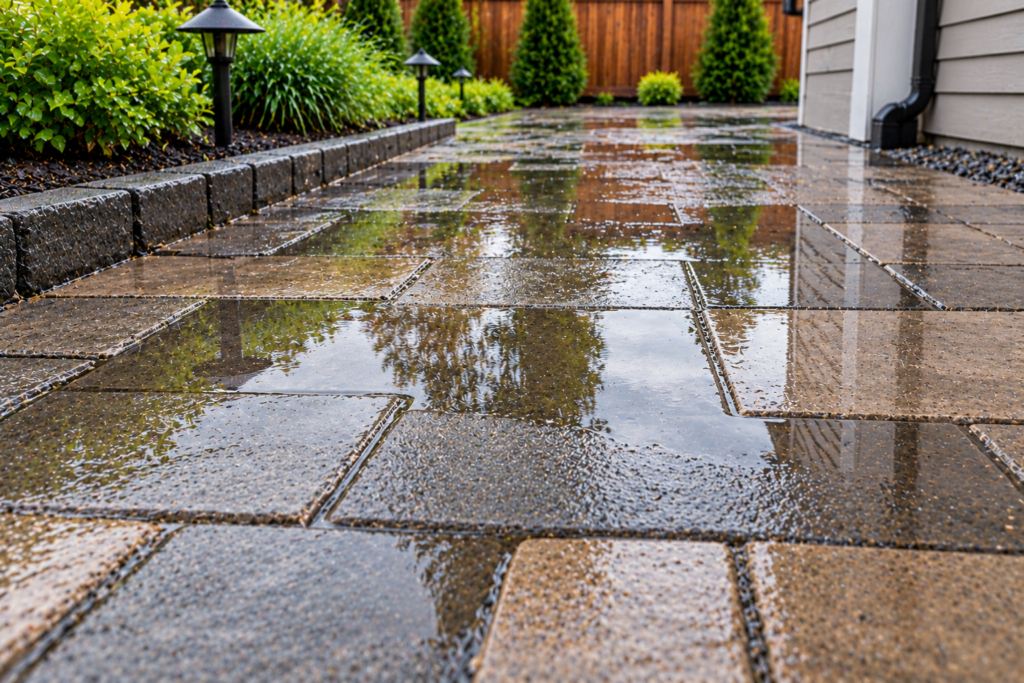
Low spots or dips that collect water
Pavers that rock or wobble underfoot
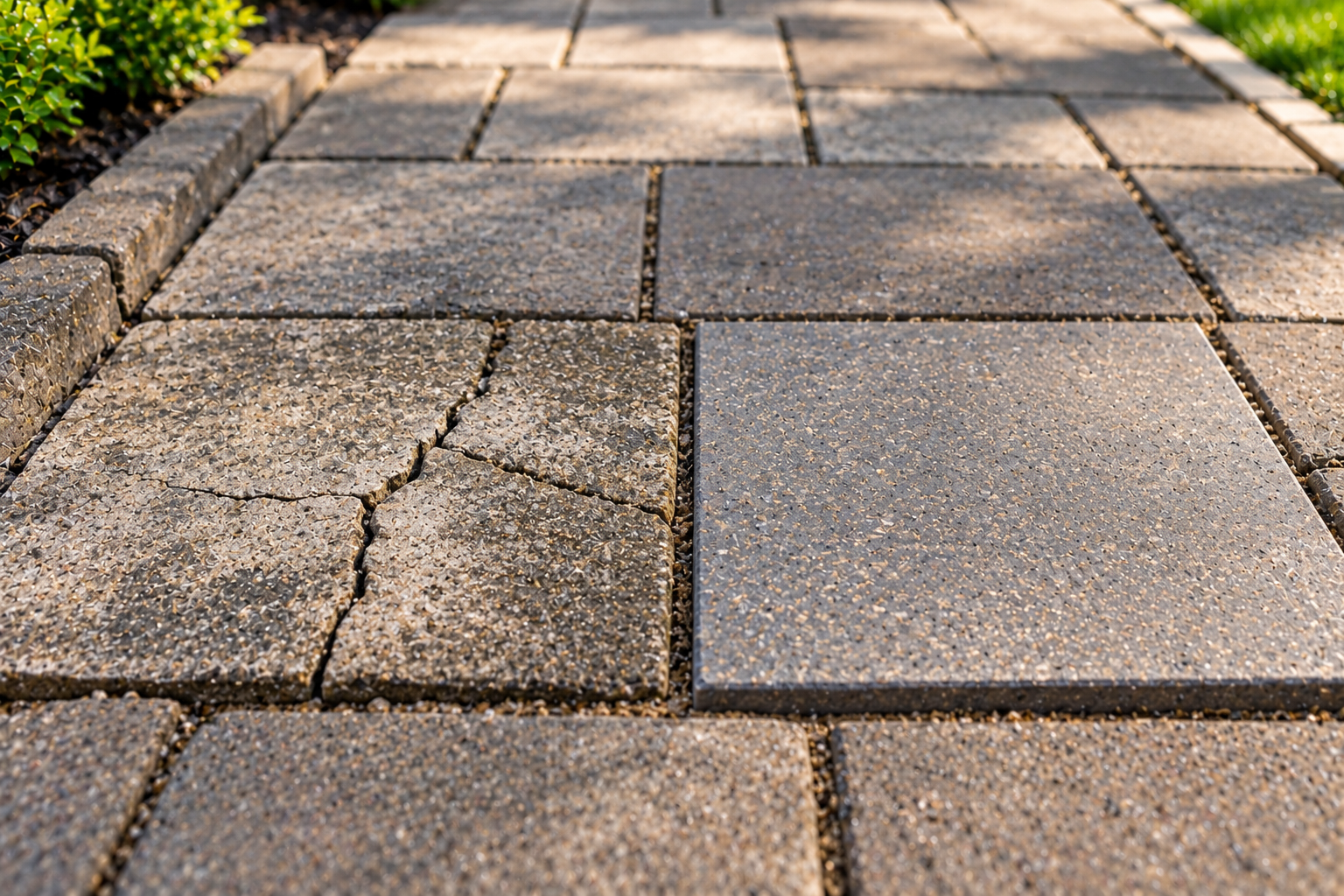
Cracked pavers, whether hairline cracks or pieces that have split in two
Uneven surfaces and tripping edges between pavers
Widening gaps between pavers
Joint sand washing out, or weeds growing through the joints
Edges that are spreading or drifting out of line
Pavers sinking near downspouts, a house foundation, or a low part of the yard
How Sinking, Shifting, or Cracked Pavers Get Fixed
The right repair depends on how widespread the problem is and what caused it.
Resetting The Pavers
The pavers are lifted, the base and bedding layer are corrected and recompacted, and the same pavers are relaid. This is the standard repair for sunken or uneven areas.
Rebuilding The Base
If the base was inadequate or has washed out, the area is excavated and rebuilt with properly compacted gravel before the pavers go back down.
Fixing The Drainage
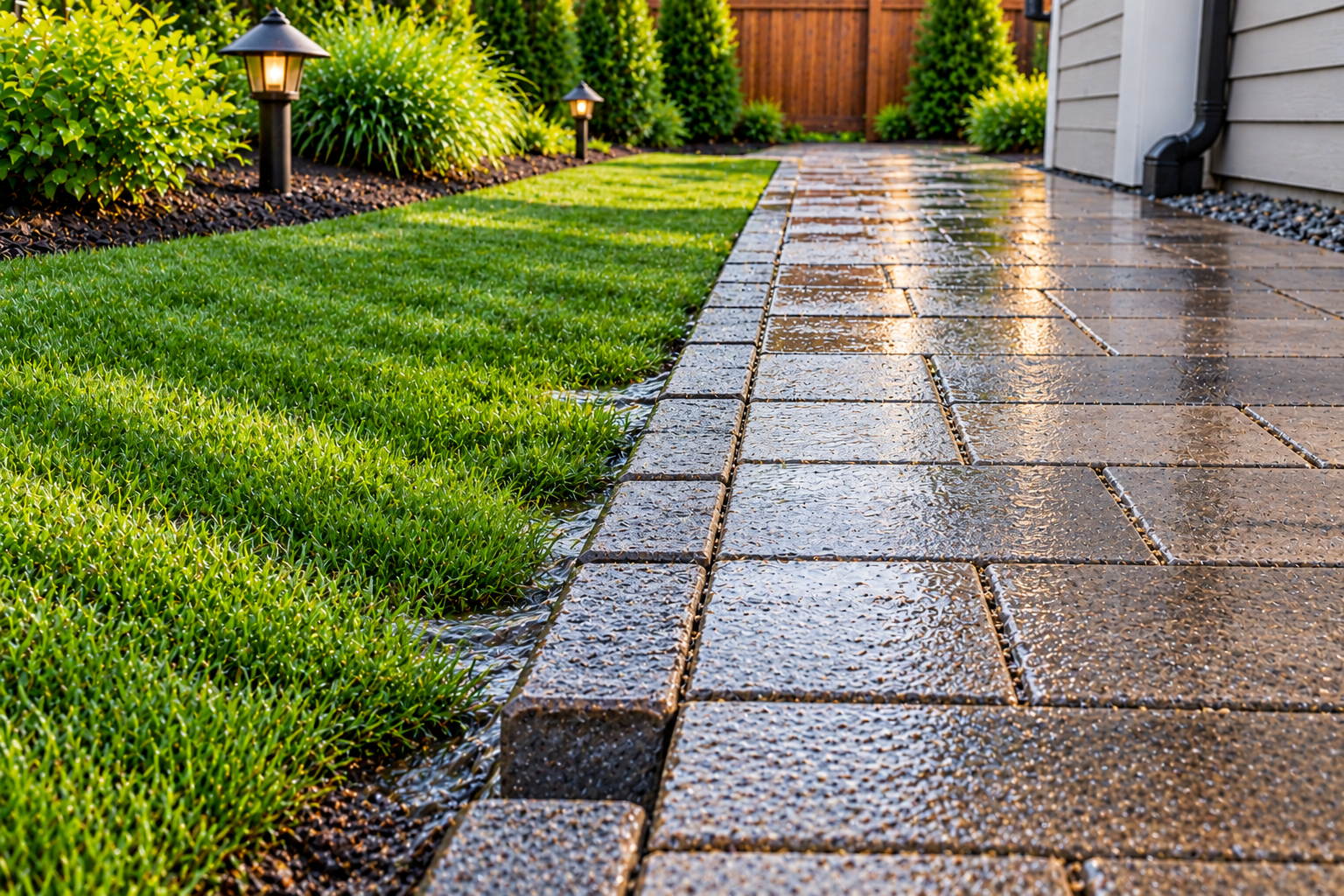
If water is the cause, the repair has to address it. Depending on the yard, that can mean regrading so water drains away, extending downspouts, or adding a French drain or catch basin to carry water off the patio.
Adding or Replacing Edge Restraints
New restraints hold the pavers in place and prevent edges from spreading.
Re-sanding The Joints
Fresh joint sand, often a polymeric type that hardens, helps lock the pavers together and slows weeds.
Replacing Cracked Pavers
Cracked or broken pavers are removed and replaced. If the cracks came from a weak base or drainage problem, that is corrected first, or the new pavers can crack too.
Filling in a sunken area with sand, or topping it off, is a short-term patch. If the cause underneath isn’t fixed, the area will settle again.
How to Prevent Pavers from Sinking and Cracking
Make sure the patio or walkway is built on a properly compacted gravel base
Slope the surface slightly so water drains away from the house
Keep downspouts and runoff from emptying onto the pavers
Install and maintain edge restraints
Keep joint sand topped up
Fix soggy spots and drainage problems early
Choose a base and paver thickness designed for the load, especially for driveways
Keep vehicles and heavy loads off patios and walkways that weren’t built for them
Pavers in Skagit, Whatcom, and Snohomish County!
Whether your patio is in Mount Vernon, Oak Harbor, , Sedro-Woolley, Bellingham, Ferndale, Lynden, Stanwood, Marysville, or Arlington, local soil and water conditions play a big role in how pavers perform. Contact us today for a free consultation. We install paver walkways and patios built on a proper base, and we handle the drainage work that helps them last, including French drains, catch basins, and regrading, throughout Skagit, Whatcom, and Snohomish County.
Or text/Call Us at