
Signs You Need A Retaining Wall or Rock Wall in Whatcom County, WA
Why Whatcom County’s Terrain Puts Extra Pressure on Yards
Whatcom County yards don’t all face the same threat. Out toward Lynden, the flat, low-lying farmland means water often has nowhere to go, leaving soil waterlogged and unstable after every storm. Closer to Bellingham and Ferndale, it’s the opposite problem: steep, wooded lots and coastal bluffs put constant pressure on soil that’s already loosened by the region’s wet winters. Different terrain, same outcome — erosion, shifting ground, and slope or drainage failure that only gets more expensive the longer it’s ignored.
Here’s how to tell which risk your property is facing — and whether a retaining wall or a rock wall is the right fix.
1
Signs Your Whatcom County Yard Needs a Retaining Wall or Rock Wall
You Have A Steep, Wooded, or Bluff-adjacent Lot
You have a steep, wooded, or bluff-adjacent lot where soil visibly shifts or slides after heavy rain, common around Bellingham’s hillier neighborhoods. Left untreated, this kind of movement tends to accelerate and can eventually lead to a full slope failure.
Trees or Landscaping Near A Slope Are Leaning or Exposing Roots
Trees or landscaping near a slope are leaning or exposing roots, a sign the ground beneath them is eroding. If it continues, you risk losing established trees and landscaping altogether as the soil holding their roots washes away.
Water Runs Off A Slope In Visible Channels
Water runs off a slope in visible channels rather than soaking in, carrying soil with it. Over time, this carves deeper channels and can strip away enough soil to destabilize the slope or expose tree and shrub roots.
Planning To Build or Extend A Patio, Deck, or Addition Near A Slope
You’re planning to build or extend a patio, deck, or addition near a grade change and need it stabilized first. Building without addressing the slope first risks shifting, cracking, or foundation problems for the new structure down the road.
Retaining Structure You Already Have Is Bulging, Leaning, or Cracking
A retaining structure you already have is bulging, leaning, or cracking, meaning it’s failing and needs replacement. Left alone, a failing wall typically gets worse and can collapse suddenly, sometimes taking a patio, fence, or section of yard with it.
Choosing Between A Retaining Wall & A Rock Wall
On Whatcom County’s steeper terrain, the deciding factor is usually how much slope you’re holding back and how close it is to something that matters.
Rule of thumb: if there’s any risk to a structure, driveway, or safety, go with an engineered retaining wall. If it’s purely aesthetic or a minor grade change, a rock wall is usually enough. Request A Free Online Quote – We’ll take a look at your slope, & tell you whether you need a retaining wall or rock wall.
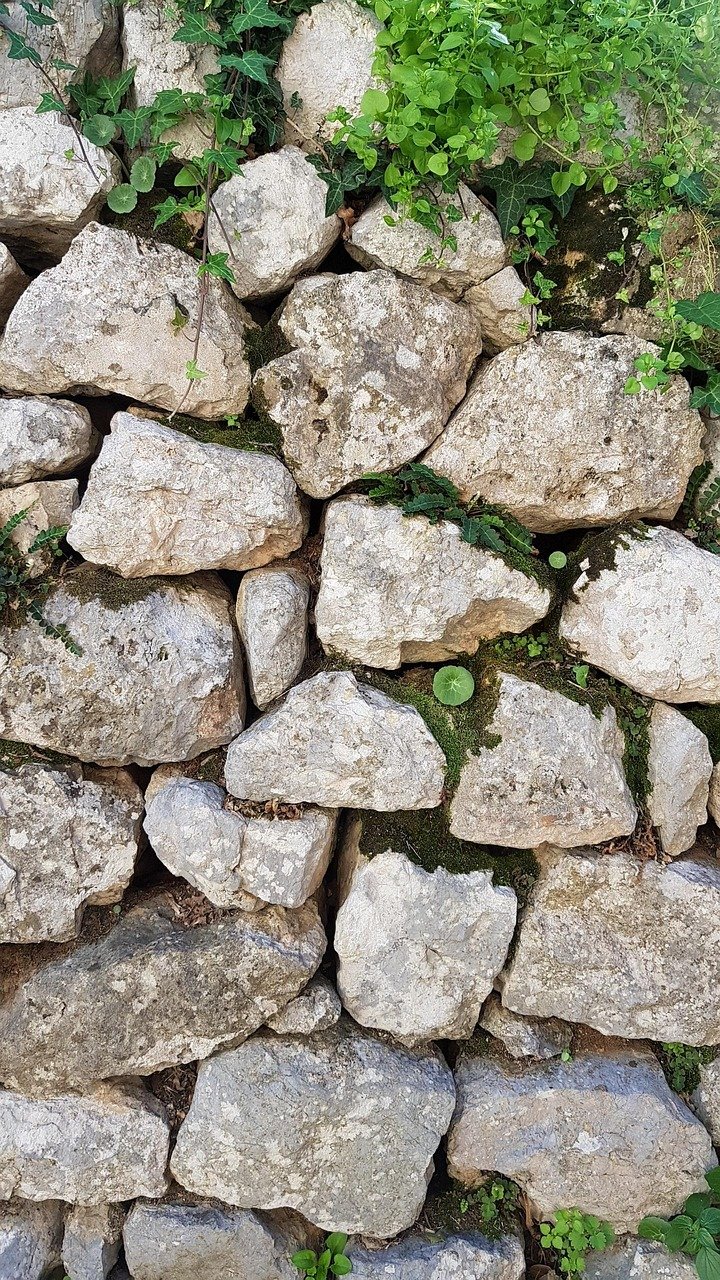
Rock Wall
A rock wall suits smaller, lower-stakes grade changes — a garden terrace, a mild slope in the yard, or a decorative edge where you’re not worried about structural failure. It’s a good fit when the goal is
more about shaping the landscape than preventing a
slide.
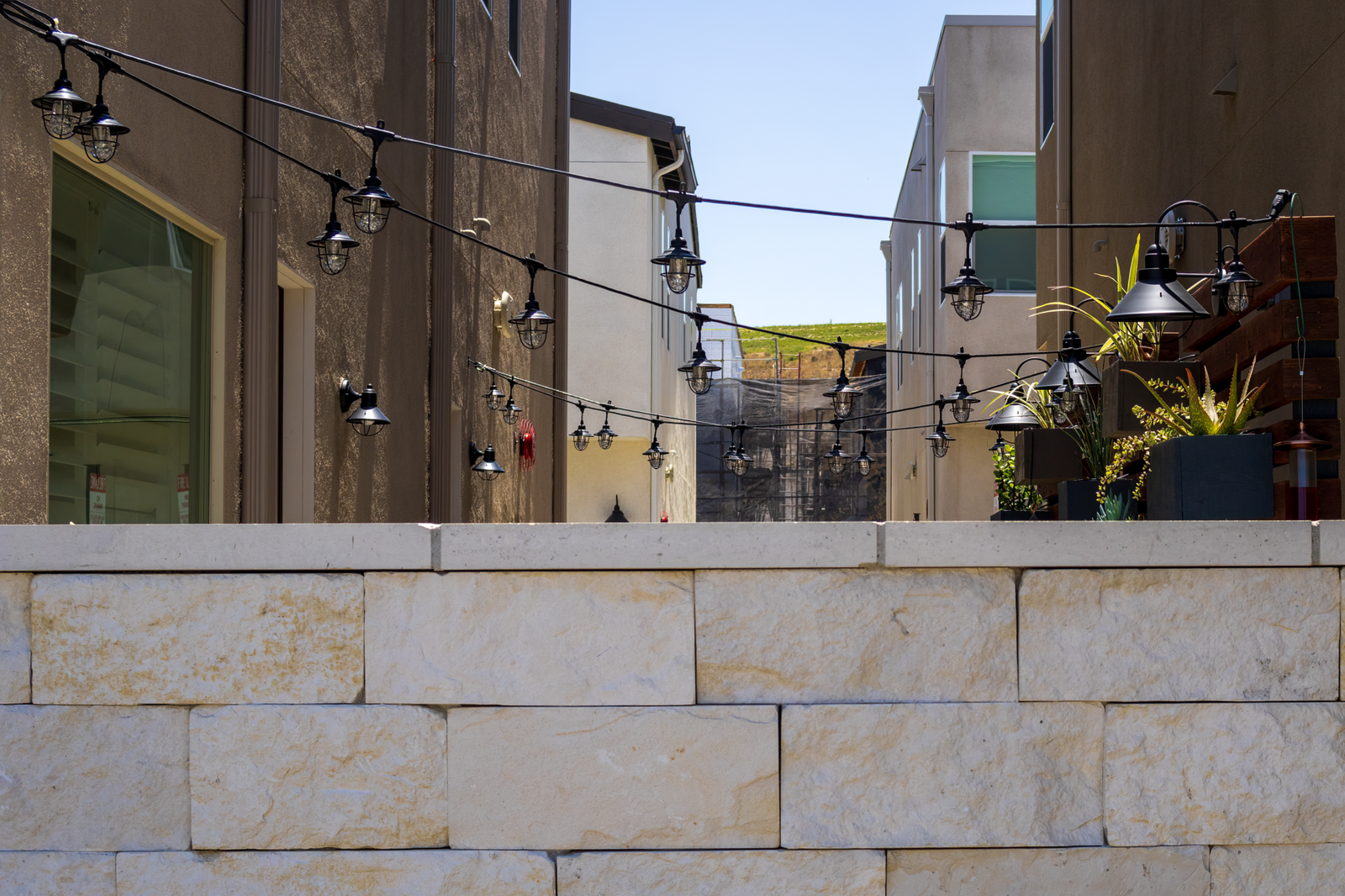
Retaining Wall
A retaining wall is the engineered option: block, or concrete, built to resist the pressure of a real slope failure. On bluff-adjacent or heavily sloped lots, especially near a home, driveway, or existing structure, this is typically the safer and often required solution. Paired with drainage system.
A Recent Bellingham Rock Wall Project
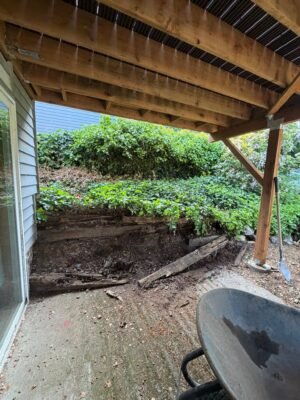
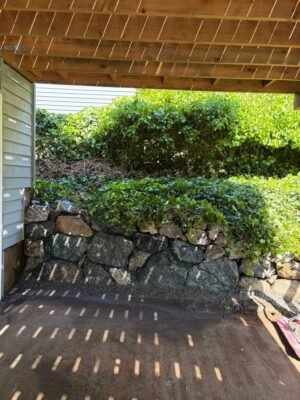
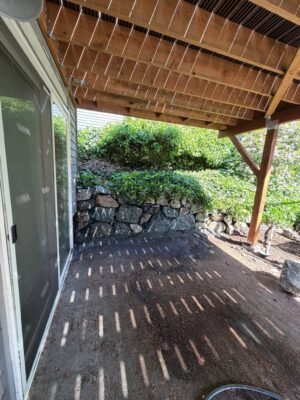
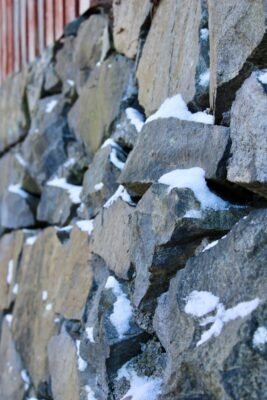
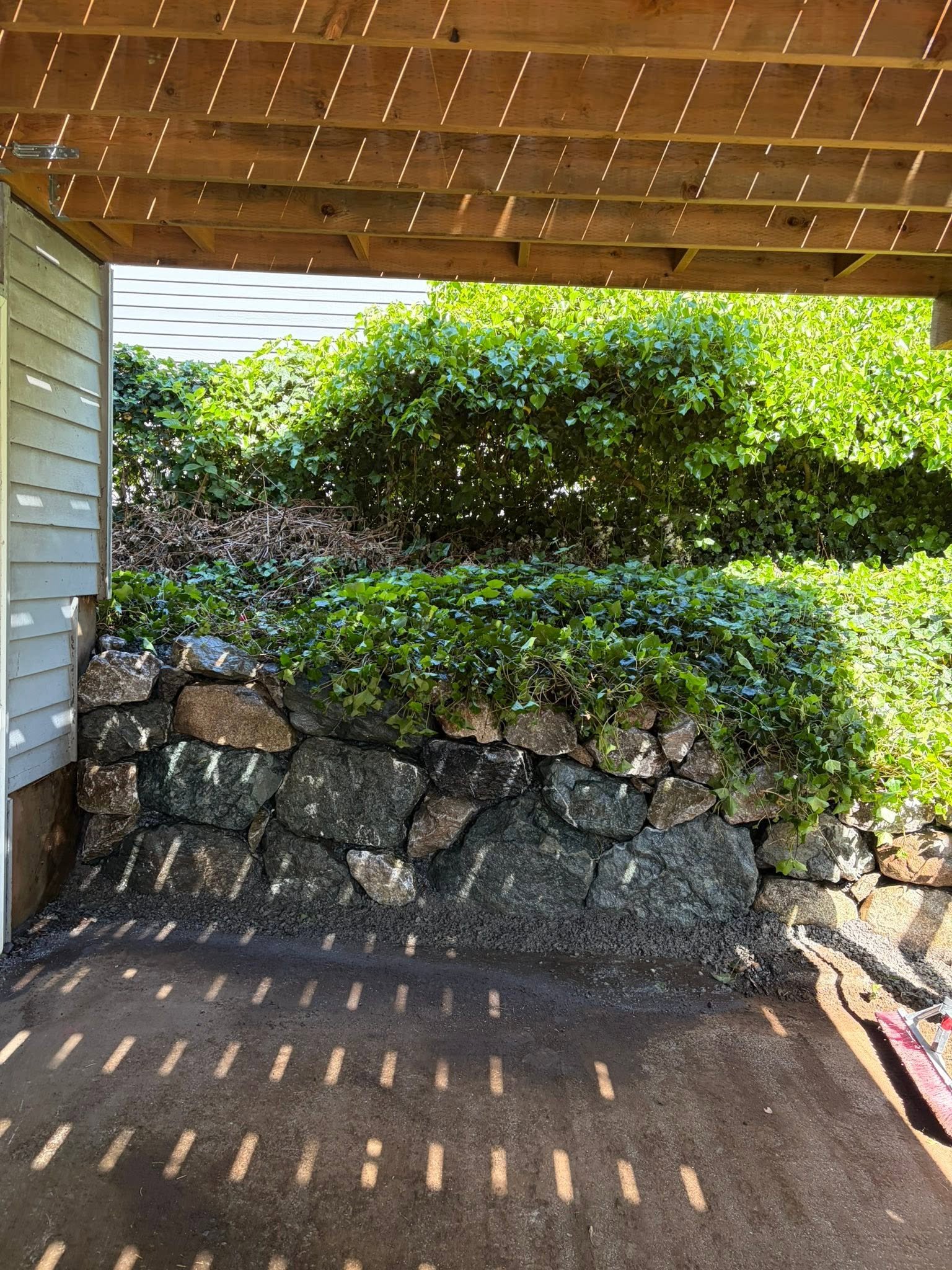
On a property in Bellingham, the yard behind the house had no way for water to drain, and the old timber edging holding back the slope near the patio had rotted out and given way, letting soil spill onto the walkway with every rain. We removed the failed timber and installed a rock wall along the slope to hold the soil back and give water somewhere controlled to go instead of running straight down onto the patio. Since the rock wall went in, the area drains properly, the soil has stopped washing out, and the space under the patio cover looks clean and finished instead of eroded.
Frequently Asked Questions
How Do I Know If My Retaining Wall Is Failing?
Bulging, visible leaning, cracks, or gaps forming between the wall and the soil behind it are all signs a wall is no longer holding. On steep Whatcom County lots, a failing wall should be addressed quickly before the slope moves further.
Does Whatcom County Require A Permit For A Retaining Wall?
Yes, in most jurisdictions, once a wall exceeds 4 feet from footing to top. On bluff or steep-slope properties, expect the possibility of added geotechnical review — worth checking with your city or the county early in planning.
What Should I Budget For A Retaining Wall In Whatcom County?
A typical residential wall runs $25–$60 per square foot installed. Steeper or bluff-adjacent sites often run toward the higher end because of the extra engineering and equipment access involved. A site visit is the only way to pin down your number.
Can A Retaining Wall Be Built On A Steep or Bluff Lot?
Yes, but it typically requires an engineered design and, on some bluff properties, a geotechnical assessment to confirm the wall and slope will hold. This is standard for Whatcom County’s hillier terrain and shouldn’t be skipped.
What Happens If I Ignore A Failing Retaining Wall?
A failing wall generally gets worse, not better — soil pressure keeps building until the wall bows further, cracks, or gives way entirely, sometimes taking a patio, fence, or section of yard with it. Addressing it early is almost always cheaper than a full rebuild after a collapse.
Get A Free Slope Assessment
We’ll take a look at your slope, tell you straight whether you need a retaining wall or a rock wall, and give you a firm quote. We work throughout Bellingham, Blaine, Ferndale & the surrounding Whatcom County.
Or text/Call Us at