Mulch or River Rock? A Whatcom County Homeowner’s Guide

Hardscape and Fence Services by Brownstone L&H

Choosing Between Mulch and River Rock for Your Yard

If you’ve searched “mulch or river rock” before landing here, you’re probably staring at a bare garden bed, a drainage problem near your foundation, or a yard that just needs a refresh — and you don’t want to pick the wrong one and redo it next spring.

Here in Whatcom County, that decision comes down to more than curb appeal. Between our clay-heavy soil and months of steady rain, some materials perform better than others. By the end of this guide, you’ll know exactly which option fits your yard, and why.

The Quick Answer

Choose mulch if you have garden beds, new plantings, or areas that need soil nutrition and moisture retention.
Choose river rock if you’re dealing with drainage issues, want low-maintenance curb appeal, or have areas prone to standing water.
Cost: Mulch is generally cheaper upfront but needs yearly refreshing. River rock costs more initially but can last 10+ years with minimal upkeep.
Whatcom County Factor: Our wet winters make drainage performance a bigger deciding factor here than in drier climates.

What Is Mulch?

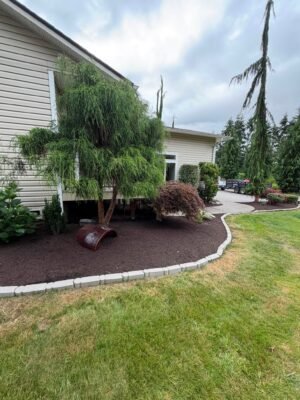
Mulch is any organic material spread over soil to cover and protect it — most commonly shredded bark, wood chips, or bark nuggets in residential landscaping. It comes in a range of types (fir bark, hemlock, cedar, compost-based blends) and colors, and it’s typically laid 2-3 inches deep over garden beds and around plants.

Because it’s organic, mulch naturally breaks down over time. That’s not a flaw — it’s the whole point. As it decomposes, it adds organic matter back into the soil, which helps with moisture retention, temperature regulation, and weed suppression.

What Mulch Does Best

Mulch is the go-to choice for anyone actively gardening or planting. It breaks down over time, which sounds like a downside — but it’s actually the point. As it decomposes, it feeds the soil, helping retain moisture and regulate temperature around your plants’ roots.

Best For:

Garden Beds & Flower Borders

Mulch helps retain moisture, enriches the soil and suppress weeds around delicate plantings.

Areas With New Trees, Shrubs, Or Perennials

It insulates delicate roots from extreme tempature, blocking weeds and adding nutrients as it breaks down

Yards Where You Want A Softer, Natural Look

It gives beds a warm, finished appearance that rock can’t replicate.

The Whatcom County Catch:

Because of our rain volume, mulch breaks down faster here than it would in a drier climate — expect to refresh it every year, sometimes sooner in heavily shaded, damp areas. It can also shift or wash out on sloped beds during heavy downpours.

Typical Cost:

Lower upfront cost, but factor in annual refresh costs over time.

What Is River Rock?

River rock is smooth, rounded stone — naturally worn down by water over time — used as a ground cover instead of organic material. It’s sold by size (ranging from small pea gravel-like stones to larger 3-5 inch rock) and typically installed over landscape fabric to prevent weeds and keep the rock from sinking into the soil below.

Unlike mulch, river rock is inorganic, so it doesn’t break down, fade into the soil, or need replacing. It’s a one-time installation that holds its look and function for years, which is part of why it’s grown popular for low-maintenance landscaping.

What River Rock Does Best

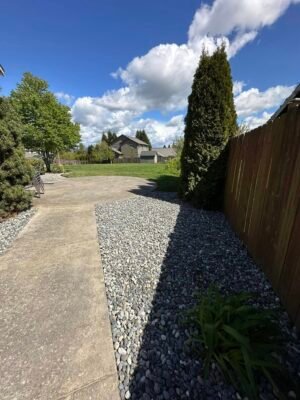
River rock is the low-maintenance, high-drainage option. It doesn’t decompose, doesn’t need replacing yearly, and handles water far better than organic mulch — which matters a lot in a county that sees as much rain as ours does.

Best For:

Areas With Poor Drainage Or Standing Water

Rocks let water pass through instead of holding moisture against your foundation.

Low-Maintenance Zones (Side Yards, Dry Creek Beds, etc..)

No yearly refresh, no decomposition to manage.

Modern Or Minimalist Curb Appeal

Clean, uniform stone gives a sharper, more contemporary look.

The Whatcom County Catch:

With our wet winters, river rock’s drainage performance is a real selling point — especially near foundations, downspouts, or low points in the yard where water tends to pool.

Typical Cost:

Higher upfront cost, but little to no annual maintenance expense.

Mulch vs. River Rock: Quick Comparison
Which One Fits Your Whatcom Yard?

Your Yard Has Poor Drainage Near The Foundation

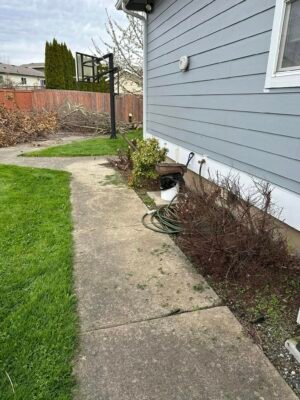
Especially common in older Whatcom County homes — river rock paired with proper grading will do more to protect your home than mulch ever could.

You’re Planting Annuals Or Perennials Every Season

Mulch is still the better long-term choice for soil health, even with the yearly refresh.

If You Want A Low-Maintenance Side Yard Or Dry Creek Bed

River rock will save you time and money over the years, even with the higher upfront cost.

You’re Mixing Both Zones In One Yard 

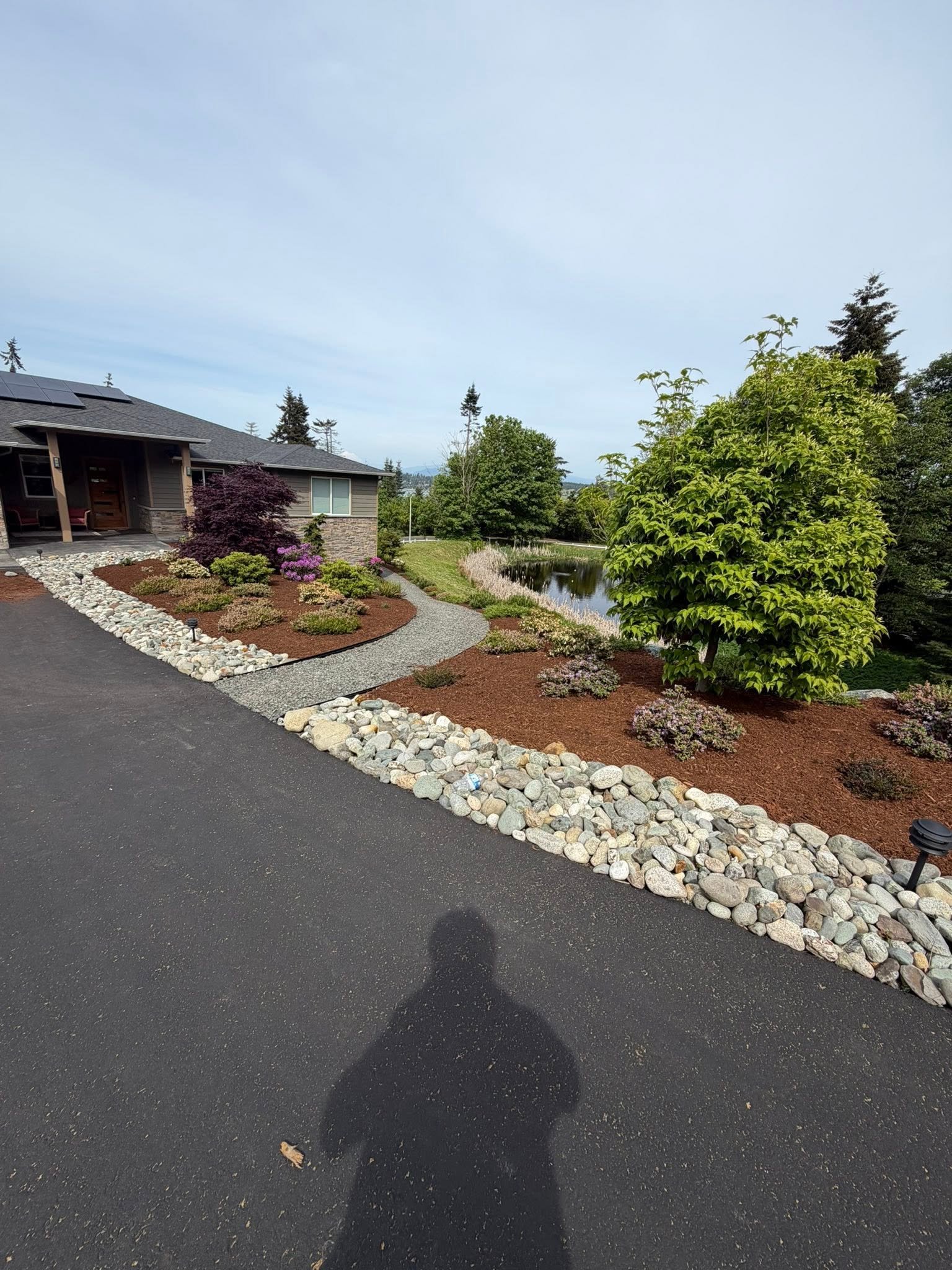
That’s usually the right call — mulch where you’re actively gardening, rock where drainage or low-maintenance matters most.

A Bellingham, WA Example

We recently helped a homeowner around the [Bellingham Area] with a yard similar to what we see alot across Whatcom County — a backyard that stayed soggy for weeks after heavy rain. Switching the problem area from compost mulch to river rock, combined with better grading, solved the standing water without changing the overall look of the yard. It’s a simple fix, but it’s one a lot of homeowners don’t realize is an option until they ask.

Common Mistakes to Avoid

Mixing Mulch Types In The Same Bed

Different mulches (compost, bark, chips, etc..) break down at different rates, which creates an uneven look.

Skipping Landscape Fabric Under River Rock

Without it, weeds will come through and rocks will sink into the soil over time.

Using The Wrong Rock Size On A Slope

Smaller rock migrates and washes out during heavy rain: larger rock holds better on inclines.

Piling To Much Mulch Against Tree Trunks Or Siding

Traps excess moisture, invites pests, and can rot or kill the plant or structure over time.

Not Sure Which Is Right for Your Yard?

Every yard in Whatcom County drains differently, and the right choice usually depends on details you can’t fully judge from a blog post — slope, soil, sun exposure, and what’s actually happening underground.
We’ll take a look and give you an honest recommendation for your specific yard.
📞 Call [360-333-7738]
or


Comparing Options in a Different County?

This guide covers Whatcom County’s clay soil and rain-driven drainage concerns. If you’re weighing the same decision somewhere else in the region:
See our Skagit County Guide — built around flood-plain and valley drainage
See our Snohomish County Guide — covers Camano Island, Stanwood, Marysville, and Arlington

Scroll to Top