
Whatcom County Drainage Problems: Causes, Warning Signs & Fixes
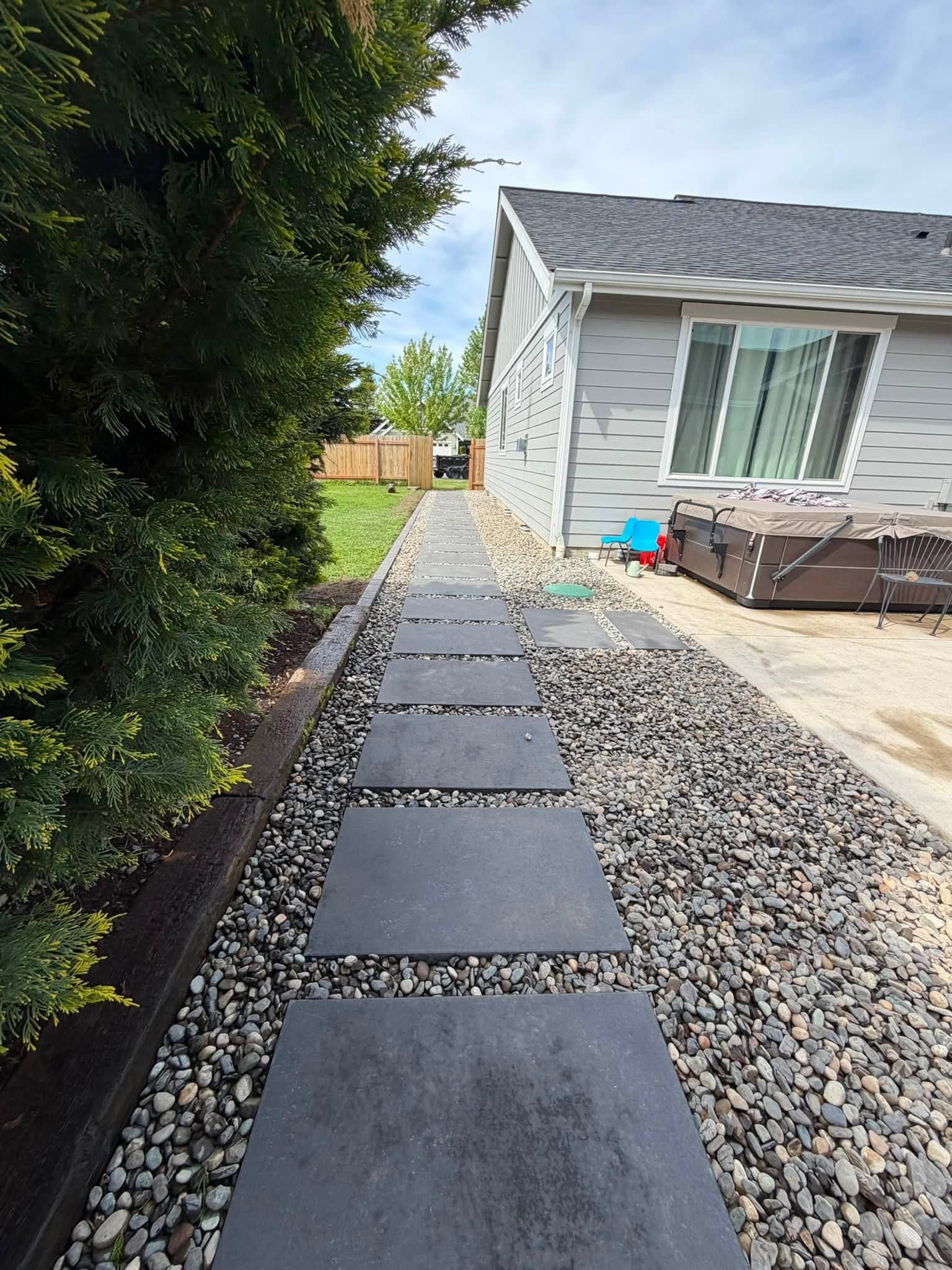
Why Whatcom County Yards End Up With Drainage Problems
If your yard stays wet for days after a storm, you’re dealing with one of the most common complaints we hear from homeowners across Bellingham, Ferndale, and Blaine. Here’s what’s usually behind it:
Some Of The Highest Rainfall In The Region
Whatcom County sees close to 37 inches of rain a year, and a lot of it falls steadily over the fall and winter rather than in a few big storms. That kind of sustained rainfall gives your yard less time to dry out between wet spells, so drainage problems tend to build up rather than clear on their own.
Flat, Low-Lying Ground
Much of Whatcom County — especially areas near the Nooksack River and the Fraser Lowland — is flat, low-lying farmland and residential ground with very little natural slope. Without a clear path for water to follow, rain has nowhere to go but sit wherever it lands.
Dense, Slow-Draining Soil
A lot of yards here sit on compacted glacial soil that water has a hard time passing through. Instead of soaking in, rain tends to sit on top of the ground or run along the surface, which is part of why standing water and soggy lawns are so common across the county
Poor Yard Grading
If your yard isn’t sloped to move water away from the house, rain just collects in whatever spot is lowest. On already-flat Whatcom County lots, even small grading mistakes can leave a yard holding water far longer than it should.
Water Pooling Near The Foundation
Between heavy rainfall, flat ground, and slow-draining soil, water often ends up right against the house instead of running off — one of the most common and most costly drainage complaints we see on Whatcom County properties.
Warning Signs Your Yard Has a Drainage Problem
These signs show up when water can’t move through or off your yard fast enough, so it collects somewhere it shouldn’t:
Standing Water
Standing water more than a day after rain — This usually means the soil or grading can’t move water away fast enough to keep up with local rainfall, so it just sits in place.
Soft, Spongy Ground
Soft, spongy ground that stays saturated even between storms. Saturated soil has nowhere left to hold more water, so any new rain has nowhere to go but the surface.
Visible Runoff Paths or Erosion
Visible runoff paths or erosion cutting across the yard. This happens when water is moving too fast over the surface instead of soaking in, which is common on flat or poorly graded ground.
Patchy, Yellowing, or Dying grass
Patchy, yellowing, or dying grass in the same low spots season after season. Roots sitting in water too long are deprived of oxygen, which is a direct result of poor drainage in that area.
Water Sitting Against Your Foundation & More
Water sitting against your foundation, patio, or driveway. This means water isn’t being redirected away from the house, which is often the end result of flat grading or soil that can’t absorb it fast enough.
Ways to Fix Yard Drainage Problems
Regrade Your Yard
Giving your yard a proper slope away from the house is often the most effective fix on flat Whatcom County lots, since it gives water an actual direction to travel instead of settling in place.
Install a French Drain
A french drain — a gravel-filled trench with a hidden pipe — pulls water out of problem areas and redirects it somewhere safe, which matters most where the ground itself is too flat or too dense to drain on its own.
Add a Catch Basin
A catch basin collects water at low points and carries it away through underground piping, which helps on properties where multiple wet spots are collecting more runoff than the yard can absorb.
Choose Plants That Handle Wet Ground
Moisture-tolerant plants suited to our climate can help soak up extra water in trouble spots, though they work best paired with an actual drainage fix rather than on their own.
When It’s Time To Call A Professional
Drainage problems are often happening below the surface where you can’t see them, which is why DIY fixes are hit-or-miss. A professional can assess your property’s grading, soil, and water flow, and recommend the right fix instead of guessing.
Real Fix: Paver Project/ Bellingham, WA
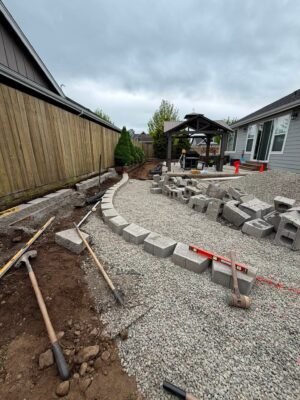
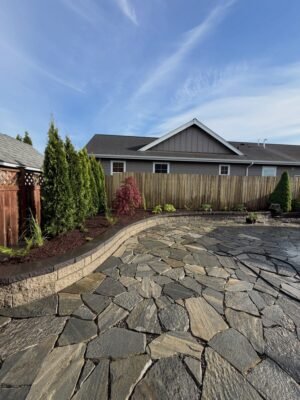
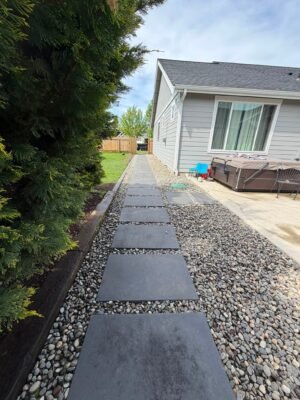
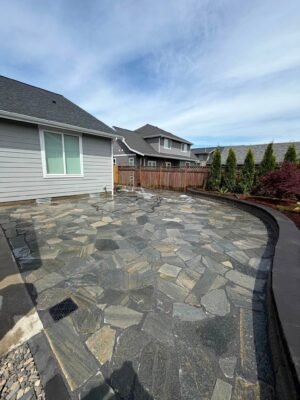
This backyard project near Bellingham, WA started with a low area that held water and stayed muddy for most of the year. We excavated the space, added a drain line and a compacted gravel base to give water somewhere to go instead of sitting on top of the soil, then built a curved retaining wall to define the new patio area and tie it into the paver walkway along the fence line. What used to be a wet, unusable corner of the yard is now a dry, functional space built around the existing gazebo
Ready To Fix Your Yard
Drainage?
Get a free, no-obligation drainage assessment. We’ll pinpoint what’s causing the standing water on your property and recommend a solution built for Whatcom County’s rainfall and soil.
Or text/Call Us at