
Why Is Water Pooling in My Yard After It Rains? (Whatcom County, WA)
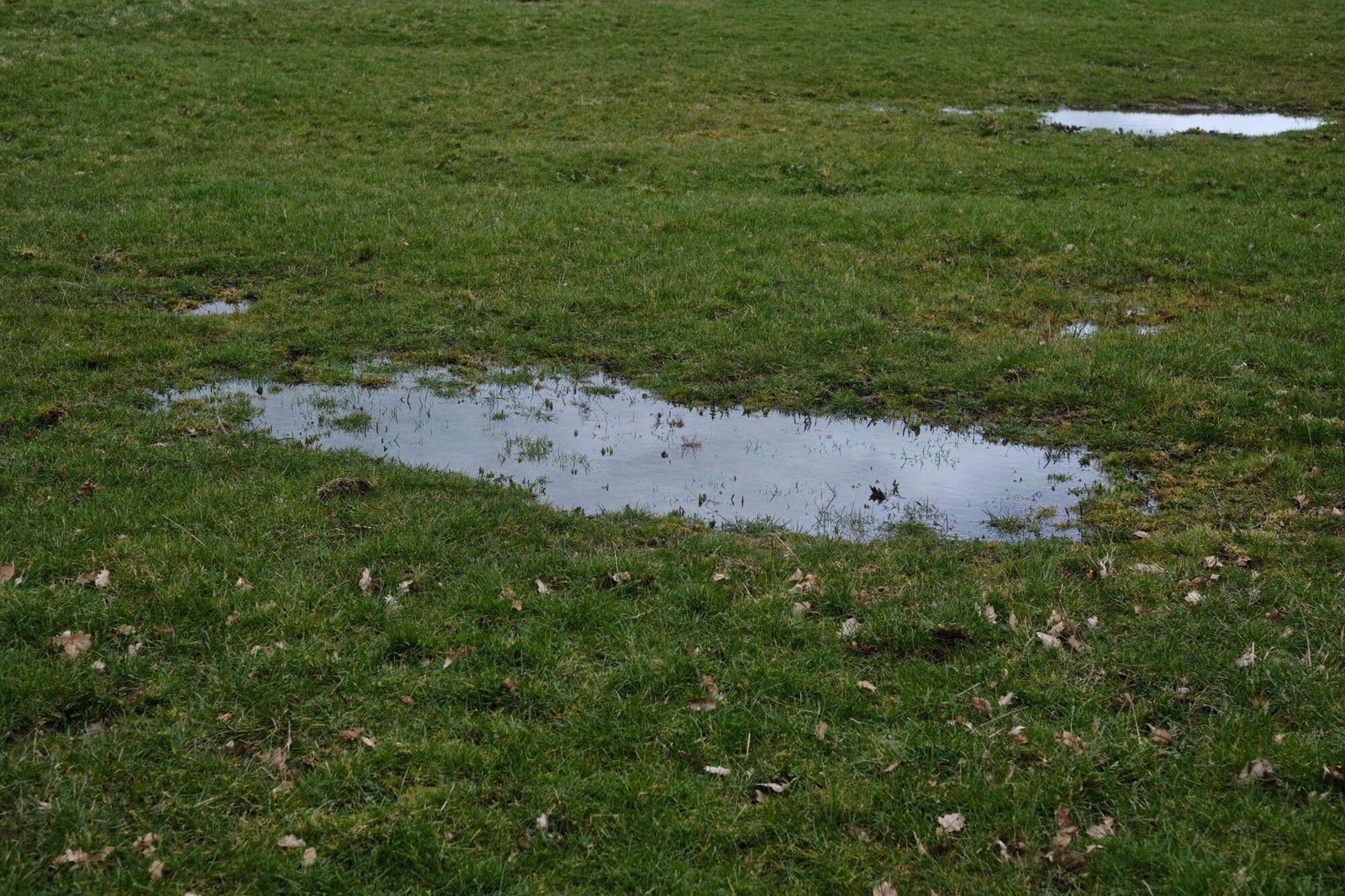
If water is still sitting in your yard hours (or days) after a storm, your soil isn’t absorbing it fast enough or it has nowhere to go — and in Whatcom County, the reason usually depends on where you live. Flat farmland around Lynden and steep, wooded lots near Bellingham and Ferndale fail in different ways, but both lead to the same soggy, standing-water mess. Here’s what’s actually causing it, and how to fix it before winter rain makes it worse.
Common Causes of Yard Pooling
1. Compacted or Clay-heavy Soil
Dense soil absorbs water slowly, so rain sits on top instead of soaking in — a common issue on newer-construction lots where topsoil was disturbed during building. Even a light rain can leave water sitting for hours once soil this dense reaches its saturation point.
2. Poor Grading
If your yard slopes toward your house instead of away from it, water has nowhere to go but to collect near your foundation. Common on newer builds where the final grade wasn’t properly sloped once landscaping was finished.
3. Clogged or Misdirected Gutters
Downspouts that dump water a foot from your foundation, or gutters that are clogged and overflowing, send far more water into your yard than natural rainfall alone. Cleaning gutters and extending downspouts a few extra feet is one of the cheapest fixes on this entire list.
4. No Drainage System At All
Many yards were never built with a way to move water off the property — it’s relying entirely on soil absorption, which fails fast in a real Pacific Northwest storm. Older homes built before modern drainage requirements are especially likely to be missing any system altogether.
5. A High Water Table
In low-lying areas, groundwater can sit close enough to the surface that soil simply can’t hold any more, no matter how well it’s graded. This is more common near creeks, wetlands, or the flatter valley floor around Lynden, especially later in the rainy season.
Why It Looks Different Depending on Where You Live
Out in Lynden’s flat farmland, pooling is usually about volume, not slope — the ground is level, so water has no natural direction to travel, and it just sits until it evaporates or slowly drains. This is often made worse by clay soil common to the valley floor.
In Bellingham and Ferndale’s hillier neighborhoods, the problem is usually the opposite: water moves too fast down a slope, carving channels, overwhelming a low spot at the bottom of the hill, and pooling wherever the grade levels out — often right next to a house built at the base of a slope.
How to Fix a Yard That Won’t Drain
Regrading
Regrading reshapes the yard’s slope so water flows away from your home instead of pooling — often the first fix for a mild grading issue, especially on flatter Lynden-area lots.
French Drains
French drains are underground perforated pipes surrounded by gravel that collect water and redirect it away from problem areas. They work well for both flat-lot pooling and hillside runoff, especially when paired with regrading.
Sloped Yards
Retaining walls with drainage address the slope side of the problem directly, holding back soil so water isn’t cutting channels downhill, while built-in drain tile carries water safely away instead of letting it collect at the base.
Catch Basins
Catch basins are grated drains installed at a yard’s low point to capture surface water before it pools, then channel it underground to a drain line or discharge point. They’re especially useful at the base of a slope or in a spot where water consistently collects, catching it right where the problem starts instead of waiting for it to spread.
Dry Creek Beds
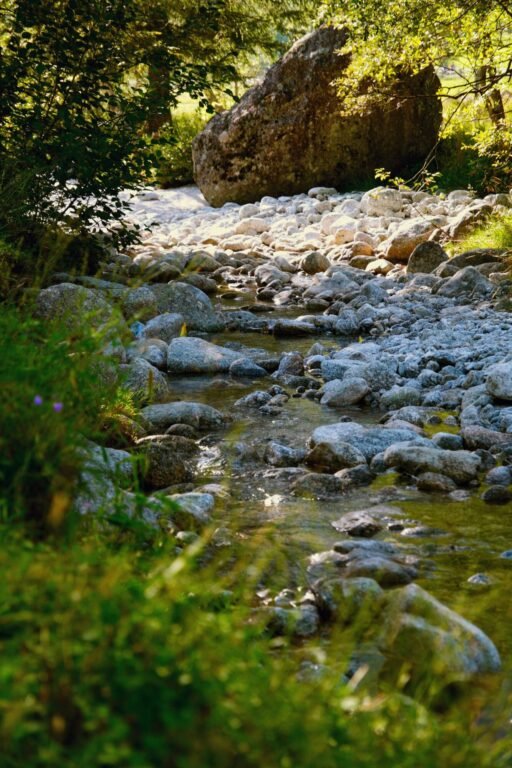
Dry creek beds are shallow, rock-lined channels that guide surface water across a yard toward a drain, low spot, or property edge, while also looking like an intentional landscape feature rather than a drainage fix. They work well for redirecting runoff on sloped lots and can double as a decorative element instead of a purely functional one.
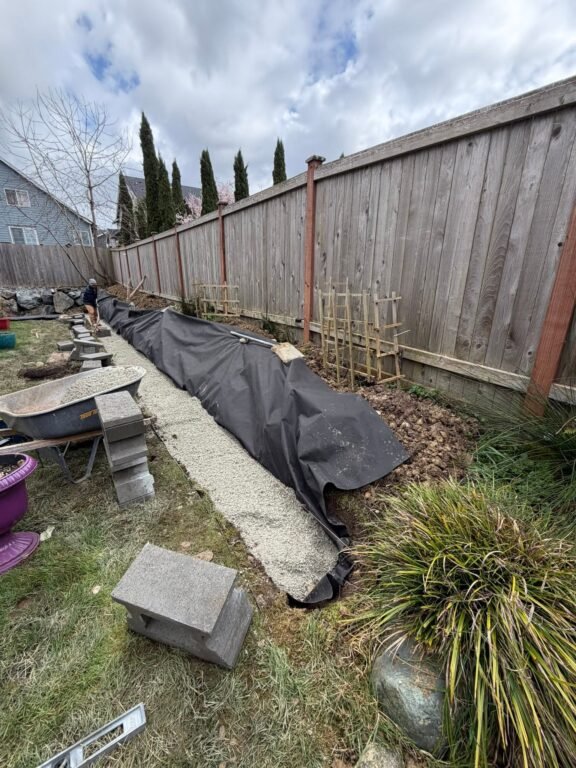
Most yards need a combination of these rather than just one fix — which one (or which mix) makes sense depends on whether you’re dealing with flat-ground volume or hillside runoff.
A Recent Whatcom County Drainage Fix
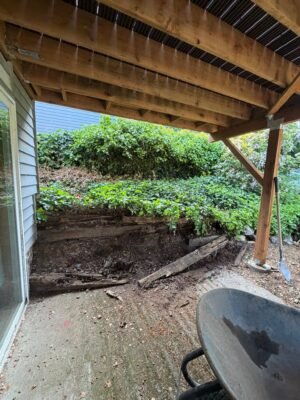
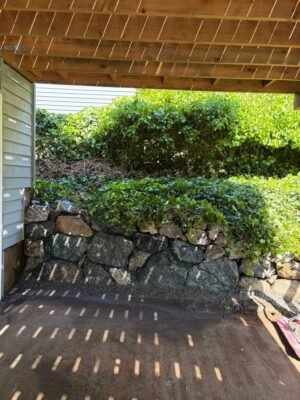
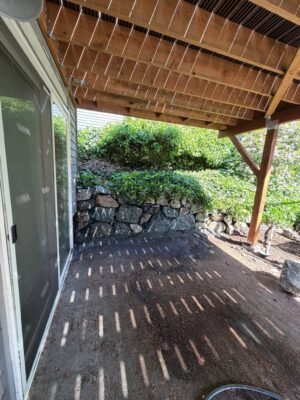
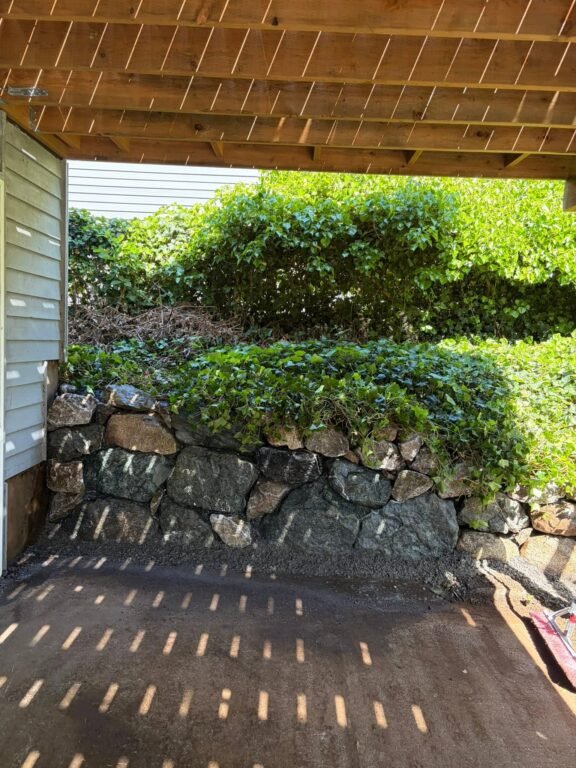
On a property in Bellingham, an old timber retaining wall behind the covered patio had rotted out, and without anything holding the slope back, soil was washing away and cutting runoff channels every time it rained. The homeowners wanted the fix to look natural rather than like an obvious structural repair, so we built a stacked rock wall that holds the soil in place while blending into the surrounding landscaping. It now handles runoff from the slope above without eroding, and it looks like it’s always been part of the yard rather than a retrofit.
Frequently Asked Questions
Find answers to commonly asked questions about our products and services.
How Much Does Yard Drainage Cost In Whatcom County?
A simple regrading job can run a few hundred dollars, while a french drain or dry well system typically runs $1,500–$5,000 depending on length and complexity. A retaining wall with integrated drainage costs more but solves slope and water issues together. A site visit gets you an accurate number.
Can I Fix Yard Pooling Myself?
Minor fixes like extending a downspout or clearing debris from a low spot are doable DIY. But if water is consistently pooling near your foundation or a slope is actively eroding, that usually needs proper grading calculations or engineered drainage — mistakes here can make the problem worse or push water toward a neighbor’s property.
How Long Does It Take To Fix A Yard Drainage Problem?
Regrading or a french drain install typically takes one to a few days. Larger projects involving a retaining wall or extensive regrading can take one to two weeks depending on scope and weather.
Stop The Pooling Before Winter Rain Hits
We’ll walk your property, figure out exactly why water isn’t draining, and tell you straight whether you need regrading, a french drain, a dry well, or a retaining wall — no upsell, just what actually fixes it. We work throughout Bellingham, Blaine, Ferndale, and the surrounding Whatcom County. Contact us for a free drainage assessment
Or text/Call Us at