Mulch or River Rock? A Skagit County Homeowner’s Guide

Hardscape and Fence Services by Brownstone L&H

Which Is Right For Your Skagit County Yard?

It depends on your soil, your drainage, and how much maintenance you want to deal with. Skagit County’s low-lying valley soil and wet winters change the equation. Mulch is affordable and easy to refresh but breaks down fast in our rain. River rock costs more upfront but handles moisture and drainage problems better — with its own trade-offs on heat and weeds.
Here’s how to pick the right one for your yard, whether you’re in Mount Vernon, Burlington, or out toward La Conner.

Quick Answers:

Cost: River rock costs more to install but requires almost no upkeep. Mulch is cheaper upfront but needs yearly refreshing.
River rock is usually the better call for low-lying, flood-prone, or poor-draining areas common across the valley floor.
Mulch still wins for garden beds and planting areas where you want the soil to stay healthy and fed.
Skagit factor: Proximity to the river and flat terrain mean drainage performance should weigh heavier in your decision than it might elsewhere.

River Rock: What It Is & Best For

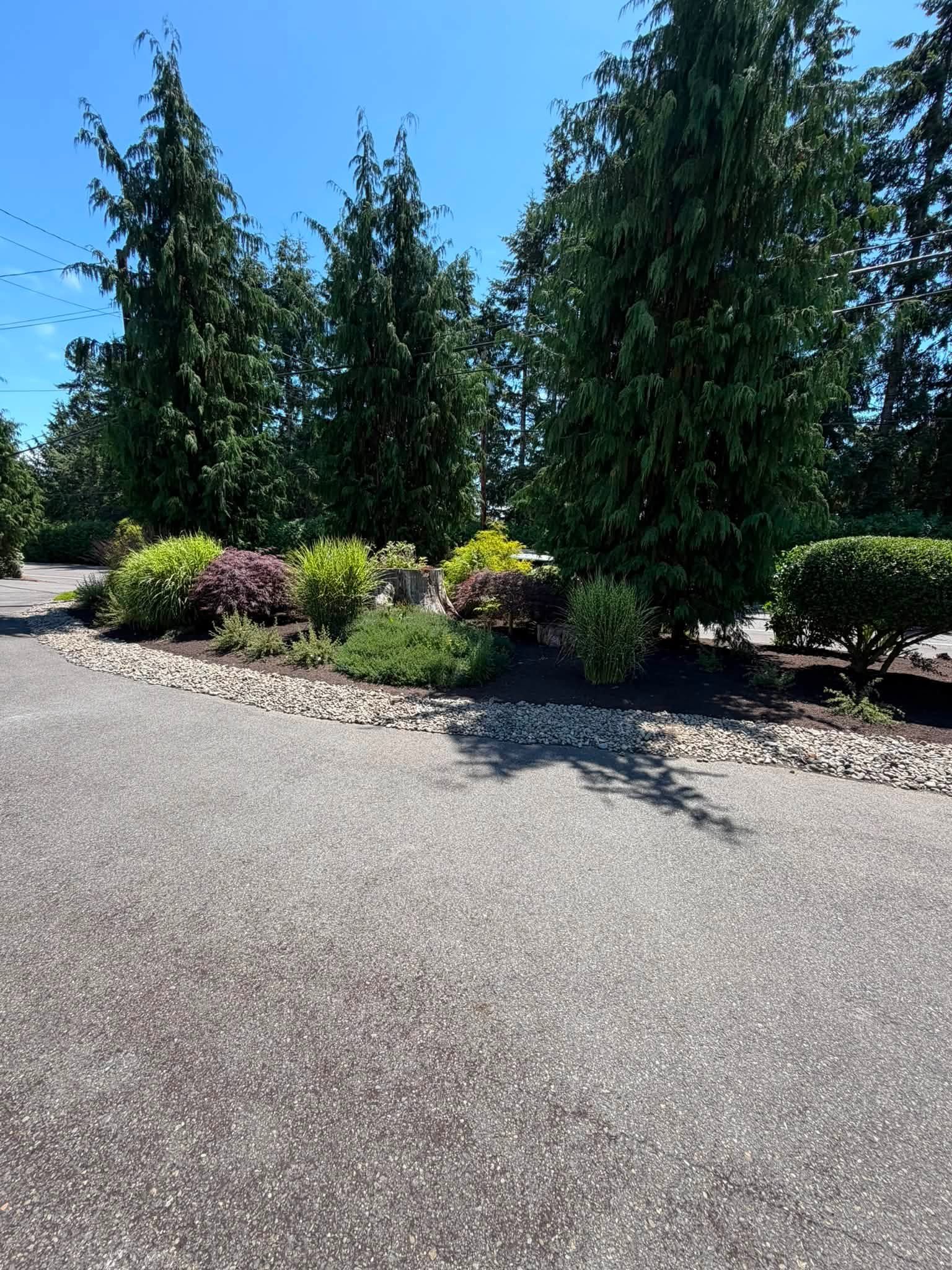
River rock is smooth, rounded stone, naturally worn down by water, sold by size and installed over landscape fabric so it doesn’t sink into the soil or let weeds through. It doesn’t break down and doesn’t need yearly replacing — once it’s in, it stays.

That durability is exactly why it holds up well in Skagit County’s lower-elevation neighborhoods. In areas near Mount Vernon, Burlington, and other valley-floor properties, yards often sit close to the water table, and heavy rain can leave standing water for days. River rock, especially when combined with proper grading or a French drain, moves water through instead of holding it against your foundation or plants.

Best For:

Flood-Prone or Low-Lying Yards

Heavy stone will not wash away during severe rainstorms, and they actively help redirect excess water when installed correctly.

Areas Near The Skagit River or Drainage Ditches

Heavy stones slow down water flow and resist washing away

Side Yards & Low-Maintenance Zones

Where you don’t want yearly upkeep — install it once and forget it, no refresh, no fading.


Worth Knowing Before You Commit:

In true flood-prone spots along the valley floor, smaller river rock can shift or float during major flooding events, so sizing matters more here than in yards that just deal with everyday rain. It also holds summer heat more than mulch does, which is worth factoring in if the area sits close to outdoor seating.

Typical Cost

Higher upfront, minimal long-term cost.

Mulch: What It Is & Best For

Mulch is organic material — shredded bark, wood chips, or bark nuggets — spread over soil to protect it and feed it as it breaks down. It’s typically laid a few inches deep around plants and garden beds.

Mulch is still the right call for active garden beds anywhere in the county, including the valley floor — but it’s worth knowing it has limits here. On flatter, wetter ground, mulch can hold moisture longer than it would on well-drained soil, which is good for plants that like consistent moisture but can lead to matting or fungal issues if beds don’t drain well to begin with.

Best For:

Garden Beds, Borders, & Areas With New Plantings

It retains moisture, regulates soil temperature, and suppresses weeds while breaking down slowly.

Yards With Decent Drainage

Yards with good drainage let excess water soak in quickly. Mulch slows down surface evaporation so your plants stay hydrated, while adding nutrients.

Don’t Mind Yearly Maintenance

Most standard wood and bark mulches require a top-off every year. If you prefer less upkeep, longer-lasting wood chips or inorganic choices are better.


Worth Knowing Before You Commit:

On true low-lying properties near the river system, standing water can actually lift and carry lighter mulch out of the bed entirely during a bad storm, leaving bare soil behind. If your yard floods more than it just gets soggy, that’s a sign a bed might need better drainage before mulch will stay put.

Typical Cost

Lower upfront, ongoing yearly maintenance cost.

Pros & Cons At A Glance

River Rock

Handles standing water and poor drainage well
No yearly replacement
Holds up in flood-prone areas
Higher upfront cost
Doesn’t feed the soil or support new plantings

Mulch

Feeds and protects soil for active plantings
Lower upfront cost
Natural, soft look
Breaks down, needs yearly refreshing
Can hold excess moisture in poorly-drained, low-lying beds


Which One Fits Your Skagit Yard?

If You’re On or Near The Valley Floor

Dealing with standing water after storms, river rock paired with proper grading/drainge system will do more for your yard — and your foundation — than mulch could.

Your Property Sits On Higher, Better-draining Ground

If your property drains well, mulch remains the better choice for garden beds — flooding isn’t a concern you need to weigh

Part Of Your Yard Floods & Other Parts Don’t

A lot of Skagit yards aren’t uniformly wet — one corner floods while the rest drains fine. If only part of yours does, split it — rock where the water sits, mulch where it doesn’t.

A Mount Vernon, WA Example

Hardscape and Fence Services by Brownstone L&H

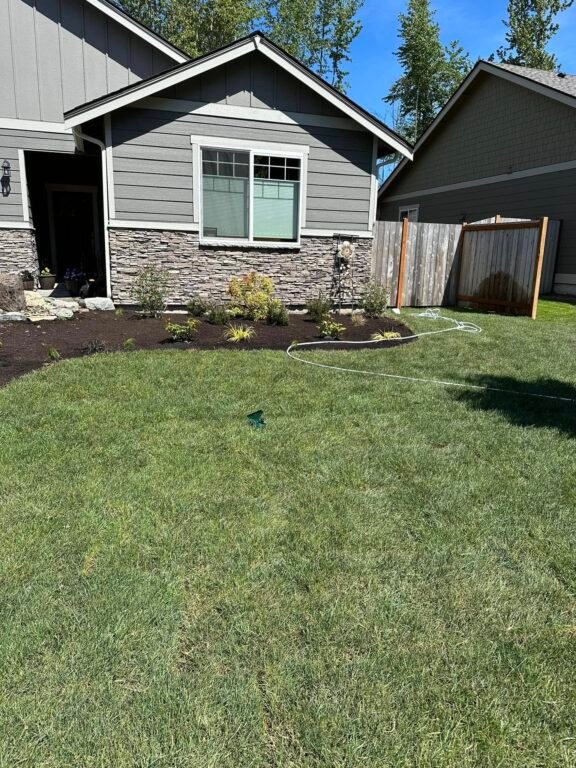
We recently mulched a new planting bed for a homeowner in Mount Vernon with solid drainage already in place. A few inches of mulch around the new plantings helped lock in moisture and gave the roots a strong start as they settled in. Straightforward job, but it’s a good example of picking the right material for a yard that’s already set up well — no extra fixes needed, just the right ground cover doing its job.

Mistakes To Avoid

Skipping Grading Before Installing Either Material

Neither mulch nor rock fixes a drainage problem on its own if the ground itself doesn’t slope away from your home.

Skipping Landscape Fabric Under River Rock 

Without it, weeds come through and rock sinks into the soil over time.

Using Small Rocks On Flood-Prone, Flat Ground 

Lighter rocks can shift or float during heavy flooding; larger rock tend to hold up better.

Over-Mulching Wet Beds 

Piling mulch too deep in already-damp areas traps moisture and invites rot.

Get Your Skagit Yard Ready Before the Rainy Season Hits

If you’re not sure whether your yard needs better drainage, a material switch, or both, we’ll take a look and tell you honestly what will actually solve the problem — not just what looks good.

Or Call Us at

(360) 333-7738

Comparing Options in a Different County?

This guide focuses on Skagit Valley’s flood-prone, low-lying terrain. For other parts of the region:

See our Whatcom County Guide — covers clay soil and general PNW drainage
See our Snohomish County Guide — covers island, delta, and suburban terrain

Scroll to Top