
Why Is My Skagit County Lawn Turning Yellow or Patchy?
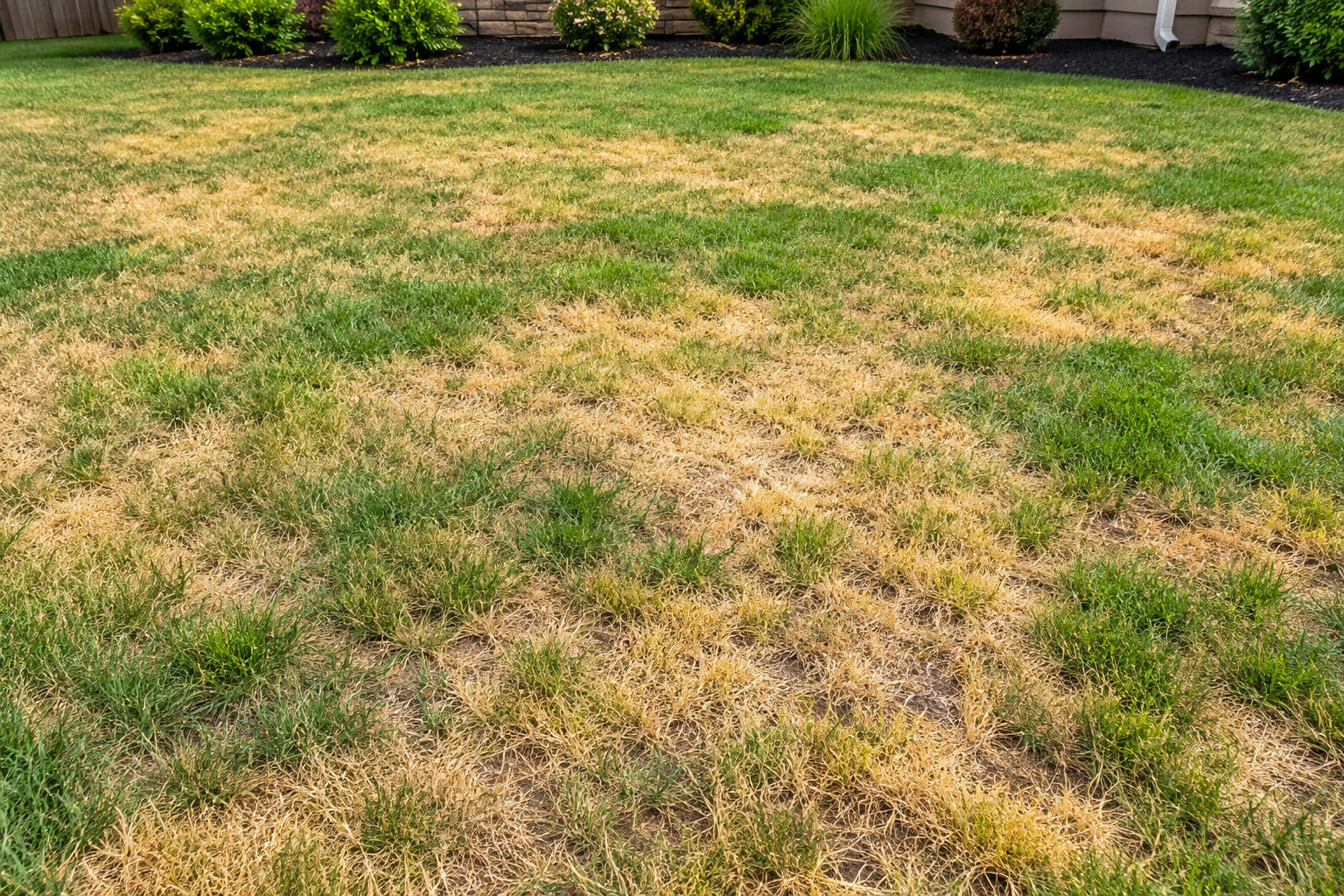
A yellow or patchy lawn is one of the most common complaints we hear from homeowners across the Skagit Valley, from Mount Vernon to Burlington to Sedro-Woolley. The tricky part is that patchy grass can have several different causes, and the fix depends entirely on which one you’re actually dealing with. Here’s what’s usually behind it and what actually works to fix it.
Quick Answer: A yellow or patchy lawn in Skagit County is usually caused by compacted soil, poor drainage leaving grass waterlogged, thin or bare spots from wear, or seeding with the wrong grass type for our wet climate. Dog urine spots, fungal disease from prolonged dampness, and nutrient-starved clay soil are also common.
Most patchy lawns are fixed with a combination of aeration, overseeding, hydroseeding, or sod, along with addressing any underlying drainage issue so the fix actually holds. Get a free lawn assessment →
Common Causes of a Yellow or Patchy Lawn in Skagit County
1. Compacted Soil
Skagit Valley’s clay-heavy soil compacts easily under regular foot traffic, play areas, or even heavy rain. Compacted soil prevents water, air, and nutrients from reaching grass roots, which causes thinning and yellowing even when you’re watering and fertilizing normally.
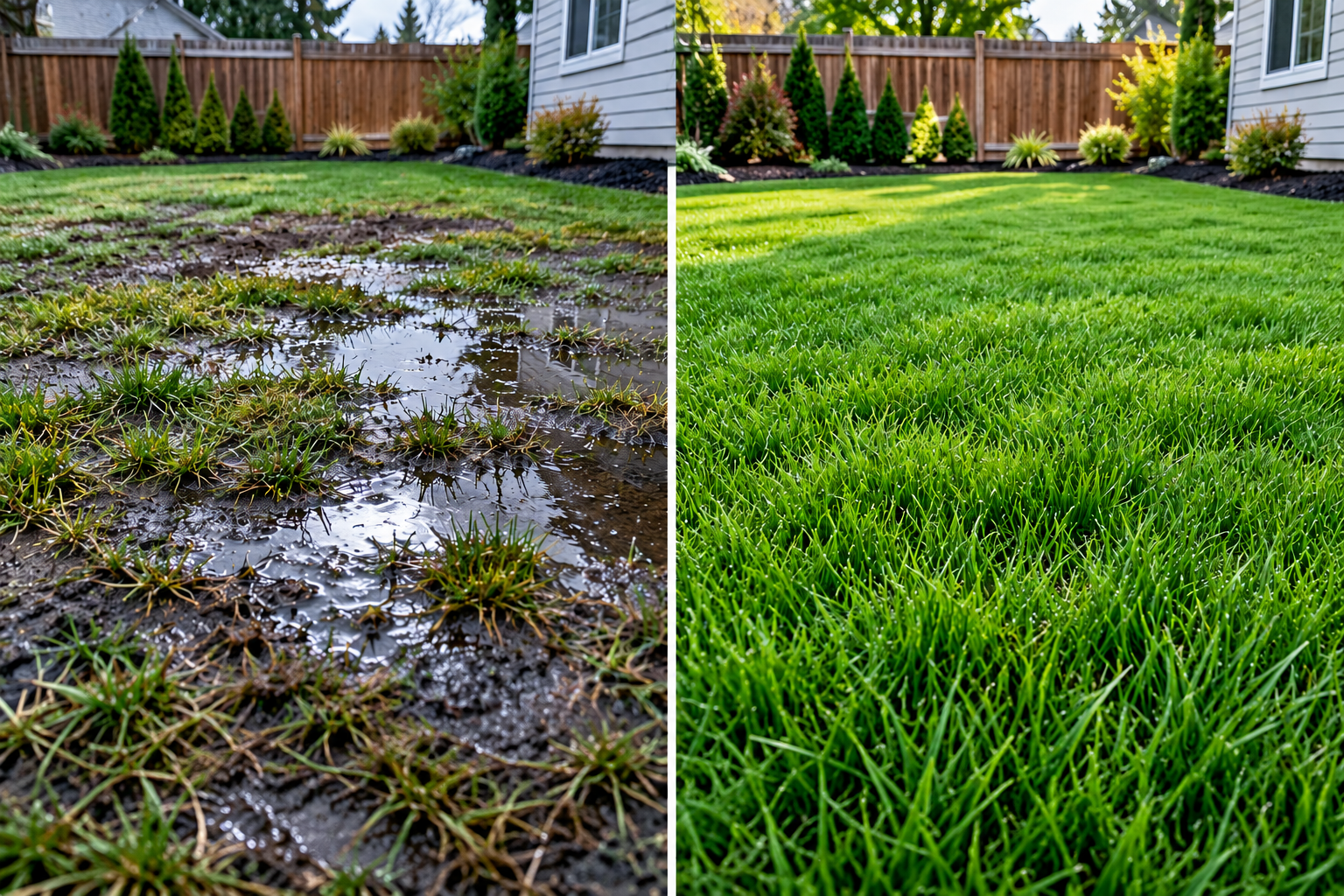
2. Poor Drainage and Waterlogged Grass
If water sits in part of your yard after it rains, as it often does in the Skagit Valley’s flatter, low-lying areas, grass roots can become waterlogged and starved of oxygen. This typically shows up as yellow, mushy patches in the same low spots every time it rains.
3. Thin or Bare Spots from Wear
High-traffic areas, like a path to the garden, a spot by the fence gate, or anywhere kids or pets regularly run, wear grass down faster than it can recover, leaving bare or thin patches that never quite fill back in.
4. Dog Urine Spots
Concentrated nitrogen from dog urine burns grass, leaving behind distinct yellow or brown patches, often ringed by a darker green edge where diluted nitrogen actually fertilized the grass around it.
5. Fungal Disease from Prolonged Dampness
Skagit County’s long, wet stretches create ideal conditions for lawn fungus, which often shows up as irregular yellow or brown patches, sometimes with a slightly different texture than the surrounding healthy grass.
6. Wrong Grass Type for the Climate
Some grass seed blends simply aren’t suited to the Pacific Northwest’s wet, mild climate. A lawn seeded with the wrong mix can thin out and yellow over time, even with proper care, because the grass itself isn’t well matched to local conditions.
7. Nutrient-Deficient Soil
Clay-heavy soil throughout the valley can be naturally low in the nutrients grass needs to stay thick and green, especially if the lawn hasn’t been fertilized or amended in some time.
How to Actually Fix a Yellow or Patchy Lawn
The right fix depends on the cause, but here’s what typically works:
Aeration
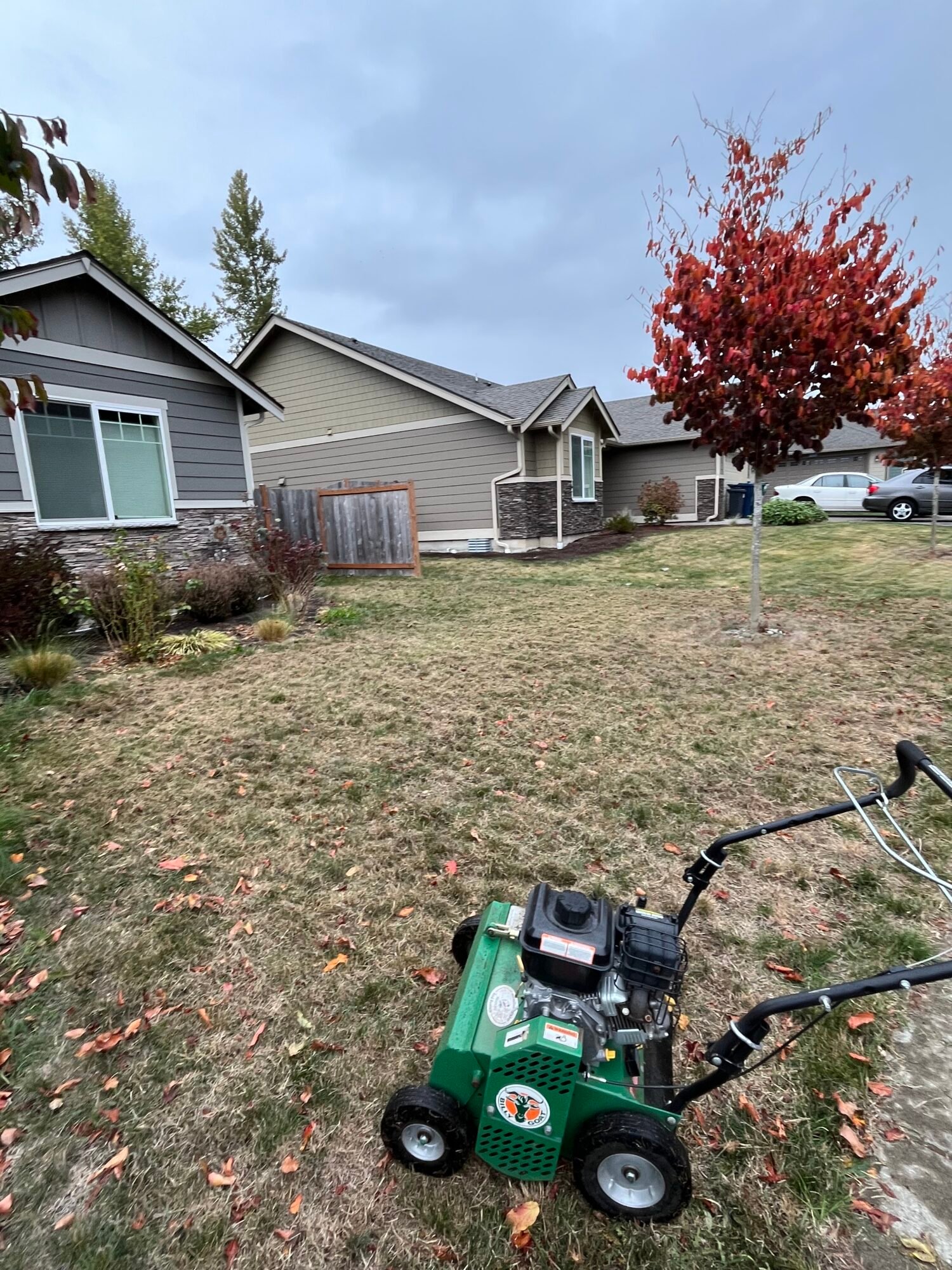
Aerating pulls small plugs of soil out of the lawn, relieving compaction and letting water, air, and nutrients reach the roots again. This is often the first step for a lawn that’s thinning across large areas rather than in just one or two spots.
Overseeding
Overseeding spreads new grass seed directly into an existing lawn to fill in thin or bare patches without starting over completely. It works well for wear-related bare spots once the underlying cause, like foot traffic or soil compaction, is addressed.
New Sod
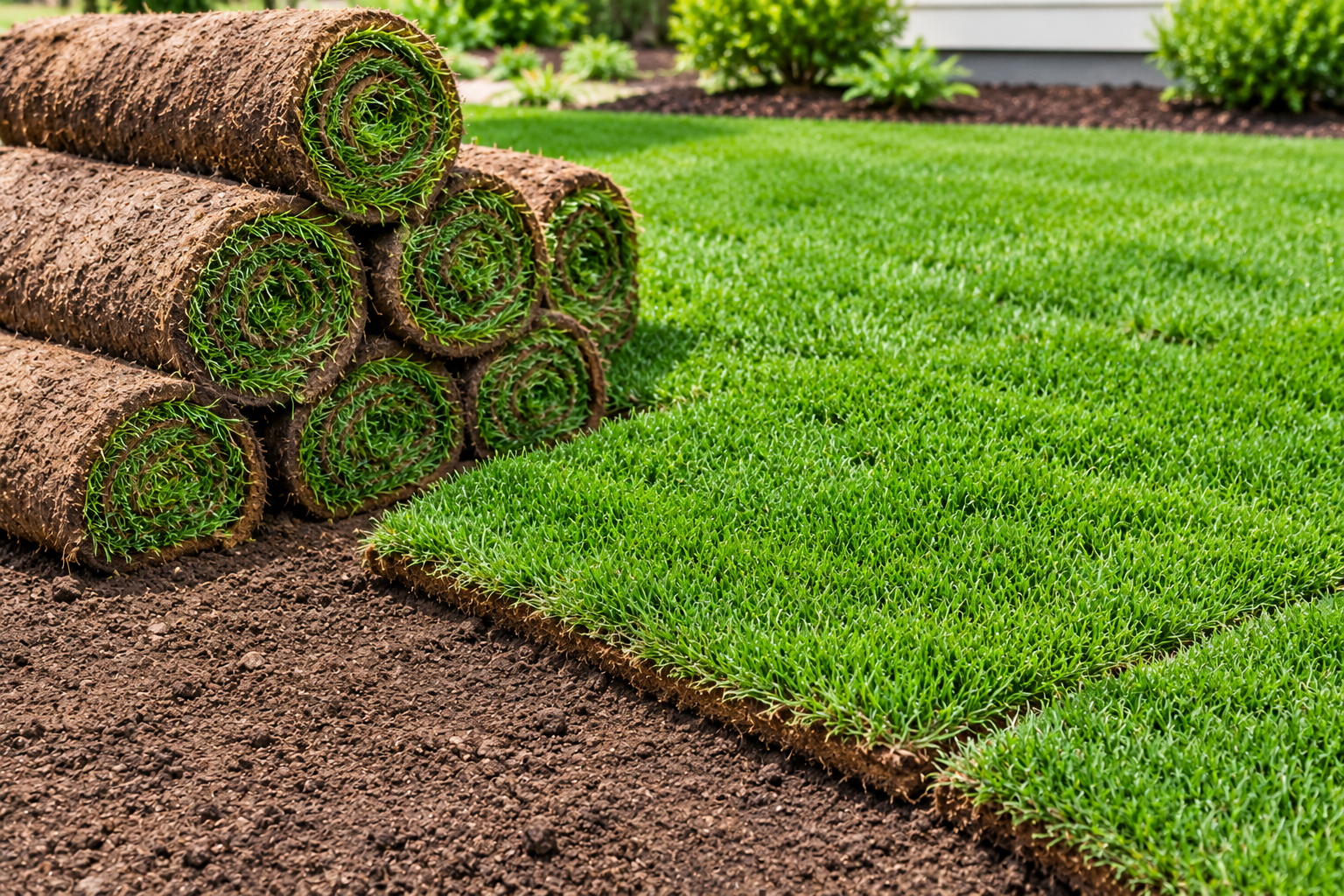
For more significant bare or damaged areas, installing new sod gives you an established lawn right away rather than waiting for seed to fully fill in. This is often the better choice for larger patchy areas or when a faster result matters.
Hydroseeding
Hydroseeding applies a mixture of grass seed, mulch, fertilizer, and a pacifying agent as a sprayed-on slurry, which holds moisture against the seed and helps it germinate faster and more evenly than dry seed alone. It’s a good option for larger patchy or bare areas where sod would be costly but even, reliable coverage still matters, and it tends to establish more consistently than broadcast seeding on sloped or uneven ground.
Fixing the Underlying Drainage Issue
If yellow patches keep showing up in the same low spot every time it rains, no amount of seeding or sod will hold until the drainage problem itself is addressed, whether that’s a French drain, a catch basin, or regrading the yard.
Choosing the Right Grass Seed
When reseeding or overseeding, using a grass blend suited to Western Washington’s wet, mild climate makes a real difference in whether the lawn actually holds up long-term instead of thinning out again.
A lot of patchy lawns need more than one of these at once, for example, aerating a compacted area and then overseeding it, or fixing a drainage issue before resodding a spot that keeps coming back yellow. That’s why an on-site look at the actual cause matters more than guessing from the symptoms alone.
When to Get Your Lawn Looked At
It’s worth getting an assessment if you’re seeing:
Yellow or brown patches that return in the same spot every season
Bare areas that don’t fill back in on their own
Grass that looks thin and weak across large sections of the yard
Patches that appear right after heavy rain and take a long time to recover
Not sure what’s causing the patches in your lawn? Get a free on-site lawn assessment from our Skagit County team — we’ll identify the actual cause and recommend the right fix, whether that’s aeration, overseeding, hydroseeding, new sod, or addressing a drainage issue underneath it.
Fix Your Lawn Today!
A yellow or patchy lawn usually isn’t just a cosmetic issue — it’s often a sign of something underneath it, whether that’s compacted soil, poor drainage, or the wrong grass for our climate. If you’re dealing with a thinning or patchy lawn in Mount Vernon, Sedro-Woolley, Oak Harbor or anywhere else in Skagit County, contact us today for a free lawn consultation. We handle seeding, hydroseeding, sod installation, and drainage fixes throughout the Skagit Valley to get your lawn thick and green for good.
Or Call Us at