Mulch or River Rock? A Snohomish County Homeowner’s Guide

Depends On Which Part Of Snohomish County You’re In

Snohomish County isn’t one landscape — it’s several. Waterfront and bluff properties on Camano Island deal with wind, salt exposure, and erosion. Stanwood sits closer to the Stillaguamish River delta, where low ground and drainage are the bigger issue. Marysville and Arlington lean more suburban, with typical PNW rain and soil to plan around. Mulch and river rock both work here — the right one just depends on which of these situations describes your yard. This guide breaks it down by scenario, not just by material

Quick Answers:

On Camano Island (waterfront, bluffs, or wind-exposed lots): river rock generally holds up better — it resists wind displacement and doesn’t wash out on slopes the way mulch can.
In Stanwood (low-lying, near the delta): river rock is usually the stronger drainage choice, similar to flood-prone valley areas.
In Marysville or Arlington (typical suburban lots): mulch works well for garden beds; river rock for low-maintenance or drainage-heavy spots — a more standard mulch-vs-rock decision.
Cost: Mulch is cheaper upfront but needs yearyly refreshing. River rock cost more initally but holds for 10+ years.

Type Of Material

What Is Mulch?

Mulch is organic material — usually shredded bark, wood chips, or bark nuggets — spread over soil to cover and protect it. It’s typically laid a few inches deep around plants, trees, and garden beds. Over time it naturally breaks down, which adds nutrients back into the soil and helps retain moisture. Because it’s organic, it needs to be refreshed roughly once a year as it decomposes.

What Is River Rock?

River rock is smooth, rounded stone, naturally worn down by water and sold by size. It’s installed over landscape fabric so it doesn’t sink into the soil or let weeds through. Unlike mulch, it’s inorganic — it doesn’t break down, fade, or need yearly replacing. Once it’s installed correctly, it holds its look and function for years.

Which One Fits Your Part of Snohomish County?

Because this county covers such different terrain — island, delta, and suburban lots — the best choice really does depend on where your property sits. Here’s a breakdown by area:

A note on cost either way: mulch is cheaper to install but needs yearly refreshing, while river rock costs more upfront but can last 10+ years with little to no maintenance.

A Local Example

Hardscape and Fence Services by Brownstone L&H

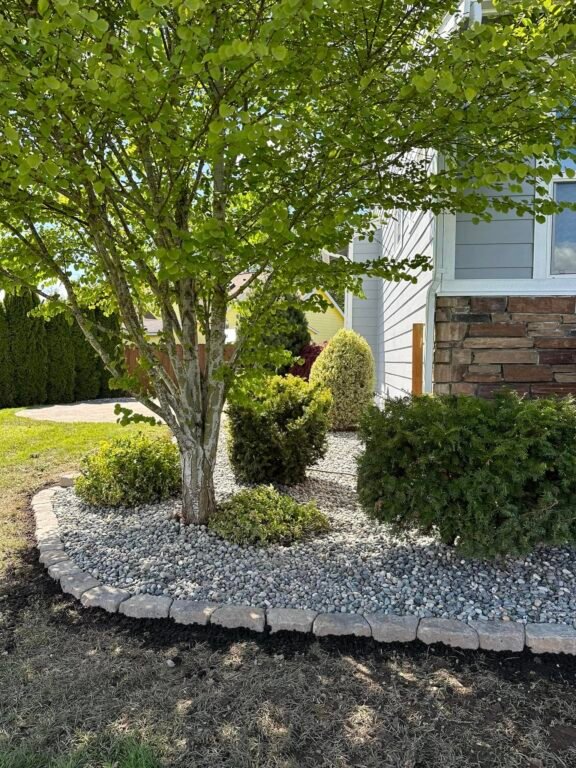
On a Camano Island property, a shaded bed near the house had become a constant upkeep headache — bark mulch breaking down quickly in the shade, weeds pushing through, and water lingering after rain instead of draining away. We cleared the bed, set a paver edge for a clean, defined border, and replaced the mulch with river rock around the existing tree and shrubs. With no organic material to break down or replace every year, the bed now drains well and holds its look with almost no upkeep.

Mistakes to Avoid


Using Light, Shredded Mulch On Wind-exposed or Waterfront Lots

It scatters fast; go with heavier bark (woodchips, red cedar, etc.) or switch to rock.

Skipping Erosion Control On Sloped Beds

Mulch alone won’t hold a slope; river rock or a retaining edge will.

Ignoring Drainage On Low-lying, Delta-adjacent Properties

Grading matters as much as the material you choose.

Assuming One Material Fits The Whole Property

Snohomish County’s terrain varies enough that most yards benefit from a mix.

Get A Free Estimate Based On Your Snohomish Property

Whether you’re on Camano Island, in Stanwood, or out in Marysville or Arlington, we’ll take a look at your yard’s terrain, wind exposure, and drainage before recommending anything — not just default to whatever’s easiest to install.

Or Call Us at

(360) 333-7738

Comparing Options in a Different County?

This guide breaks things down by area — Camano Island, Stanwood, Marysville, and Arlington. If you’re outside Snohomish County:

See Our Whatcom County Guide
See our Skagit County Guide

Scroll to Top