
French Drain vs. Catch Basin: How to Choose for Your Northwest Washington Yard
If water sits in your yard after our rainy weather, two of the most common fixes are a French drain and a catch basin. They sound similar, but they solve different problems. Here’s how to tell them apart, with notes for homeowners in Skagit, Whatcom, and Snohomish County and on Camano Island.
Quick Answer: A French drain is a gravel-filled trench with a perforated pipe that collects water soaking into the soil and carries it away, so it suits soggy ground and wet areas along a line, like a fence or foundation.
A catch basin is an underground box with a grate that collects surface water at one low spot and sends it into a pipe, so it suits ponding at a single point. Many yards need both. Get a free drainage assessment →
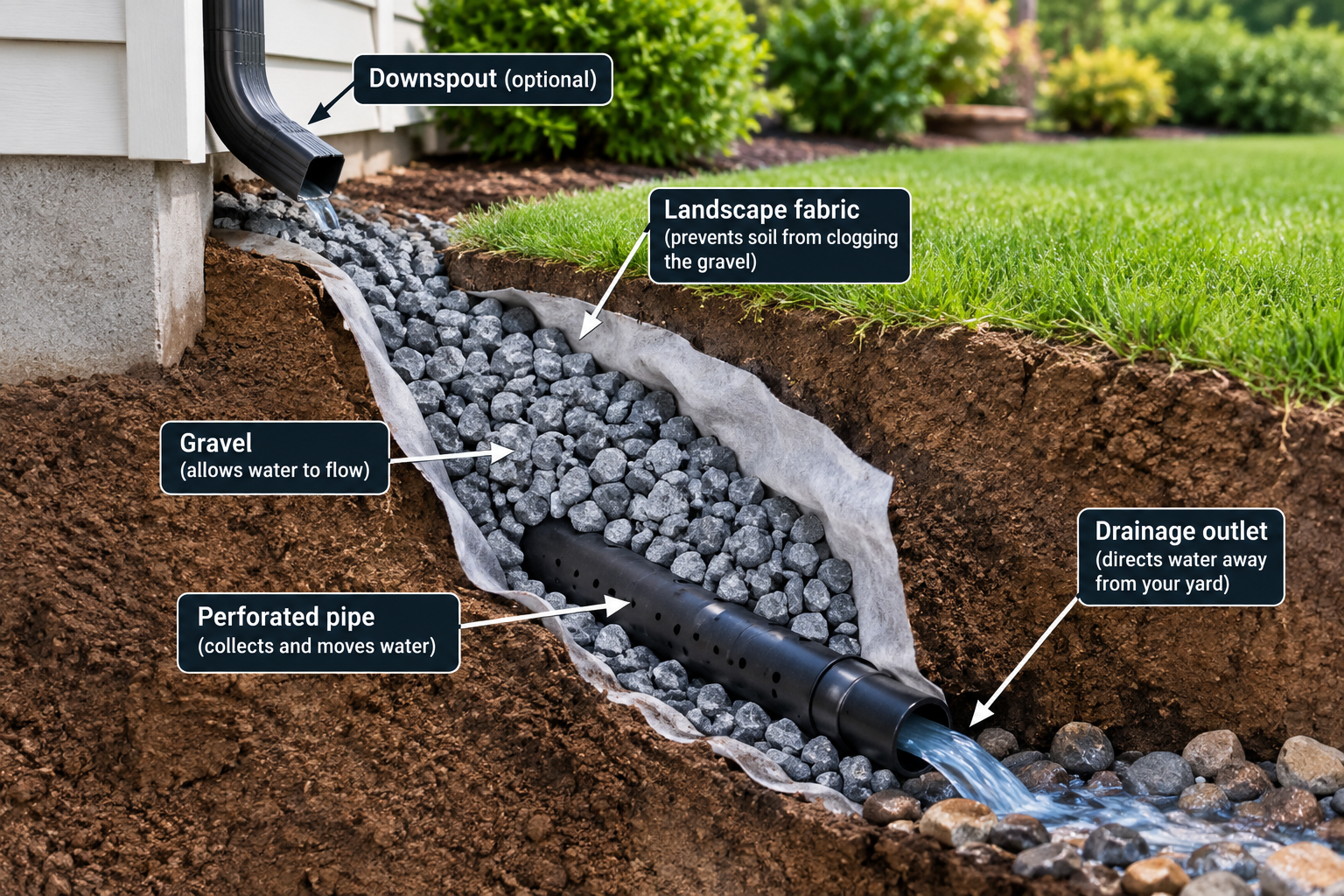
What Is a French Drain?
A French drain is a trench lined with fabric and filled with gravel, with a perforated pipe running through it. Water in the soil seeps into the gravel and pipe and is carried away to a lower area, a ditch, or another approved outlet.
Best for: soggy lawns, wet areas along a fence line or foundation, and spots where water collects across a stretch of ground instead of one point.
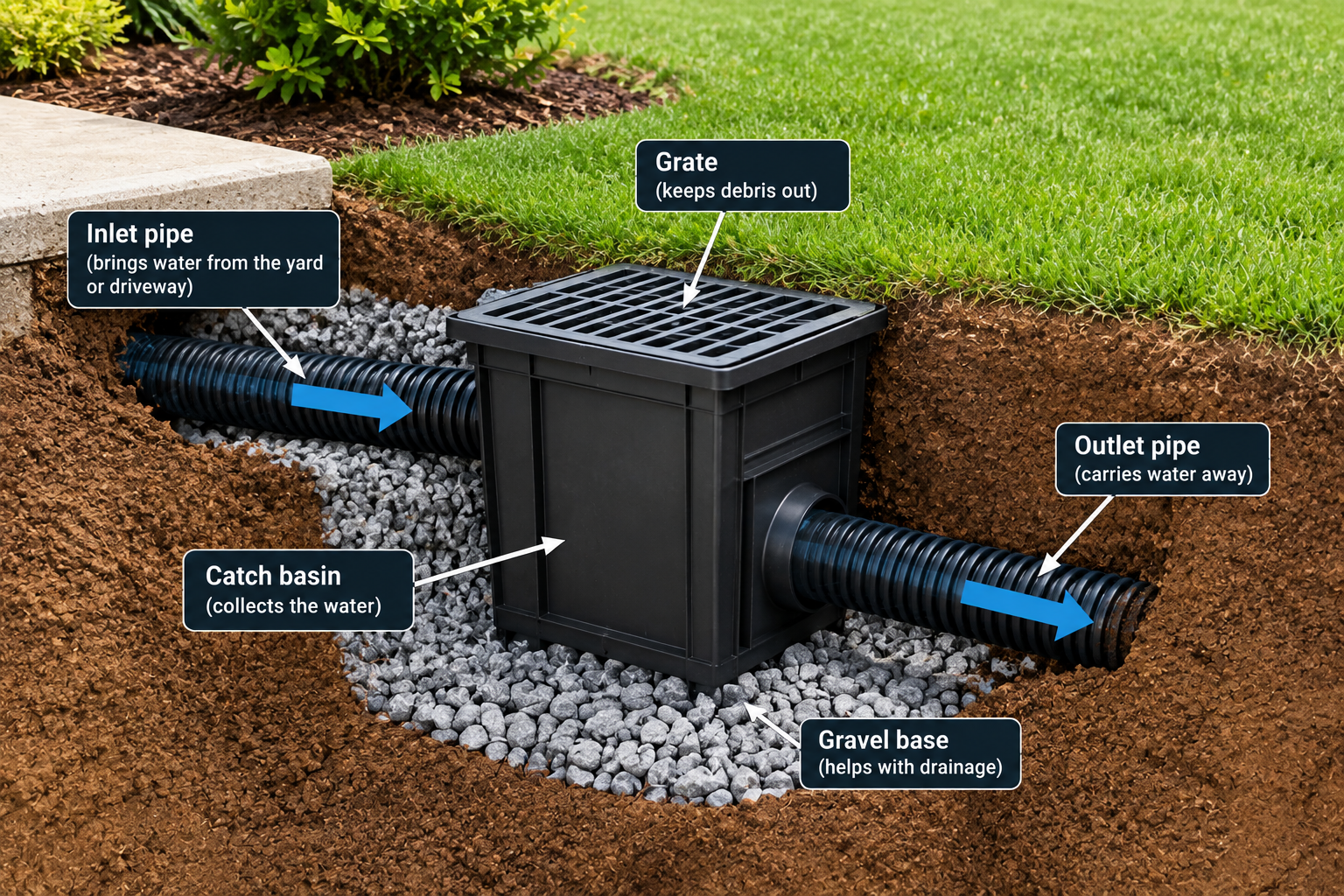
What Is a Catch Basin?
A catch basin is a small underground box with a grated lid, set at the lowest point where water collects. Surface water flows into the grate and down into the basin, which connects to a solid pipe that carries it away.
Best for: a single low spot where water ponds, areas where runoff collects, and places where a downspout empties
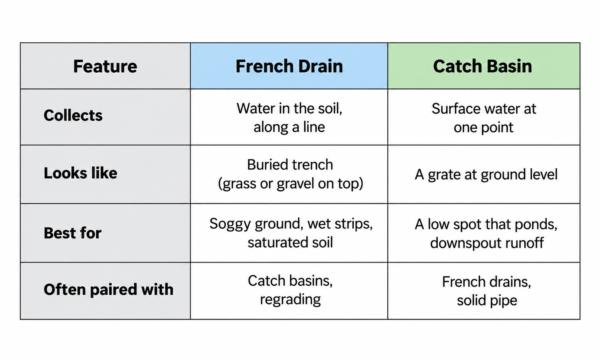
How to Choose
A simple rule of thumb: if the whole area feels wet and squishy, a French drain is usually the better fit. If water gathers in one spot and sits on the surface, a catch basin usually fits better. If you have both problems, you likely need both.
When You May Need Both
Many yards have a low spot and wet soil around it. A catch basin captures the surface water, and a French drain handles the wet ground and carries water to the outlet. Regrading can also help by reshaping the yard so water moves toward the drain.
Don’t Forget the Outlet
Every drainage system needs somewhere for water to go. The right outlet depends on your property, and some areas have rules about where water can be discharged, so it’s worth having a pro check before you build.
How to Maintain a French Drain and a Catch Basin
Both are low-maintenance compared with the problems they prevent, but neither is install-and-forget. A little attention keeps them working through our wet season.
French Drain
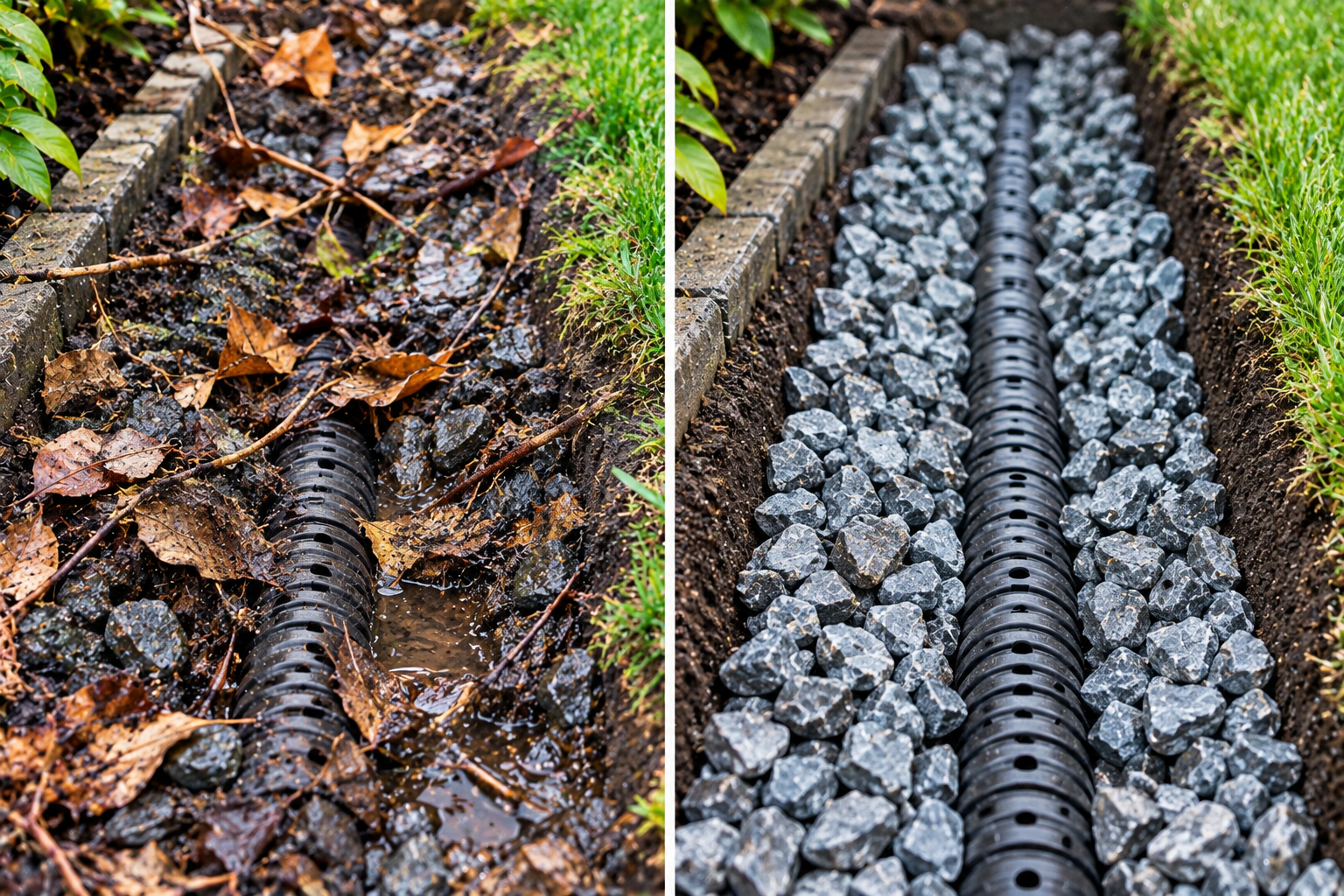
A French drain is buried, so it’s mostly out of sight, but a few habits help it last.
Keep the surface clear. If your drain has a gravel or open surface, keep leaves, soil, and debris from building up on
top of it.
Watch for warning signs. Soggy spots coming back, water pooling along the drain line, or slow drainage after rain can mean the drain is clogged or the outlet is blocked.
Check the outlet. Make sure the end of the pipe isn’t buried, crushed, or covered with debris.
Catch Basin
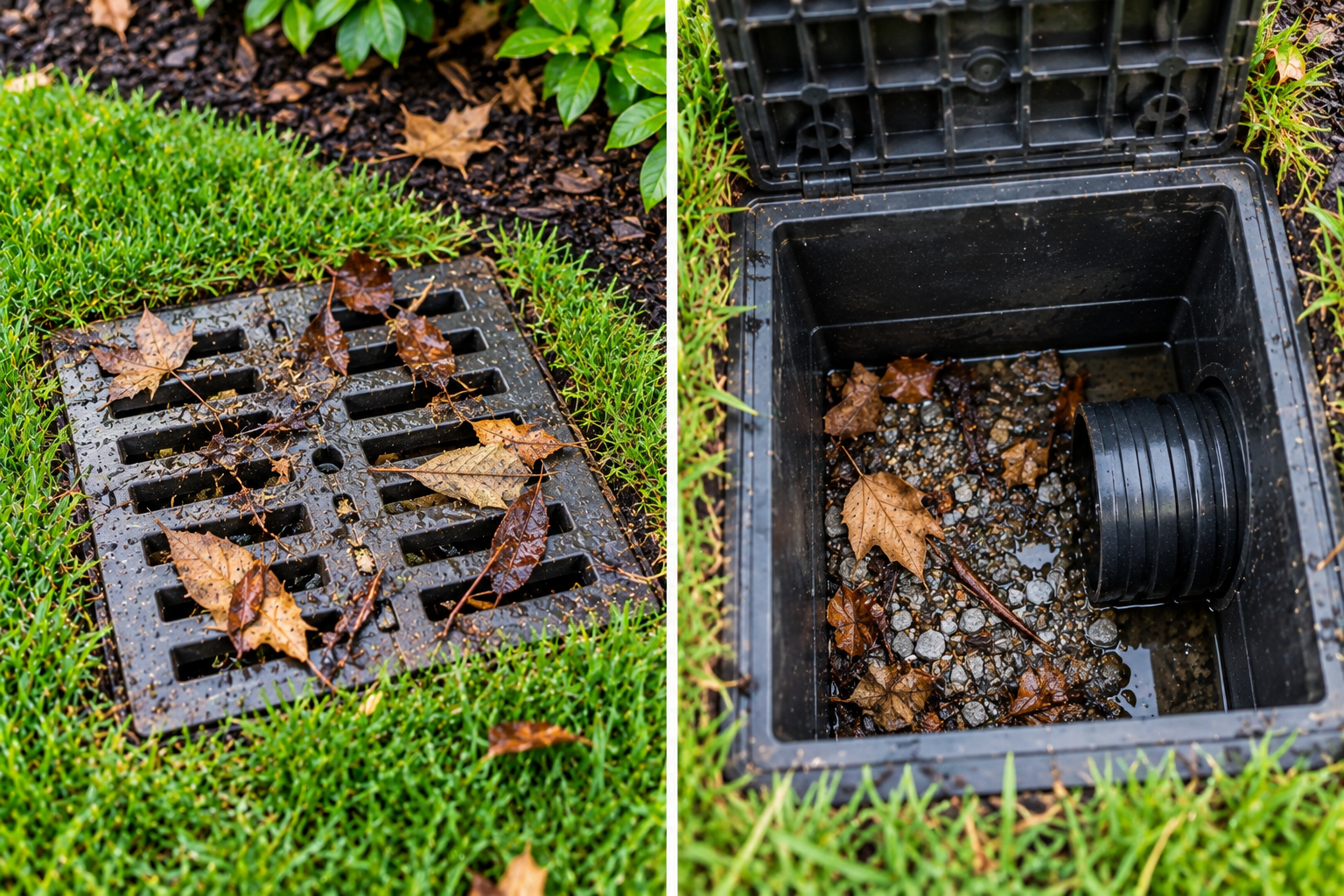
Catch basins collect what the rain carries with it, so they need the most regular attention.
Keep the grate clear. Leaves, needles, mulch, and debris can block the grate and make water pool around it. Clear it by hand, especially in fall.
Check for sediment. Dirt and grit settle in the basin over time. If the basin is filling up, it needs to be cleaned out so water can keep flowing.
Check the outlet pipe. If water drains slowly or backs up in the basin, the pipe may be clogged or the outlet blocked.
Look after storms. After heavy rain, take a quick look to make sure water is moving through.
When to Call a Pro
Call a pro if water backs up in a catch basin, a wet spot keeps returning, a drain outlet is blocked or damaged, or you notice ground sinking along a drain line. Get a free on-site drainage assessment. We’ll look at where the water comes from and where it needs to go, and recommend a French drain, a catch basin, regrading, or a combination.
Whether you’re in Mount Vernon, Oak Harbor, Bellingham, Ferndale, Marysville, Lake Stevens, or on Camano Island, contact us today for a free consultation. We install French drains and catch basins, regrade yards, and build retaining and rock walls with proper drainage throughout Skagit, Whatcom, and Snohomish County and on Camano Island.
Or text/Call Us at